
Django Core | A Reference Guide to Core Django Concepts (Udemy.com)
Dive in deep to the core concepts behind the power Django framework written in Python. Using Django 1.10 with Python 3
Created by: Justin Mitchel
Produced in 2017
 What you will learn
- Django Models
- Model Instance Methods & Properties
- Model-level field validation
- Django Forms and Formsets
- Form validation
- Model Form
- Function Based Views (FBVs)
- Class Based Views (CBVs)
- CRUD in Django Views (Create Retrieve Update Delete List)
- Django Templates
- Django translation
- Deploying Django on a Live Server| Heroku, Webfaction, Linode, Digital Ocean
- Celery + Redis for asynchronous tasks and scheduled tasks
- and much more!
- Requirements are Python 2.7 or 3.3 and Django 1.8 & up
- We use Python 3 and Django 1.10 in this one
 Quality Score
Overall Score : 88 / 100
 Live Chat with CourseDuck's Co-Founder for Help
 Course Description
the Django Core course.
In this course, we go in-depth into various Django concepts to provide a comprehensive guide to topics that include:
Django ModelsModel Instance Methods &PropertiesModel-level field validationHow models map to databases andPrimary KeysDjango Forms and FormsetsRelatingDatawithForeign Keys in DjangoHandling Subdomains with Django HostsForm validationModel FormFunction Based Views (FBVs)Class Based Views (CBVs)CRUDin Django Views(Create Retrieve Update Delete List)Django TemplatesTemplate InheritanceTemplate shortcuts &FiltersDjango translationand much more!
We built this for students looking for a in-depth look at the above concepts. We encourage you to have some experience with Django such as our Try Django series (1.
8 &Up) which is available on Udemy.
Who this course is for:
Requirements are Python 2.
7 or 3.
3 and Django 1.
8 & upWe use Python 3 and Django 1.
10 in this oneAnyone looking to learn more about DjangoAny student looking to build robust cutting edge web applicationsPython UsersDjango beginners with some experience, like doing our Try Django (1.
8 & up Series)


*Some courses are excluded from this sale. Coupon not working? If the link above doesn't drop prices, clear the cookies in your browser and then click this link here.
Also, you may need to apply the coupon code directly on the cart page to get the discount.
 Instructor Details

- 4.4 Rating
 204 Reviews
Justin Mitchel
It all started with an idea. I wanted freedom... badly. Freedom from work, freedom from boredom, and, most of all, the freedom to choose. This simple idea grew to define me; it made me become an entrepreneur.
As I strived to gain freedom, overtime I realized that with everything that you do you can either (1) convince someone, somehow, to do it with you or (2) figure out how to do it yourself.
Due to a lack of financial resources (and probably the ability to convince people to do high quality work for free), I decided to learn. Then learn some more. Then some more. My path of learning website design started a long time ago. And yes, it was out of need not desire. I believed I needed a website for a company that I started. So I learned how to do it. The company died, my skills lived on... and got better and better.
It took me a while after learning web design (html/css) to actually start learning programming (web application, storing "data", user logins, etc). I tinkered with Wordpress, believing it could be a "user" site, but I was mistaken. Sure there are/were hacks for that, but they were hacks/work-arounds and simply not-what-wordpress-was-indended-to-be. Wordpress is for blogs/content. Plain and simple.
I wanted more. I had a web application idea that I thought would change the way restaurants hire their service staff. I tested it with my basic html/css skills, had great initial results, and found a technical (pr
 Reviews

- Video Duration:
 18.5h
18.5h - Price: 11.99 Track Price 11.99 Track Price
- Provider:
 Udemy
Udemy - Year:
 2017
2017 - Language:
 English
 - Certificate:
 Yes
Yes

30-Day Money-Back Guarantee
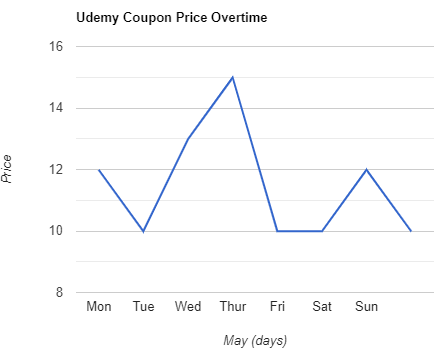
Udemy Coupon Price Tracker