
 Web Development
 Data Science
 Python
 SQL
 JavaScript
 Artificial Intelligence
 IT & Software
 IT Certifications
 Hacking
 AWS
 Arduino
 DevOps
 3D Modeling
 Graphic Design
 Photoshop
 Drawing
 Digital Painting
 UX Design
 Business
 Data Analysis
 Communication Skills
 Project Management
 Leadership & Management
 Human Resources
 Digital Marketing
 Social Media Marketing
 Marketing
 SEO
 Google Analytics
 Branding
 Excel
 Office Productivity
 SAP
 PowerPoint
 Microsoft Access
 SharePoint
 Finance & Accounting
 Trading & Investing
 Accounting
 Bitcoin
 Personal Finance
 Video Editing & Animation
 Photography
 Adobe Premier Pro
 Adobe Lightroom
 Personal Development
 Productivity
 Career Development
 Life Coaching
 Health & Fitness
 Meditation & Mindfulness
 Yoga
 Music
 Music Production
 Guitar
 Piano
 Singing
 Language Learning
 Teaching & Academics
 Engineering
 Math
 Lifestyle
Financial Statement Analysis (Udemy.com)
Learn how to make understanding finance your superpower!
Created by: Eric Knight, DBA, CPA
Last updated January 2026
 What you will learn
- Financial Statements
- Analyzing Business
- Business Decisions
- Business Evaluation
How it compares
Against the other 376 rated Udemy courses in Finance & Accounting on CourseDuck:
- Rating4.4 out of 5higher than 28% of them
- Reviews1,407#98 of 377 by number of reviews
- Length4.3 hoursshorter than 54% of them
- Last updatedJanuary 2026more recently than 62% of them
 Course Description
Employees are asking for a raise. A key supplier wants a commitment. A customer needs reassurance. And your board just reminded you that “cash flow” isn’t a suggestion—it’s survival.
In moments like these, one thing becomes very clear: you need to understand your numbers.
No matter your role—managing a team, running a business, launching a startup, or leading a department—financial statements are packed with the insights you need to make confident, data-driven decisions.
Sure, you could ask an accountant to translate the numbers. But here’s the catch: your accountant might not fully understand the quirks of your industry. And let’s be honest—sometimes you need answers faster than you can schedule a meeting.
The good news? You don’t have to be an accountant to understand financial statements. You just need someone who can teach them in a clear, practical, “no jargon allowed” way.
I’m Dr. Eric Knight—CPA, professor, consultant, and your soon-to-be guide through the world of financial statements. With over 20 years of experience helping business leaders make sense of their numbers, I’ve designed this course to strip away the unnecessary complexity and focus on what actually matters.
You’ll learn:
What each major financial statement really tells you
How to analyze company performance using ratios and understand why those ratios matter
How to spot the story behind the numbers using real company data
How managers can use (or, let’s say… creatively interpret) accounting rules—and how not to be fooled by it
We’ll explore real-world examples, case studies, and “wait… they can do that?” scenarios. You’ll check your understanding with quizzes and discussion questions that help you apply what you’re learning directly to your industry.
By the end, you won’t just read financial statements—you’ll decode them.
Because no matter your field, understanding financials is a superpower. And yes, you can absolutely learn it.
Lesson Highlights
Why We Analyze Financial Statements
Financial statements may start with accountants, but they definitely don’t end there. They’re used by managers, lenders, investors, and anyone responsible for making decisions that move a business forward. In this lesson, you’ll learn who relies on financial data, why they need it, and how proper analysis turns raw numbers into real strategy.
GAAP: The Rules
Every sport has rules—and business is no different. To understand financial statements, you need to understand GAAP, the rulebook that tells companies how to report their performance. We’ll cover where GAAP comes from, who enforces it, and how management’s incentives shape what gets reported.
Timing Is Everything
Profit should be straightforward… but it isn’t. In this lesson, we’ll uncover how timing, revenue recognition, and accounting choices can shift reported income. You’ll learn why two companies can look identical but report very different profits—and what that means for your decisions.
Earnings Management
Financial statements should reflect reality. But because GAAP allows some wiggle room, managers sometimes give those numbers a little “polish.” In this lesson, we’ll explore how earnings management works, why it happens, and what red flags to watch for so you’re never misled by overly optimistic reporting.
Balance Sheet Part 1
Let's take a closer look at the financial statements. In this lesson we'll begin with an overview of the two key statements used in business. The balance sheet and income statement. As important as knowing what is included on the statements, is understanding how the value of each element was derived. This lesson begins with a closer look at current assets.
Balance Sheet Part 2
We continue to unravel the mysteries of the balance sheet in our lesson. One of the most misunderstood accounting concepts is depreciation. We'll discuss how property and equipment is valued first. Then we discuss what depreciation really is and what it is not. By the end of the lesson, we'll understand book value.
Balance Sheet Part 3
Our journey through the balance sheet continues with intangibles and onward to the liabilities. Who knew the balance sheet could provide so much information on a business? The lesson ends with an overview of corporate bonds.
Statement of Cash Flows
We finally finish up with the balance sheet and move on to the Statement of Cash Flows. Cash is the most important current asset a business has. Without cash the business cannot pay employees or vendors. So how that cash is derived gives the financial statement analyst important information. This lesson takes us through the Statement of Cash Flows while explaining the implications of cash to the organization.
Time Series
The objective of the financial statements are to provide external users with a window into the company. But do we understand what we see in that window? Let's begin understanding the financial statements by using time series analysis. This lesson starts explaining how to analyze a business using the financial statements.
Ratios
Ratios provide analysts with tools to develop deeper understanding of the financial statements. Ratios can help us to determine risk and get a feel for management's performance. In this lesson we learn ratios that can evaluate profitability, liquidity and solvency of an organization.
Applying Ratios
In a previous lessee we began our journey towards understanding ratios. In this lesson we take the next step. We use those ratios on real companies that actually exist. We'll analyze real numbers from Lowe's, Home Depot, Pepsi, Coca Cola, and Monster to see how using ratios can tell us a story about the operations of management.
Valuation
What is a business worth? Is it the buildings and equipment the company has? Is it the value of the employees? Is it the earnings power? Determining value is not as easy as one might thing. In this lesson we'll dive into this idea of valuation.
Credit
A common option used in business is to obtain funds to buy the necessary resources by taking a loan. The creditor needs to understand the business to ascertain the risk of not being paid back. This lesson examines the various methods that creditors approach determining a risk. We begin with an overview of the various types of loans used in business in general.
Contracts

 Udemy Discount
The discount is applied through our link. Open the course from here and Udemy's current promotional price is applied at checkout on most courses, no code to type.
Some courses are excluded from Udemy's promotions. If the price does not drop, clear your browser cookies and use the button again.
Instructor Details

- 4.4 Rating
 1,407 Reviews
Eric Knight, DBA, CPA
Hello! My name is Eric Knight. Simply stated I am a teacher. I have taught students in classrooms, in online colleges, and with online courses I developed.
I am a life-long learner. I completed both Bachelor and Master degrees in Accounting before earning a Doctorate in Business Administration. I am also certified first as a CPA and later a CGMA (Managerial Accounting).
My education is a big factor in my success in life and I want to help others gain success through their own learning path.
I am passionate about helping other students learn. I have researched learning and use my research and experience to help students succeed. I strive to continue to improve my teaching style and develop better courses.
It is my goal to make the complex topics simple.
It is my pleasure to meet you!
Eric
 More Finance & Accounting courses
Investment Appraisal Mastery - NPV, IRR, Payback, PI, ARR (2026)
4.9 (811 Reviews)
 Provider: Udemy
 Time: 2.5h
$10.99
Beginner Binary Options Trading: The Bandit Strategy (2026)
4.9 (352 Reviews)
- Provider: Udemy
- Time: 1.7h
Free
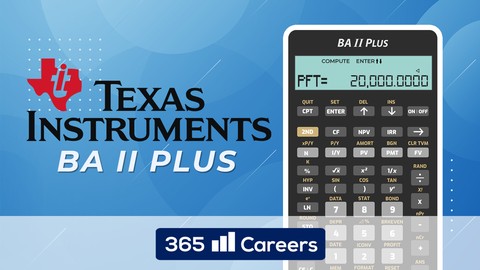
Texas Instruments BA II Financial Calculator for CFA and FRM (2021)
4.9 (321 Reviews)
- Provider: Udemy
- Time: 1.1h
Free
Economics 101 : Master the Basics of Business & Finance (2026)
4.9 (104 Reviews)
- Provider: Udemy
- Time: 1.5h
$19.99

Invest in Stocks Like a Pro Investor by a Pro Investor! (2026)
4.8 (2,368 Reviews)
- Provider: Udemy
- Time: 8.4h
$19.99

Fundamental Analysis. Understanding Financial Statements (2026)
4.8 (1,474 Reviews)
- Provider: Udemy
- Time: 9.5h
$11.99
 Reviews

By Babatunde Gbadebo on 4/24/2026
Yes, it was. It covered the basics in good detail and did not dive too deep into complicated aspects of financial reporting to cause confusion.
By Camilo Amarcy on 4/14/2026
Im still listening and tryng to understand. My big challenges are abut the language. My english is poor so, first off all, i need to improve my speech. But its being a great experience
By Enrique Palomino on 11/11/2025
Good course, it explains the basics, but it does become somewhat complex toward the end. I recommend additional material to understand the final topics
By Marie Louise NYIRANDIKUBWIMANA on 8/18/2025
From this course, I gained the skills needed to interpret financial statements, evaluate profitability, liquidity, and cash flows, and assess a borrower’s creditworthiness. It is helping me to identify risks, detect financial weaknesses, and make sound lending recommendations that balance opportunity with risk management
By José Alejandro Solorio G. on 7/21/2025
The instructor's engaging teaching style kept me interested throughout the course. And He used real world company examples to illustrate key concepts. it realy made the material much easier to understand and retain.
By Emily Kingsale on 9/20/2024
The instructor's clear articulation and engaging examples made the financial statement analysis course truly valuable. Highly recommended for its clarity and practical approach.
By rogier Richelle on 7/30/2024
The course is wel structured and well explained. All topics explained wel in short videos. I would like a little more applicability. At which source(s) can i find the data used in the examples? I have read financial reports before and it is not as easy shown as is the theoretical examples used in this course. Overall i leared a lot and can progress in my journey.
By Sneha Anil Deshpande on 3/10/2024
The explanation given to all the important concept is very easy to understand and that every new term is explained with an example. I would like to have more examples to practice.
By Jummy Ayodeji on 6/19/2023
The topics discussed were extensive and diverse. The financial concepts such as valuations were explained very well. I appreciated having a real life example and the mathematical example of different ideas/theories
By Helio da Silva on 8/29/2021
I think the instructor has been doing a great job explaining how to calculate the Profitability, Liquidity and Solvency. I am enjoying to learn how to use the ratios to see how profitable the company is doing.
 Quality Score
No CourseDuck member has rated this course yet. Taken it? Give each part a thumbs up or down.
Overall Score : 88 / 100

- Video Duration:
 4.3h
- Price: $59.99
- Provider: Udemy
- Updated:
 January 2026
- Level:
 Beginner
- Language:
 English
- Certificate:
 Yes
30-day money-back guarantee on most paid courses
Udemy Coupon Price Tracker
