
 Web Development
 Data Science
 Python
 SQL
 JavaScript
 Artificial Intelligence
 IT & Software
 IT Certifications
 Hacking
 AWS
 Arduino
 DevOps
 3D Modeling
 Graphic Design
 Photoshop
 Drawing
 Digital Painting
 UX Design
 Business
 Data Analysis
 Communication Skills
 Project Management
 Leadership & Management
 Human Resources
 Digital Marketing
 Social Media Marketing
 Marketing
 SEO
 Google Analytics
 Branding
 Excel
 Office Productivity
 SAP
 PowerPoint
 Microsoft Access
 SharePoint
 Finance & Accounting
 Trading & Investing
 Accounting
 Bitcoin
 Personal Finance
 Video Editing & Animation
 Photography
 Adobe Premier Pro
 Adobe Lightroom
 Personal Development
 Productivity
 Career Development
 Life Coaching
 Health & Fitness
 Meditation & Mindfulness
 Yoga
 Music
 Music Production
 Guitar
 Piano
 Singing
 Language Learning
 Teaching & Academics
 Engineering
 Math
 Lifestyle
Chemistry + Python: Solve chemistry problems with Python (Udemy.com)
Learn how to model problems of chemistry with the powerful and popular programming language Python in this course
Created by: Guilherme Matos Passarini, phD
Last updated October 2023
 What you will learn
- A brief review of some concepts of chemistry
- Basic commands and data structures of the programming language Python
- You will learn to develop an algorithmic thinking related to problems of chemistry
- Solve problems of chemistry computationally
- You will learn how to calculate the molecular formula of a compound with Python
- You will learn how to balance a chemical equation with the built-in commands of Python
How it compares
Against the other 388 rated Udemy courses in Python on CourseDuck:
- Rating4.4 out of 5higher than 37% of them
- Reviews252#298 of 389 by number of reviews
- Length6.1 hoursshorter than 66% of them
- Last updatedOctober 2023more recently than 51% of them
 Course Description
Are you a person with a background in chemistry, engineering, biology, or physical sciences interested in learning a programming language to model problems of chemistry with programming? Or maybe you are someone from a computer science background who is curious about how to model problems of chemistry computationally.
In this course, you'll know how to model different chemistry problems with Python! Through each section, you'll learn (or review) basic concepts of the programming language Python! The following classes are exercises in which I explain some problems of chemistry. After watching these classes, it is expected that you try to solve these problems by yourself. In the following videos, I solve the problems of chemistry step-by-step in the programming language Python.
Each chapter is structured as follows:
Basic lectures about some subjects of Python (variables, data types, loops, etc.
Videos of exercises, in which I explain the problems of chemistry that you must model in Python
Videos of the exercises being solved
Also, there are three projects that you must solve after you watch a certain number of classes. In the first project, you must write code that reads a string of characters representing an organic compound (as SMILES) and generates the name of the compound according to IUPAC rules. In the second project, you must write code that generates the molecular formula of a compound given the elements present in the substance, their molar masses, and their relative amounts in a sample. And finally, in the third project, you must write a program that balances a chemical equation by multiplying the components of the reaction by random coefficients. Each of these projects is cumulative and requires knowledge about the commands and methods that have been seen so far in Python.
Since this course is introductory, we will only use built-in commands and libraries.

 Udemy Discount
The discount is applied through our link. Open the course from here and Udemy's current promotional price is applied at checkout on most courses, no code to type.
Some courses are excluded from Udemy's promotions. If the price does not drop, clear your browser cookies and use the button again.
Instructor Details
- 4.4 Rating
 252 Reviews
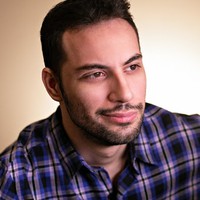
Guilherme Matos Passarini, phD
English:
Hi, my name is Guilherme, I have a bachelor's degree in Biological Sciences, a master's degree in Experimental Biology, and a Ph.D. also in Experimental Biology, both from the Federal University of Rondônia (Brazil). I recently finished a degree in math and I'm also finishing an educationl degree in physics. My main research area is the search for compounds that are active against the parasites of malaria and leishmaniasis. I also have been programming for a while, especially in the programming languages Python and R. My main interests are biology, biotechnology, programming, medicinal chemistry, and artificial intelligence. My main goal here in Udemy is therefore spreading the knowledge related to these areas to people around the world.
Português:
 More courses by Guilherme Matos Passarini, phD
Introduction to Cheminformatics and medicinal chemistry (2023)
4.2 (561 Reviews)
 Provider: Udemy
 Time: 2.9h
$64.99
Phytochemistry: Introduction to Plant Chemistry (2022)
4.6 (203 Reviews)
- Provider: Udemy
- Time: 2.4h
$59.99
More Python courses
Python 3: Deep Dive (Part 1 - Functional) (2024)
4.9 (13,534 Reviews)
- Provider: Udemy
- Time: 45.8h
$22.99
Python 3: Deep Dive (Part 3 - Dictionaries, Sets, JSON) (2023)
4.9 (1,996 Reviews)
- Provider: Udemy
- Time: 21.9h
$17.99

Programming for Everybody (Getting Started with Python)
4.9 (717 Reviews)
- Provider: Coursera
- Time: 12h
Free

An Introduction to Interactive Programming in Python (2013)
4.9 (554 Reviews)
- Provider: Coursera
- Time: 6h 40m
Free
Python: Python Programming Language | Tutorial | Beginner (2023)
4.9 (239 Reviews)
- Provider: Udemy
- Time: 5.1h
$19.99

An Introduction to Interactive Programming in Python (Part 2)
4.9 (225 Reviews)
- Provider: Coursera
- Time: 25h
Free
 Reviews

By Cicy Thomas on 7/20/2025
It is definitely good for me! I am a postgraduate in Chemistry and at the same time have knowledge in Python. Have done projects in Python data Science and Data analysis. The course gives me opportunity to apply my skills both in Chemistry and Python.
By Triantafyllos Manios on 7/17/2025
Very comprehessive information about Python coding in general, with practical applications in chemistry. However, some elements could be better explained in a slower pace (Reducing the video speed is not enough). Sometimes the instructions in exercises or projects are not entirely clear making the learner unable to understand how to structure the code.
By Michael Land on 8/4/2024
The programing part was very good and insightful. The early python instructions were well described and paced right. The last few projects the python aspect was very fast paced without exactly explaining things just stating what the code used was, rather than walking through what was being done. Although advanced chemistry was not expected in this course, there were some issues with the chemical concepts explained, some of these could be translational issues. For example, I have never heard side chains of a molecule be referred to as "radicals", therefore I was expecting additional electron occupancies to be discussed in this course due to the traditional use of the term "radical".
By Gloria Santos on 10/19/2023
excellent. The right python course for chemists. Just looking for extra exercises for practicing. Guilherme rocks!!!
By Rishitha Gundala on 10/4/2023
I like the way how the tutor teaches in a fashion, how understanding the next level concept makes your code better, how one problem can be solved with different levels of expertise.
By Madhuri Gupta on 6/6/2023
As per the course's title, ample amount of information was given about different functions and queries in Python. I would love to enroll in a course that discusses some of the computational chemistry-related software, if it would be provided by the author of this course
By Lars Tuff on 3/13/2023
Excellent course. I jumped out a bit at the balancing of eq (project 3, section 12), but that can be done with packages such as chemlib at pypi. I tried using that one at colab, but it would not work, but it works fine for me at replit.com and in pyCharm, so that's okay. Otherwise, extremely good learning experience here. Thanks, man.
By Jay Harrison on 12/20/2022
As a data scientist, I like the idea of using a different discipline to illustrate key Python concepts in a unique problem-solving approach. I enjoyed learning Python by reviewing some high school-level chemistry. This was more enjoyable than analyzing old or contrived data sets.
By Sarah Radwan Cheayto on 11/23/2022
Thank you for the amazing and fruitful sessions. The sessions were easy to understand. My expectations were in there place and I had gained many info as a beginner.
By Shinisha Sujesh on 2/14/2022
This is my second course with instructor Dr. Guilherme. First one was cheminformatics. Feels happy for getting updated, motivated to do more. Course delivery is awesome. Its very clear, easy to follow and at the end feels like understood some new concepts. Most importantly with the tools Dr. Guilherme showed in the course, can be used to apply the concepts learnt. Thank you.
 Quality Score
No CourseDuck member has rated this course yet. Taken it? Give each part a thumbs up or down.
Overall Score : 88 / 100
- Video Duration:
 6.1h
- Price: $74.99
- Provider: Udemy
- Updated:
 October 2023
- Level:
 Beginner
- Language:
 English
- Certificate:
 Yes
30-day money-back guarantee on most paid courses
Udemy Coupon Price Tracker
