
 Web Development
 Data Science
 Python
 SQL
 JavaScript
 Artificial Intelligence
 IT & Software
 IT Certifications
 Hacking
 AWS
 Arduino
 DevOps
 3D Modeling
 Graphic Design
 Photoshop
 Drawing
 Digital Painting
 UX Design
 Business
 Data Analysis
 Communication Skills
 Project Management
 Leadership & Management
 Human Resources
 Digital Marketing
 Social Media Marketing
 Marketing
 SEO
 Google Analytics
 Branding
 Excel
 Office Productivity
 SAP
 PowerPoint
 Microsoft Access
 SharePoint
 Finance & Accounting
 Trading & Investing
 Accounting
 Bitcoin
 Personal Finance
 Video Editing & Animation
 Photography
 Adobe Premier Pro
 Adobe Lightroom
 Personal Development
 Productivity
 Career Development
 Life Coaching
 Health & Fitness
 Meditation & Mindfulness
 Yoga
 Music
 Music Production
 Guitar
 Piano
 Singing
 Language Learning
 Teaching & Academics
 Engineering
 Math
 Lifestyle
QSAR Modeling: Principles and Practice (Udemy.com)
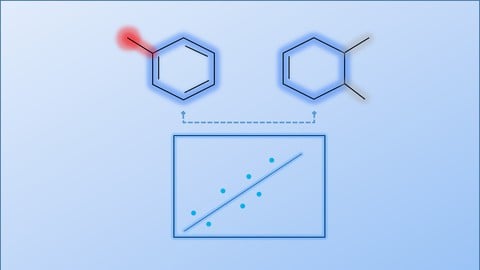
Learn QSAR modeling in Computer-Aided Drug Design (CADD) and obtain practical skills for performing QSAR Studies.
Created by: Omar Al-Attraqchi
Last updated November 2025
 What you will learn
- Understanding the principles of QSAR modeling in Drug Design.
- Practical skills in developing and validating QSAR models using various methods and techniques.
- Planning, executing and reporting QSAR studies for publication or projects.
- Performing virtual screening using QSAR models.
- Improved Computer-Aided Drug Design (CADD) skills and knowledge such as planning and executing workflows.
How it compares
Against the other 503 rated Udemy courses in Teaching & Academics on CourseDuck:
- Rating4.6 out of 5higher than 58% of them
- Reviews125#413 of 504 by number of reviews
- Length3.6 hoursshorter than 51% of them
- Last updatedNovember 2025more recently than 79% of them
 Course Description
In this course you will learn the subject of Quantitative Structure-Activity Relationship (QSAR) modeling in Computer-Aided Drug Design (CADD). You will obtain practical skills to develop QSAR models on your own, which will be a valuable tool and a great addition for your skills set. In particular, for Drug Design, Cheminformatics, Bioinformatics or related fields practitioners. This course also explains key concepts in machine learning, which is involved in developing QSAR models.
In the initial sections, the theoretical aspects of QSAR modeling are explained which include the chemical and statistical knowledge required for performing QSAR.
Following the initial theoretical sections, the practical sections will involve performing practical QSAR experiments using real QSAR datasets. You will be provided all the datasets so you can follow along the experiments. A free QSAR modeling software will be used throughout the course which is modern and efficient for all the required tasks. In the first experiment, each step in the QSAR modeling process will be explained and performed in details. In the subsequent experiments, new concepts will be introduced including using automatic descriptor selection methods, using non-linear regression algorithms and performing virtual screening with QSAR models. In those practical sections, each concept will be explained theoretically first then it will be demonstrated in a practical experiment. The subjects of the experiments are as follow:
Experiment 1: Developing a QSAR model (MLR method) step by step in details.
Experiment 2: Developing a QSAR model using fingerprints and the PLS method.
Experiment 3: Developing a QSAR model using a non-linear method (kNN).
Experiment 4: Developing a QSAR model with automatic descriptor selection methods.
Experiment 5: Performing virtual screening on a database using a QSAR model.
In the final section, planning, executing and reporting QSAR studies will be explained, and general guidelines for proceeding in QSAR analysis will be given, as well as general tips on how to successfully publish a QSAR study. This will further bring together all the theoretical and practical knowledge obtained previously to give you a clear view and efficiency in performing QSAR studies. Overall, this course is intended to explain the subject of QSAR and grant practical skills for performing QSAR modeling studies.

 Udemy Discount
The discount is applied through our link. Open the course from here and Udemy's current promotional price is applied at checkout on most courses, no code to type.
Some courses are excluded from Udemy's promotions. If the price does not drop, clear your browser cookies and use the button again.
Instructor Details

- 4.6 Rating
 125 Reviews
Omar Al-Attraqchi
Omar Al-Attraqchi is a drug design practitioner, he has a M. Sc. in Computer-Aided Drug Design (CADD) from USM university. He has published many research and review articles in world-class journal of the drug design field, in particular on CADD. He has also co-authored several book chapters on the subject of drug design and discovery. He also develops drug design software and packages.
 More Teaching & Academics courses

GMAT Focus | Quantitative| Master Math Course | 2026 Updated
5.0 (854 Reviews)
 Provider: Udemy
 Time: 55.3h
$11.99

Speed Reading MACHINE 5.1: How To Read 307 Books In 2026
4.9 (1,386 Reviews)
- Provider: Udemy
- Time: 7.2h
$12.99

GRE Quantitative Prep | Master Math Course | 2026 Updated
4.9 (980 Reviews)
- Provider: Udemy
- Time: 59h
$10.99

IELTS Pro: Reading | Writing | Listening | Speaking (2026)
4.9 (799 Reviews)
- Provider: Udemy
- Time: 30.4h
$10.99


 Reviews

By Ayusman Kitu Biswal on 1/27/2026
It is a good, well-structured, and to-the-point course. The course delivers the things it promises. But this course is not for pure beginners who have never heard of QSAR or ML. The course lacks coverage of collecting a dataset from multiple databases and preprocessing the dataset before QSAR, such as filtering the data according to the target organism or removing incomplete data. This course lacks the practical demonstration of applying another ML method after the feature selection using one method. The instructor did not explain how to deal with highly correlated descriptors. I personally benefited from this course, and I would also recommend this to my juniors. I would be happy if the instructor added instructions to do QSAR using Python.
By Mateusz Jasikowski on 1/13/2026
Very well presented and explained with examples. I think it would be ideal if there were references and examples from other software and interpretation of the results. Thank you.
By Pranatchareeya Chankhamjon on 10/31/2025
The training provided a very detailed explanation of both the process and the theory behind the algorithms and statistical analyses. It also covered how to interpret the data derived from QSAR models. Overall, it was a highly comprehensive training that can be directly applied to real-world work.
By Rui M. Borges dos Santos on 1/6/2025
Very good introductory course, software (ChemMaster) is also very user friendly, gives you the confidence to dive deeper in this immense subject.
By Adarsh Tripathi on 9/29/2024
Your explanation was excellent and highly insightful. However, incorporating a live experiment using a dataset from PubCHEM or ChEMBL, followed by building and testing a model in real-time, would enhance understanding even further. If you have any resources or examples like this, I would greatly appreciate it if you could share them.
By Hazel Consunji de Guzman on 9/19/2024
Very good introductory course for those without any background on QSAR. Clear, step-by-step instructions with concise explanations. Multiple examples with expected results for right or wrong methods used. Instructor highly knowledgeable. Would recommend!
By Mustapha Suleiman on 4/23/2024
This QSAR and Virtual Screening course were incredibly informative and thoroughly satisfying. I cannot adequately express how happy I am with the content and delivery of the course. It truly addressed all my inquiries and quenched my thirst for knowledge in QSAR and Virtual Screening. Thank you for providing such an insightful lecture. Just a quick question, how can we make that plot>
By Anil Agiral on 3/23/2024
Good course, both theory and software application are included. Good explanations. It lacks exercises
By William Kantovisck Mozzer on 1/19/2024
The present course was able to unclear a lot of doubts a had about the subject. Now I have a detailed workflow in my mind in how to proceed with my own analysis.
By Emi̇ne Bağdatli on 12/4/2023
The course is well planned and explains QSAR modelling theoretically and practically in a very clear and understandable manner. The teacher explained my every question, which will be very helpful to me for my future research. Thanks for this wonderful course.
 Quality Score
No CourseDuck member has rated this course yet. Taken it? Give each part a thumbs up or down.
Overall Score : 92 / 100
- Video Duration:
 3.6h
- Price: $19.99
- Provider: Udemy
- Updated:
 November 2025
- Level:
 All Levels
- Language:
 English
- Certificate:
 Yes
30-day money-back guarantee on most paid courses
Udemy Coupon Price Tracker
