
 Web Development
 Data Science
 Python
 SQL
 JavaScript
 Artificial Intelligence
 IT & Software
 IT Certifications
 Hacking
 AWS
 Arduino
 DevOps
 3D Modeling
 Graphic Design
 Photoshop
 Drawing
 Digital Painting
 UX Design
 Business
 Data Analysis
 Communication Skills
 Project Management
 Leadership & Management
 Human Resources
 Digital Marketing
 Social Media Marketing
 Marketing
 SEO
 Google Analytics
 Branding
 Excel
 Office Productivity
 SAP
 PowerPoint
 Microsoft Access
 SharePoint
 Finance & Accounting
 Trading & Investing
 Accounting
 Bitcoin
 Personal Finance
 Video Editing & Animation
 Photography
 Adobe Premier Pro
 Adobe Lightroom
 Personal Development
 Productivity
 Career Development
 Life Coaching
 Health & Fitness
 Meditation & Mindfulness
 Yoga
 Music
 Music Production
 Guitar
 Piano
 Singing
 Language Learning
 Teaching & Academics
 Engineering
 Math
 Lifestyle
Speaker Recognition | By Award Winning Textbook Author (Udemy.com)
Audio processing, feature extraction, speaker recognition, machine learning, and neural networks with coding examples
Created by: Quan Wang
Last updated December 2022
 What you will learn
- Basic concepts and core algorithms in speaker recognition
- Audio processing and acoustics
- Machine learning and deep learning basics
- Coding practice and toolkits for audio and speech
- Python and PyTorch for machine learning
- Building a speaker recognition system from scratch
How it compares
Against the other 155 rated Udemy courses in Machine Learning on CourseDuck:
- Rating4.4 out of 5higher than 49% of them
- Reviews305#92 of 156 by number of reviews
- Length7.9 hourslonger than 54% of them
- Last updatedDecember 2022more recently than 50% of them
 Course Description
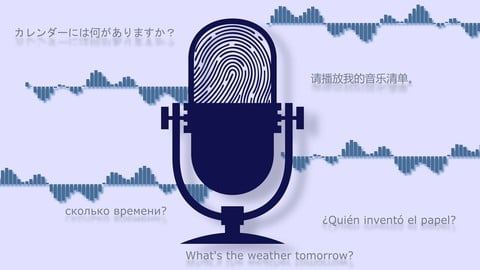
This course is an introduction to speaker recognition techniques.
Speaker recognition lies in the intersection of audio processing, biometrics, and machine learning, and has various applications. You can find the application of speaker recognition on your smart phones, smart home devices, and various commercial services.
In this course, we will start with an introduction to the history of speaker recognition techniques, to see how it evolved from simple human efforts to modern deep learning based intelligent systems.
We will cover the basics of acoustics, perception, audio processing, signal processing, and feature extraction, so you don't need a background in these domains. We will also have an introduction of popular machine learning approaches, such as Gaussian mixture models, support vector machines, factor analysis, and neural networks.
We will focus on how to build speaker recognition systems based on acoustic features and machine learning models, with an emphasis on modern speaker recognition with deep learning, such as the different options for inference logic, loss function, and neural network topologies.
We will also talk about data processing techniques such as data cleansing, data augmentation, and data fusion.
We included lots of hands-on practices and coding examples for you to really master the topics introduced in this course, and a final project to guide you through building your own speaker recognition system from scratch.
If you are a college student interested in AI or signal processing, or a software engineer, system architect or product manager working with related technologies, then this course is definitely for you!

 Udemy Discount
The discount is applied through our link. Open the course from here and Udemy's current promotional price is applied at checkout on most courses, no code to type.
Some courses are excluded from Udemy's promotions. If the price does not drop, clear your browser cookies and use the button again.
Instructor Details
- 4.4 Rating
 305 Reviews
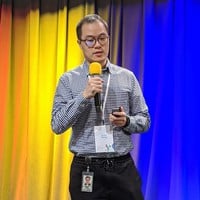
Quan Wang
Dr. Quan Wang is currently a Senior Staff Software Engineer at Google DeepMind, managing the Hotword Modeling team and the Speaker, Voice & Language team, and an IEEE Senior Member. He was a former Machine Learning Scientist at Amazon Alexa team. Quan had been leading the efforts to deploy advanced speaker recognition technologies to various products at Google, making Google Home the first smart home speaker to support multiple users in the market.
Quan has authored 50+ impactful patents and papers in speaker recognition, speaker diarization, voice separation, speech detection, language recognition and speech synthesis, with 6000+ citations. Quan's work has received coverage by top tech media including VentureBeat, TechCrunch, Engage and CNET.
Quan is the author of the textbook "Voice Identity Techniques: From core algorithms to engineering practice", which was selected by the bestselling books about AI leaderboard in China, and won the Distinguished Author of Year 2020 Award.
 More Machine Learning courses


Automated Machine Learning with AutoGluon Library in Python (2023)
4.8 (157 Reviews)
 Provider: Udemy
 Time: 5.5h
$84.99

Complete A.I. & Machine Learning, Data Science Bootcamp (2026)
4.7 (30,982 Reviews)
- Provider: Udemy
- Time: 44h
$129.99

Bayesian Machine Learning in Python: A/B Testing (2026)
4.7 (8,053 Reviews)
- Provider: Udemy
- Time: 10.4h
$109.99

[2026] Machine Learning: Natural Language Processing (V2)
4.7 (7,251 Reviews)
- Provider: Udemy
- Time: 23.5h
$99.99
 Reviews

By Uendel Rocha on 8/19/2025
O programa do curso é excelente, mas estou usando recursos adicionais para compreender o curso, principalmente porque a transcrição/legenda do áudio é confusa e não reflete a fala do professor. Em um curso de análise de fala, esperava que as transcrições dos áudios das aulas estivessem em português ou ao menos corretas em inglês. A transcrição como está prejudica a compreensão. A qualidade do curso está sendo prejudicada pela legenda. Usando recursos externos para compreensão dos tópicos, o curso fica excelente.
By Dylan Funk on 3/19/2024
Content is good and surprisingly thorough. There is a lot of to-the-point content, and a good amount of coding lessons. However, the coding lessons can be a little frustrating - things like having to reimplement numpy feels like a waste of time, and not being able to see/print a single test case are awkward roadblocks.
By Arunav Arya on 8/23/2023
the course is very nicely structured , little bit more of coding exercises or a link to a site where we can have more problems inline with the lectures that would help. also the subtitle information is very poor, because of the accent of the instructor its slightly difficult to understand and when the subtitles are also wrong thre is a chance to loose context
By Ajit Singh Balyan on 3/22/2023
The course is very well structured and ticks all the bases from a signals and communication point of view. Only thing is it is not meant for beginners, either in the field of signal processing or in the field on coding on python. Hence anyone taking this course should have an intermediate skill level in both python and signal processing else you will find the videos are not fully self explanatory and you will have to make use of a lot resources outside of Udemy to learn the concepts and basics
By Diana Kapralova on 1/26/2023
It's a really great course for advanced learners (python) or for the beginner who has a big desire to get new knowledge about this topic. Here you have to work hard and search for information. This course gives the direction, not all knowledge that makes this course really interesting and inspires for future investigation at this topic. Good quizzes, interesting assignments, and rare information, that is difficult to find elsewhere in one place, but here.
By Aishwarya Gupta on 10/1/2022
This tutorial discusses exactly what I was searching from a long time and got to know about topics I was missing in my research. Thanks, Quang for the unique content but looking forward to more hands-on practice in other tutorials if any are on the way.
By Lisa Becker on 4/28/2022
As one of the leaders in his field he’s doing a great job dissecting the topic of speaker diarization and manages to teach it in an easy-to-follow and interesting, yet entertaining way. He’s also not simply teaching how to apply speaker diarization but also its history and background as well as outdated methods. I recommend this course to anyone who wants to get their feet wet in speaker diarization!
By Hafizh Ash Shiddiqi on 4/13/2022
As far I learn from this course, actually totally good in speaker recognition, this course teach us from the bottom, but unfortunately I didn't see any single full code tutorial from initialization library, load data, until evaluate our speaker recognition model, I hope this course can attach at least on last session for anything we learn from this course. no need the expert one, just state-of the art model or i-vector is enough because we learn that model in this course, thank you.
By Anya Korneyeva on 4/7/2022
This course is a great overview of speaker recognition. Looking at the overall workflow is very helpful. Definitely clearer than reading 20 years worth of papers! The instructor doesn't "pre-digest" big mathematical concepts for you, but that's OK. One question: why is there no mention of x-vectors from Povey at al.?
By Jun Zhai on 3/26/2022
As one of many general audiences to this course and new to speaker recognition field, I found this course very easy to follow and interesting to watch. As Dr. Wang mentioned in the video, there is few good materials covering this topic nowadays. However, this course covers all important concepts step by step, starts from the fundamentals of acoustics, perception, audio processing, signal processing, and feature extraction, to the more advanced topics such as how to build speaker recognition systems. This course really opens the door for new joiners in this field. Dr. Wang also introduced different options for inference logic, loss function, neural network topologies, as well as many data processing techniques and machine learning approaches. Those topics are very useful for applications even beyond speaker recognition such as NLP app, recommendation system, image processing, computer visions, etc. I now have a big picture of the speaker recognition industry and my general knowledge in deep learing and data processing has been expanded. I highly recommend this course to people from all backgrounds.
 Quality Score
No CourseDuck member has rated this course yet. Taken it? Give each part a thumbs up or down.
Overall Score : 88 / 100
- Video Duration:
 7.9h
- Price: $74.99
- Provider: Udemy
- Updated:
 December 2022
- Level:
 All Levels
- Language:
 English
- Certificate:
 Yes
30-day money-back guarantee on most paid courses
Udemy Coupon Price Tracker
