
 Web Development
 Data Science
 Python
 SQL
 JavaScript
 Artificial Intelligence
 IT & Software
 IT Certifications
 Hacking
 AWS
 Arduino
 DevOps
 3D Modeling
 Graphic Design
 Photoshop
 Drawing
 Digital Painting
 UX Design
 Business
 Data Analysis
 Communication Skills
 Project Management
 Leadership & Management
 Human Resources
 Digital Marketing
 Social Media Marketing
 Marketing
 SEO
 Google Analytics
 Branding
 Excel
 Office Productivity
 SAP
 PowerPoint
 Microsoft Access
 SharePoint
 Finance & Accounting
 Trading & Investing
 Accounting
 Bitcoin
 Personal Finance
 Video Editing & Animation
 Photography
 Adobe Premier Pro
 Adobe Lightroom
 Personal Development
 Productivity
 Career Development
 Life Coaching
 Health & Fitness
 Meditation & Mindfulness
 Yoga
 Music
 Music Production
 Guitar
 Piano
 Singing
 Language Learning
 Teaching & Academics
 Engineering
 Math
 Lifestyle
Arduino under the Hood - AVR for Professionals (Udemy.com)
Go beyond Arduino sketches. Master the ATmega328P at the register level.
Created by: Dr. Alexander Fell
Last updated March 2026
 What you will learn
- Program and Software Optimizations to reduce Power Consumption
- Stripping away the Arduino library, how does the ATmega work under the Hood?
- All peripherals: Timers, Watchdog, Reset, Brown-Out, Clock Manipulation registers, ADC, Temperatur Sensor (built in), etc.
- Effective Computing for Embedded Systems and the Arduino Platform
- Pointers to Registers in C: An easy guide, on how to access Registers. Make your code efficient.
- Steps in the GNU Compiler Chain: The journey from the Source Code to the Executable
- Ease the Compilation Process: What are Makefiles and how to use them?
- Communciation Protocols (TWI/I2C, SPI U(S)ART, debugWIRE, Bit Banging) of Embedded Systems: How does the MCU communicate and how to configure it?
- How to debug the AVR using debugWIRE? (How to read the Register Contents, step through the Program?)
How it compares
Against the other 295 rated Udemy courses in Arduino on CourseDuck:
- Rating4.3 out of 5higher than 36% of them
- Reviews71#230 of 296 by number of reviews
- Length20.1 hourslonger than 93% of them
- Last updatedMarch 2026more recently than 90% of them
 Course Description
This is one of the most comprehensive AVR microcontroller courses available - designed to take you from Arduino hobbyist to embedded systems professional.
The Arduino library is convenient, but it hides the true power of the ATmega328P. In this course, you'll strip away the abstraction and work directly with the hardware: manipulating registers, configuring peripherals, and writing code that's faster, leaner, and dramatically more power-efficient. The result? Embedded systems that can run on small batteries for years.
Why this course matters: The concepts you learn here aren't limited to Arduino. They transfer directly to the entire AVR family -from the tiny ATtiny to the larger ATmega series - and provide a foundation for working with any microcontroller platform. Once you understand how hardware really works, you can build anything.
Hands-on from start to finish. Every topic includes practical exercises solving real-world problems. Stuck on implementation? Each exercise comes with progressive hints and fully-commented solutions.
Learn at your own pace. This course isn't linear - dive into whichever topics match your current projects and interests.
What You'll Master
Toolchain & Workflow
The GNU Compiler Collection: understand every step from source code to executable
Makefiles: automate your builds with targets, rules, and shortcuts
Transitioning from Arduino to bare-metal AVR programming
Core Peripherals
Timers, counters, and PWM generation
Interrupts and event-driven programming
Analog-to-digital conversion (including the built-in temperature sensor)
Analog comparator
Communication Protocols
UART/USART serial communication
I²C/TWI for sensor networks
SPI for high-speed peripherals
1-Wire and DHT protocols
USI (Universal Serial Interface)
Bit-banging: implement any protocol the hardware doesn't natively support
Power Optimization
Sleep modes and wake-up sources
Dynamic clock frequency scaling
Selective peripheral shutdown
Techniques that extend battery life from days to years
Memory & Security
Using Flash memory for constants and runtime data
EEPROM for persistent storage
Fuse configuration: clock sources, lock bits, and brown-out detection
Protecting your intellectual property
Development & Debugging
Running AVR chips standalone on a breadboard
Debugging with simulators, JTAG, and debugWIRE
Programming via ISP (without a bootloader)
Bonus: Parallel Task Execution
Implement concurrent operations on a single-core MCU
What You'll Walk Away With
By the end of this course, you won't just understand existing embedded code—you'll be able to write highly optimized implementations from scratch. You'll know how to squeeze every bit of performance and battery life from small microcontrollers, and you'll read datasheets with confidence instead of confusion.
The documentation is thick, but it won't be scary anymore.

 Udemy Discount
The discount is applied through our link. Open the course from here and Udemy's current promotional price is applied at checkout on most courses, no code to type.
Some courses are excluded from Udemy's promotions. If the price does not drop, clear your browser cookies and use the button again.
Instructor Details

- 4.3 Rating
 71 Reviews
Dr. Alexander Fell
In my capacity as assistant and adjunct professor at various institutes in India and Singapore, I gained extensive experience how to communicate theoretical concepts. My approach is more practically oriented and I follow the principle: Learning by doing.
Due to my research, I became an expert in cybersecurity with significant practical experience in embedded systems, processor architectures, and FPGAs.
Some successful projects in those areas:
Embedded Systems: Battery powered devices have been deployed in Antarctica to monitor nesting behaviors. Such harsh environments are challenging in terms of components, but especially the limited power resources. The software needed to be highly optimized to squeeze every bit out of those batteries to maximize its operational lifetime.
Processor Architectures: Side-channel attacks are attacks which use a involuntary channels to leak information. Those channels are often unavoidable consequences of computations and include electromagnetic emission or power consumption of the processor. In this project the aim is to harden the processor against side-channel attacks by modifying the processor itself and to make the compiler side-channel aware. The processor that has been used for this project is the new RISC-V.
 More Arduino courses

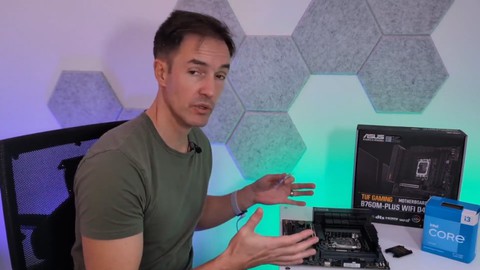
Learn to Build a Computer (PC) in 2026 - all types!
4.9 (245 Reviews)
 Provider: Udemy
 Time: 6.1h
$74.99
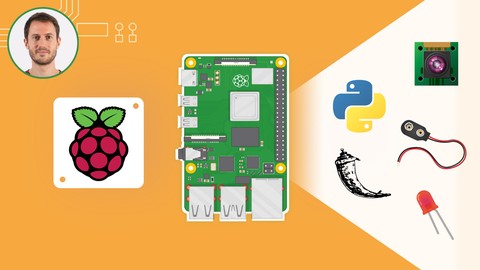
Raspberry Pi For Beginners - 2026 Complete Course
4.8 (3,105 Reviews)
- Provider: Udemy
- Time: 10.6h
$89.99

Ultimate Guide to Raspberry Pi : Tips, Tricks and Hacks (2023)
4.8 (2,363 Reviews)
- Provider: Udemy
- Time: 5.2h
$69.99
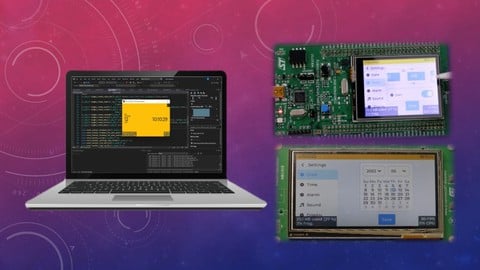
Mastering Microcontroller: STM32-LTDC, LCD-TFT, LVGL (MCU3) (2026)
4.8 (487 Reviews)
- Provider: Udemy
- Time: 8.1h
$79.99

Arduino Step by Step: Getting Started (2024)
4.7 (8,714 Reviews)
- Provider: Udemy
- Time: 21.4h
$159.99
 Reviews

By Witold Kawki on 11/1/2024
Have been looking for an indepth course on AVR architecture using the Arduino board. Glad I found this. Hoping to find more details on embedded programming guidelines and reading datasheets inorder to write code.
By Maximiliano Valenzuela Salas Andrés on 7/22/2024
It is the best arduino course you can find, the instructor is very knowledgeable, I have learned a lot about how to make more efficient codes without using the Arduino library. The course is absolutely worth it for anyone who wants to enter the world of AVR microcontrollers, keep in mind that it is an advanced course, not suitable for beginners.
By Steven Anthony Matos Carbajal on 8/14/2023
Great course, highly recommended. I'm still making progress, I'll update after finishing the course.
By Antonio Angelone on 6/29/2023
Best course i've bought till now. High quality material. I kindly ask some more about linking file in next courses!
By Joseph Scarlett on 11/14/2022
Awesome course, would really be interested in more courses from you. It would be nice to also have more step by step with some of the exercises just to know i am properly using the terminal, debugging, & make. Other lessons that would be really interesting - looking at the assembly & inline a more optimized assembly - motors and pwm in practice - how to connect it as a whole. I really like that the difference in library & macros are shown but still do not know to what extent. Although this is a more advanced topic
By Song Sung Tae on 6/29/2022
It shows me the interior mechanism of the Arduino with Atmega328. Each and every lecture is fully packed with high quality and meaningful contents. Even the multiple choices exericises have their own explanation. Honestly, I've never seen that kind of sincere effort so far. I've already learned so much about the way Arduino operates in the CPU level. If you are interested in MCUs more than the hobbist level, this is the very course you must have. Thanks again Dr.Alexander for your great effort.
By Markknaap on 6/18/2022
Based on what I have seen so far this seems to lead to a proper course.
By Jitendra P on 1/7/2022
The course is good and informative. Its not for beginners though. Its advanced course.
By Robert Lake on 11/7/2021
I found this to be a great course to get starting with AVR development and leaving the Arduino environment behind.
By Steve Cang on 1/12/2021
Good course. Especially the exercises are nice and very on point. It help me to create a library of functionality that I can use later in my projects whenever that functionality is required. Very useful.
 Quality Score
No CourseDuck member has rated this course yet. Taken it? Give each part a thumbs up or down.
Overall Score : 86 / 100

- Video Duration:
 20.1h
- Price: $19.99
- Provider: Udemy
- Updated:
 March 2026
- Level:
 Expert
- Language:
 English
- Certificate:
 Yes
30-day money-back guarantee on most paid courses
Udemy Coupon Price Tracker
