
 Web Development
 Data Science
 Python
 SQL
 JavaScript
 Artificial Intelligence
 IT & Software
 IT Certifications
 Hacking
 AWS
 Arduino
 DevOps
 3D Modeling
 Graphic Design
 Photoshop
 Drawing
 Digital Painting
 UX Design
 Business
 Data Analysis
 Communication Skills
 Project Management
 Leadership & Management
 Human Resources
 Digital Marketing
 Social Media Marketing
 Marketing
 SEO
 Google Analytics
 Branding
 Excel
 Office Productivity
 SAP
 PowerPoint
 Microsoft Access
 SharePoint
 Finance & Accounting
 Trading & Investing
 Accounting
 Bitcoin
 Personal Finance
 Video Editing & Animation
 Photography
 Adobe Premier Pro
 Adobe Lightroom
 Personal Development
 Productivity
 Career Development
 Life Coaching
 Health & Fitness
 Meditation & Mindfulness
 Yoga
 Music
 Music Production
 Guitar
 Piano
 Singing
 Language Learning
 Teaching & Academics
 Engineering
 Math
 Lifestyle
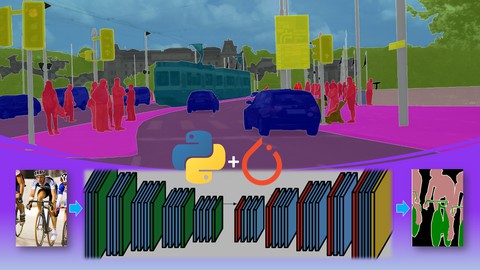
Deep Learning for Image Segmentation with Python & Pytorch (Udemy.com)
Image Semantic Segmentation for Computer Vision with PyTorch & Python to Train & Deploy YOUR own Models (UNet, SAM)
Created by: Dr. Mazhar Hussain
Last updated June 2026
 What you will learn
- Learn Image Semantic Segmentation Complete Pipeline and its Real-world Applications with Python & PyTorch
- Deep Learning Architectures for Semantic Segmentation (UNet, DeepLabV3, PSPNet, PAN, UNet++, MTCNet etc.)
- Segmentatin Anything Model (SAM) produces high quality object masks from input prompts.
- Perform Image Segmentation with Deep Learning Models on Custom Datasets
- Datasets and Data Annotations Tool for Semantic Segmentation
- Data Augmentation and Data Loaders Implementation in PyTorch
- Learn Performance Metrics (IOU, etc.) for Segmentation Models Evaluation
- Transfer Learning and Pretrained Deep Resnet Architecture
- Implement Segmentation Models (UNet, PSPNet, DeepLab, PAN, UNet++) in PyTorch using different Encoder and Decoder Architectures
- Learn to Optimize Hyperparameters for Segmentation Models to Improve the Performance during Training on Custom Dataset
How it compares
Against the other 126 rated Udemy courses in Deep Learning on CourseDuck:
- Rating4.4 out of 5higher than 32% of them
- Reviews274#89 of 127 by number of reviews
- Length3.7 hoursshorter than 88% of them
- Last updatedJune 2026more recently than 83% of them
 Course Description
This course is designed to provide a comprehensive, hands-on experience in applying Deep Learning techniques to Semantic Image Segmentation problems. Are you ready to take your understanding of deep learning to the next level and learn how to apply it to real-world problems? In this course, you'll learn how to use the power of Deep Learning to segment images and extract meaning from visual data. You'll start with an introduction to the basics of Semantic Segmentation using Deep Learning, then move on to implementing and training your own models for Semantic Segmentation with Python and PyTorch.
This course is designed for a wide range of students and professionals, including but not limited to:
Machine Learning Engineers, Deep Learning Engineers, and Data Scientists who want to apply Deep Learning to Image Segmentation tasks
Computer Vision Engineers and Researchers who want to learn how to use PyTorch to build and train Deep Learning models for Semantic Segmentation
Developers who want to incorporate Semantic Segmentation capabilities into their projects
Graduates and Researchers in Computer Science, Electrical Engineering, and other related fields who want to learn about the latest advances in Deep Learning for Semantic Segmentation
In general, the course is for Anyone who wants to learn how to use Deep Learning to extract meaning from visual data and gain a deeper understanding of the theory and practical applications of Semantic Segmentation using Python and PyTorch
The course covers the complete pipeline with hands-on experience of Semantic Segmentation using Deep Learning with Python and PyTorch as follows:
Semantic Image Segmentation and its Real-World Applications in Self Driving Cars or Autonomous Vehicles etc.
Deep Learning Architectures for Semantic Segmentation including Pyramid Scene Parsing Network (PSPNet), UNet, UNet++, Pyramid Attention Network (PAN), Multi-Task Contextual Network (MTCNet), DeepLabV3, etc.
Segmentatin Anything Model (SAM) produces high quality object masks from input prompts such as points or boxes.
Datasets and Data annotations Tool for Semantic Segmentation
Google Colab for Writing Python Code
Data Augmentation and Data Loading in PyTorch
Performance Metrics (IOU) for Segmentation Models Evaluation
Transfer Learning and Pretrained Deep Resnet Architecture
Segmentation Models Implementation in PyTorch using different Encoder and Decoder Architectures
Hyperparameters Optimization and Training of Segmentation Models
Test Segmentation Model and Calculate IOU, Class-wise IOU, Pixel Accuracy, Precision, Recall and F-score
Visualize Segmentation Results and Generate RGB Predicted Segmentation Map
By the end of this course, you'll have the knowledge and skills you need to start applying Deep Learning to Semantic Segmentation problems in your own work or research. Whether you're a Computer Vision Engineer, Data Scientist, or Developer, this course is the perfect way to take your understanding of Deep Learning to the next level. Let's get started on this exciting journey of Deep Learning for Semantic Segmentation with Python and PyTorch.

 Udemy Discount
The discount is applied through our link. Open the course from here and Udemy's current promotional price is applied at checkout on most courses, no code to type.
Some courses are excluded from Udemy's promotions. If the price does not drop, clear your browser cookies and use the button again.
Instructor Details

- 4.4 Rating
 274 Reviews
Dr. Mazhar Hussain
Dr. Mazhar Hussain is currently in the role of Deep Learning and Computer Vision Engineer. He has extensive teaching experience at University Higher Education level and Online over a decade. He has published several research papers on Deep Learning in well-reputed Journals and Conferences. He believes on comprehensive practical trainings with stunning support for his students where all his courses are 100% hands-on with step-by-step problem-based learning, demos and examples.
Dr. Mazhar Hussain is teaching Computer Science courses at University of Catania, Italy. He also taught at the National University of Computer and Emerging Sciences, Pakistan and Online since a decade. He has been teaching courses in:
· Artificial Intelligence (AI)
· Machine Learning (ML)
· Deep Learning (DL)
· Computer Vision (CV)
· Data Science (DS)
· Programming (Python, C++, Java)
· Databases especially in SQL SERVER, MYSQL, ORACLE, and MS ACCESS
 More courses by Dr. Mazhar Hussain
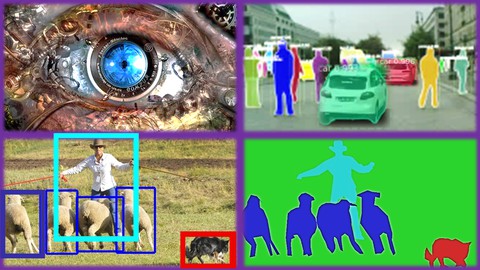
Modern Computer Vision & Deep Learning with Python & PyTorch (2026)
4.3 (364 Reviews)
 Provider: Udemy
 Time: 12.1h
$10.99
SQL BootCamp: Learn SQL DATABASE Queries with SQL SERVER (2026)
4.2 (190 Reviews)
- Provider: Udemy
- Time: 3.3h
$11.99
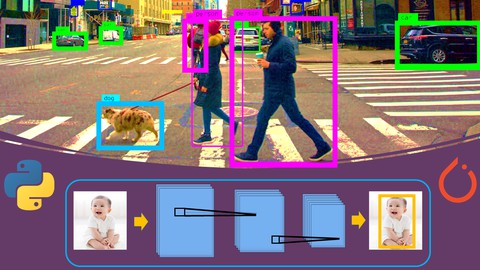
Deep Learning for Object Detection with Python and PyTorch (2026)
4.1 (178 Reviews)
- Provider: Udemy
- Time: 3.7h
$10.99
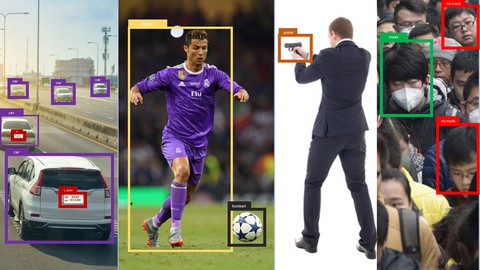
YOLOv8: Video Object Detection with Python on Custom Dataset (2026)
4.3 (145 Reviews)
- Provider: Udemy
- Time: 3.2h
$10.99
Microsoft ACCESS Database Hands-on Training with Exercises (2024)
4.3 (138 Reviews)
- Provider: Udemy
- Time: 1.5h
$34.99
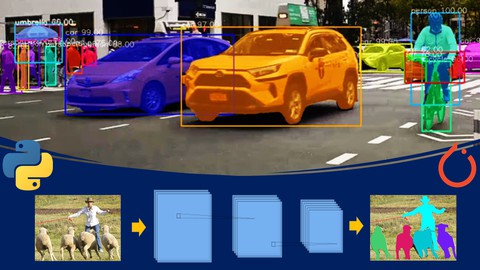
Video Segmentation with Python using Deep Learning Real-Time (2026)
4.3 (106 Reviews)
- Provider: Udemy
- Time: 2.7h
$10.99
More Deep Learning courses
A deep understanding of deep learning (with Python intro) (2026)
4.8 (6,559 Reviews)
- Provider: Udemy
- Time: 57.3h
$109.99

Deep Learning Prerequisites: Logistic Regression in Python (2026)
4.8 (4,922 Reviews)
- Provider: Udemy
- Time: 6.9h
$109.99

Data Science: Transformers for Natural Language Processing (2026)
4.8 (3,034 Reviews)
- Provider: Udemy
- Time: 19.1h
$79.99

Complete Tensorflow 2 and Keras Deep Learning Bootcamp (2022)
4.7 (8,938 Reviews)
- Provider: Udemy
- Time: 19.2h
$16.99

Deep Learning: Advanced Computer Vision (GANs, SSD, +More!) (2026)
4.7 (7,132 Reviews)
- Provider: Udemy
- Time: 17.2h
$124.99

 Reviews

By Alfred J on 9/10/2026
This is by far the richest course I have ever taken on Udemy amongst courses I already finished . It is well structured and provided with neat introductions for each of the taught topics. Moreover, the labs and exercises help a lot in getting your hands dirty with coding. Thank you Mazhar.
By Kevin Chou on 11/9/2025
I learned a lot of high level concepts that I will no doubt use in the future, but this course needs work, such as improvement in editing. Furthermore, idk if it's because the course is outdated and the deep learning libraries have improved but from what I've seen working in industry these aren't codes that are used in practice, which is what I was looking for when I signed up for this course.
By Brice Castelain on 2/14/2025
Very long explanations of dull power point images on what can be the outcomes of image segmentation. Examples or real world application would be much more interesting to illustrate why this is so important instead of just saying in what context it can be used globally.
By Matthys Lucas Steyn on 4/27/2024
I enjoyed the part of showing how different encoders and decoders can be combined to create various segmentation architectures. The course gave a good overview of segmentation models and the provided code is helpful for integrating into your own code. It would have been helpful if the examples elaborated on datasets with different structures based on the task and examples of transfer learning / fine tuning the encoders.
By Matt Henry on 12/7/2023
Exceptional course on image segmentation with python. Instructor clear explanations and hands-on examples make complex concepts easily understandable. Highly recommended for anyone keen on mastering image segmentation techniques using deep learning.
By ZainElahi on 11/12/2023
The instructor demonstrations were clear and on point, and the course covered a wide range of information related to image segmentation with PyTorch. Excellent course, highly recommended for anyone interested in this topic.
By Stephen Haase on 6/15/2023
Very interesting course, with clever use of Python software. My only complaint is that parameters were often chosen for various functions without fully explaining the effect of the parameters and why the particular values were chosen. Fully explaining the effect of all the parameter choices would probably make the class too long, so a good compromise would be to include a reference to find out more about the various functions and the available parameter choices.
By Shaheer Fardan on 5/29/2023
Overall course structure is good. Explanations can be better. Presenter can practice taking more legible pauses between sentences that will make delivery more effective.
By Francesco on 5/18/2023
This course start with an introduction to the basics of segmentation using deep learning and then move on to implementing, training and deploying segmentation models with Python. I really recommend this course to learn segmentation from basics to advanced.
By Temitayo Adeniran on 1/24/2023
Course material is well structured and easy to follow. The instructor is knowledgeable and provided clear demonstrations of the concepts. Hands-on coding exercises with python and pytorch helped solidify my understanding and gave me confidence to apply what I learned to real world projects. Instructor also provided resources for further learning. Overall, I highly recommend this course to anyone interested in diving into the world of semantic image segmentation with deep learning.
 Quality Score
No CourseDuck member has rated this course yet. Taken it? Give each part a thumbs up or down.
Overall Score : 88 / 100
- Video Duration:
 3.7h
- Price: $10.99
- Provider: Udemy
- Updated:
 June 2026
- Level:
 All Levels
- Language:
 English
- Certificate:
 Yes
30-day money-back guarantee on most paid courses
Udemy Coupon Price Tracker
