
 Web Development
 Data Science
 Python
 SQL
 JavaScript
 Artificial Intelligence
 IT & Software
 IT Certifications
 Hacking
 AWS
 Arduino
 DevOps
 3D Modeling
 Graphic Design
 Photoshop
 Drawing
 Digital Painting
 UX Design
 Business
 Data Analysis
 Communication Skills
 Project Management
 Leadership & Management
 Human Resources
 Digital Marketing
 Social Media Marketing
 Marketing
 SEO
 Google Analytics
 Branding
 Excel
 Office Productivity
 SAP
 PowerPoint
 Microsoft Access
 SharePoint
 Finance & Accounting
 Trading & Investing
 Accounting
 Bitcoin
 Personal Finance
 Video Editing & Animation
 Photography
 Adobe Premier Pro
 Adobe Lightroom
 Personal Development
 Productivity
 Career Development
 Life Coaching
 Health & Fitness
 Meditation & Mindfulness
 Yoga
 Music
 Music Production
 Guitar
 Piano
 Singing
 Language Learning
 Teaching & Academics
 Engineering
 Math
 Lifestyle
Function Acceleration on FPGA with Vitis-Part 1: Fundamental (Udemy.com)
Embedded System Accelerators with Vitis and HLS
Created by: Mohammad Hosseinbady
Last updated October 2021
 What you will learn
- Understanding the basic concepts of FPGA-Based embedded systems
- Understanding the Xilinx Zynq 7000 SoC and Zynq UltraScale+ MPSoC architectures
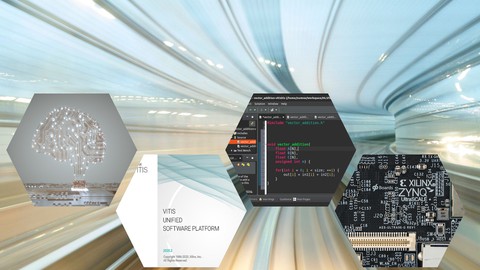
- Accelerating functions in the Xilinx Vitis unified software platform
- Using C/C++/OpenCL for accelerating compute-intensive algorithms on Zynq platforms
- Running the accelerated applications on software and hardware emulators
- Running the accelerated applications on actual FPGAs
- Working with Zybo-Z7-20 and Ultra96V2 Zynq-based FPGA platforms
- Implementing three exciting projects with Vitis
How it compares
Against the other 295 rated Udemy courses in Arduino on CourseDuck:
- Rating4.0 out of 5higher than 11% of them
- Reviews222#125 of 296 by number of reviews
- Length9.4 hourslonger than 74% of them
- Last updatedOctober 2021earlier than 69% of them
 Course Description
This course is an introduction to function acceleration in high-level synthesis (HLS). The goals of the course are describing, debugging and implementing compute-intensive algorithms on FPGA-based embedded systems using C/C++ language without any help from HDLs (e.g., VHDL or Verilog).
The course introduces the Xilinx Zynq embedded systems and then explains how to use Xilinx toolsets to map applications on them.
It uses the Xilinx Vitis unified software platform to describe real examples and applications for embedded systems. The course follows the software and hardware emulation schemes as well as running the applications on the actual FPGAs.
Each section of the course uses several examples, quizzes and exercises to explain complex designing concepts easily and smoothly.
Along the course, you will work with several examples describing the HLS concepts and techniques. The course contains numerous quizzes and exercises for you to practice and master the proposed methods and approaches. In addition, the course utilises two exciting projects to put all the explained concepts together to design real circuits and hardware controllers.
This course is the first of a series of courses on function acceleration on Zynq-based embedded systems. Whereas this course focuses on fundamental concepts, the other courses will explain different optimisation techniques in Vitis.

 Udemy Discount
The discount is applied through our link. Open the course from here and Udemy's current promotional price is applied at checkout on most courses, no code to type.
Some courses are excluded from Udemy's promotions. If the price does not drop, clear your browser cookies and use the button again.
Instructor Details

- 4.0 Rating
 222 Reviews
Mohammad Hosseinbady
Mohammad Hosseinabady received the PhD degree in computer engineering. He has been teaching electronics and computer courses in several universities for more than ten years. He is currently working on high-level synthesis for FPGA. His goal is to make advanced reconfigurable technologies more accessible for everyone who may not have in-depth knowledge of FPGAs and the traditional hardware design methodologies. His research interests include high-level reliability and testability, reconfigurable architectures, dynamic resource management, and runtime power management. He has published several papers on these topics in IEE, IEEE and ACM transactions, journals and conference proceedings.
 More Arduino courses

Learn to Build a Computer (PC) in 2026 - all types!
4.9 (245 Reviews)
 Provider: Udemy
 Time: 6.1h
$74.99
Raspberry Pi For Beginners - 2026 Complete Course
4.8 (3,105 Reviews)
- Provider: Udemy
- Time: 10.6h
$89.99
Ultimate Guide to Raspberry Pi : Tips, Tricks and Hacks (2023)
4.8 (2,363 Reviews)
- Provider: Udemy
- Time: 5.2h
$69.99
Mastering Microcontroller: STM32-LTDC, LCD-TFT, LVGL (MCU3) (2026)
4.8 (487 Reviews)
- Provider: Udemy
- Time: 8.1h
$79.99
Arduino Step by Step: Getting Started (2024)
4.7 (8,714 Reviews)
- Provider: Udemy
- Time: 21.4h
$159.99
 Reviews

By Mario Alvarez Rosas on 10/8/2025
Este curso es una basura, voy a la mitad y se la pasa repitiendo lo mismo una y otra vez.
By Lyle Webster on 7/14/2025
Not professionally done. Coverage of important topics is done without providing background and/or context. Also, the background/interleaving music played throughout the videos is very distracting and unprofessional.
By Sherry Cheng on 5/27/2024
A good introduction class for Xilinx Vitis acceleration flow. Will update the review after I finish the class.
By Khoa Mai on 1/19/2024
Very useful course. This is the first time, i know that can work with FPGA by C++. Before i believe that must use verilog, SV or VHDL only.
By Anonymized User on 6/28/2023
Very informative lecture, it covers each and every points including lab sessions. Very attracting presentation and all diagrams and figures are remembers because of the presentation. Easy explanation.
By Byoungseon Jeon on 2/19/2023
Good course material and detailed structure. Loved Section 11 & 13. Just wanted more explanation on Vitis SW suite itself - which component we may use or will be useful for debug/profiling. Also CLI description might be helpful for HPC folks who cannot use GUI.
By Robert C. Smith on 6/24/2022
I'm following along and feelin good! I feel confident all the startup bugs have been ironed out and it'll be smooth sailing from here out. I looked into some software profiling tools and hope we can use these at some point to break up a larger software build into host and kernel sections. It would be nice if, at the end of the course, I was able to create and/or utilize a linking-loader functionality from the target Linux shell.....
By Makoto uramoto on 4/3/2022
It is an excellent resource for understanding the concept of HLS and also provides a practical explanation of parallels by HW.
By Laurentiu Iacob on 12/19/2021
Very good course! Perhaps one of the very few available publicly at this time. Of course the Xilinx documentation is great but this tutorial makes the learning more enjoyable and the faster. It could be a better learning experience if the "intro" to each video would just state the intention and the generic music filling the demos will be varied or cut off altogether as it tends to be a little tedious at times. Again, overall a very good course that could be improved if the instructor would provide more platforms for other popular boards (already three at the moment). I had quite a journey until having a Pynq Z2 working properly (caveat, there are not enough resources for this board to work for the SpMV demo). I liked the progressive difficulty of the topics, culminating with the last section that makes the point of the hardware acceleration in Vitis: take a popular C/C++ library and implement a key part of its functionality and accelerate it on the FPGA fabric (Zynq PL). I can't wait for the next course in the series!
By Ardavan Elahi on 10/28/2021
The course is great for beginners with small knowledge about the concepts such as FPGAs and Vitis. But for others who look to learn more advanced concepts and corner cases of Vitis and HLS, maybe more advanced courses are appropriate.
 Quality Score
No CourseDuck member has rated this course yet. Taken it? Give each part a thumbs up or down.
Overall Score : 80 / 100
- Video Duration:
 9.4h
- Price: $84.99
- Provider: Udemy
- Updated:
 October 2021
- Level:
 Beginner
- Language:
 English
- Certificate:
 Yes
30-day money-back guarantee on most paid courses
Udemy Coupon Price Tracker
