
 JavaScript
 Web Development
 Python
 SQL
SQL Artificial Intelligence
 Machine Learning
 IT & Software
 AWS
AWS Hacking
 Arduino
 3D Modeling
 Photoshop
 Graphic Design
 UX Design
 Drawing
 Adobe After Effects
 Business
 Data Analysis
 Shopify
 Digital Marketing
 Social Media Marketing
 Marketing
 SEO
SEO Google Analytics
 Branding
 Excel
Excel Office Productivity
 Finance & Accounting
 Bitcoin
 Video Editing & Animation
 Photography
 Adobe Premier Pro
 Adobe Lightroom
 Personal Development
 Health & Fitness
 Music
Music Guitar
 Teaching & Academics
 Language Learning
 Engineering
 Lifestyle
Advanced Kalman Filtering and Sensor Fusion (Udemy.com)
Theory and C++ Simulation Implementation for Autonomous Vehicles and Self Driving Cars!
Created by: Steven Dumble
Last updated July 2021
 What you will learn
- How to use the Linear Kalman Filter to solve linear optimal estimation problems
- How to use the Extended Kalman Filter to solve non-linear estimation problems
- How to use the Unscented Kalman Filter to solve non-linear estimation problems
- How to fuse in measurements of multiple sensors all running at different update rates
- How to tune the Kalman Filter for best performance
- How to correctly initialize the Kalman Filter for robust operation
- How to model sensor errors inside the Kalman Filter
- How to use fault detection to remove bad sensor measurements
- How to implement the above 3 Kalman Filter Variants in C++
- How to implement the LKF in C++ for a 2d Tracking Problem
- How to implement the EKF and UKF in C++ for an autonomous self-driving car problem
 Quality Score
No CourseDuck member has rated this course yet. Taken it? Give each part a thumbs up or down.
Overall Score : 96 / 100
 Course Description
You need to learn know Sensor Fusion and Kalman Filtering! Learn how to use these concepts and implement them with a focus on autonomous vehicles in this course.
The Kalman filter is one of the greatest discoveries in the history of estimation and data fusion theory, and perhaps one of the greatest engineering discoveries in the twentieth century. It has enabled mankind to do and build many things which could not be possible otherwise. It has immediate application in control of complex dynamic systems such as cars, aircraft, ships and spacecraft.
These concepts are used extensively in engineering and manufacturing but they are also used in many other areas such as chemistry, biology, finance, economics, and so on.
Why focus on Sensor Fusion and Kalman Filtering
Data Fusion is an amazing tool that is used pretty much in every modern piece of technology that involves any kind of sensing, measurement or automation.
The Kalman Filter is one of the most widely used methods for data fusion. By understanding this process you will more easily understand more complicated methods.
Sensor fusion is one of the key uses of Kalman Filtering and is extensively used in unmanned vehicles and self-driving cars.
Evaluating and tuning the Kalman Filter for best performance can be a bit of a 'black art', we will give you tips and a structure so you know how to do this yourself.
So you don’t waste time trying to solve or debug problems that would be easily avoided with this knowledge! Become a Subject Matter Expert!
What you will learn:
You will learn the theory from ground up, so you can completely understand how it works and the implications things have on the end result. You will also learn practical implementation of the techniques, so you know how to put the theory into practice. In this course you will work with a C++ simulation that leads you through the implementation of various Kalman filtering methods for autonomous vehicles.
At the end of the course, the Capstone project is to implement the Unscented Kalman Filter and run it as it would be used in a real self-driving car or autonomous vehicle!
We will cover:
Basic Background Probability and Systems Theory
Linear Kalman Filtering
Extended Kalman Filtering
Unscented Kalman Filtering
Advanced Topics for Sensor Fusion, such as fault detection and sensor error modelling.
C++ Implementation in simulation for a self-driving car sensor fusion problem.
By the end of this course you will know:
How to use the Linear Kalman Filter to solve linear optimal estimation problems
How to use the Extended Kalman Filter to solve non-linear estimation problems
How to use the Unscented Kalman Filter to solve non-linear estimation problems
How to fuse in measurements of multiple sensors all running at different update rates
How to tune the Kalman Filter for best performance
How to correctly initialize the Kalman Filter for robust operation
How to model sensor errors inside the Kalman Filter
How to use fault detection to remove Bad Sensor measurements
How to implement the above 3 Kalman Filter Variants in C++
How to implement the LKF in C++ for a 2d Tracking Problem
How to implement the EKF and UKF in C++ for an autonomous self-driving car problem
What are the course requirements or prerequisites:
This course is part of the more advanced series and as such it does have a few prerequisites:
Basic Calculus: Functions, Derivatives, Integrals
Linear Algebra: Matrix and Vector Operations
Basic Probability
Basic C++ Programming Knowledge
Who is this course for:
University students or independent learners.
Aspiring robotic or self-driving car engineers or enthusiasts.
Working Engineers and Scientists.
Engineering professionals who want to brush up on the math theory and skills related to Kalman filtering and Sensor Fusion.
Software Developers who wish to understand the basic concepts behind data fusion to aid in implementation or support of developing data fusion code.
Anyone already proficient with the math “in theory” and want to learn how to implement the theory in code.
What you will get in this course:
>8 hours of video lectures that include explanations and walk thoughts, pictures, diagrams and animations.
PDF documents of cheat sheets with important notes and exercises
C++ simulation code for a self driving car example.
All the source code and friendly support in the Q&A area.
Why am I qualified to teach this course:
I have been employed for the last decade as a Guidance, Navigation and Control engineer for a number of aerospace and automation companies, focusing on sensor fusion for aircraft, missile and vehicle state estimation. I have taught this content to bachelor’s, master’s and PhD students while teaching at university and to engineering professionals.
So what are you waiting for??
Watch the course instruction video and free samples so that you can get an idea of what the course is like. If you think this course will help you then sign up, money back guarantee if this course is not right for you.
I hope to see you soon in the course!
Steve

 Udemy Discount
The discount is applied through our link. Open the course from here and Udemy's current promotional price is applied at checkout on most courses, no code to type.
Some courses are excluded from Udemy's promotions. If the price does not drop, clear your browser cookies and use the button again.
Instructor Details

- 4.8 Rating
 1,033 Reviews
Steven Dumble
I am GN&C (Guidance, Navigation and Control) aerospace engineer who has worked in academia, defense and commercial industries. This has allowed me to work in a wide range of cool areas and projects from lecturing university students to designing and implementing control and navigation systems for missiles all the way to self-driving tractors.
I have almost 15 years of experience in teaching, software development, engineering and research. I’ve taught undergraduate students all the way to PhD candidates, my research has lead to numerous scientific journal publications and patent inventions, my code runs on thousands of automated vehicles.
I don’t like how a lot of the available courses right now have very little advanced topics or content, they skip over the fundamentals and fail to teach the basic principles required for advanced learning, instead they teach cookie-cutter information which only works in one very specific situation or leave the heavily lifting to 3rd party libraries leaving the student confused if something doesn’t quite work… I will change that with my courses!
If you want to learn the knowledge and skills required to become a subject matter expert, so you can noticeably increase your value and capabilities as an employee, freelancer or business owner then hopefully I will see you soon in one of my courses (or more)!
 More Engineering courses
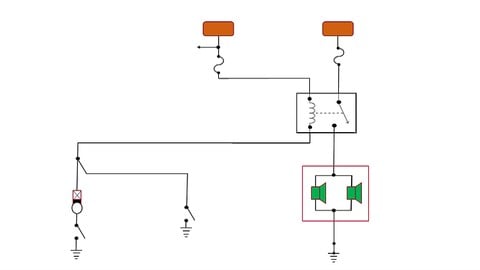
Do it Yourself - Automotive Electrical Diagnosis - Beginner (2026)
4.8 (1,893 Reviews)
 Provider: Udemy
 Time: 2.1h
$59.99

Digital Electronics: Robotics, learn by building module II (2020)
4.8 (942 Reviews)
- Provider: Udemy
- Time: 13.1h
$99.99
Ultimate Electrical Circuits for Electrical Engineering (2026)
4.8 (814 Reviews)
- Provider: Udemy
- Time: 36.5h
$99.99

Robotics & Mechatronics 3: Digital Twin Machines | Unity (2023)
4.8 (376 Reviews)
- Provider: Udemy
- Time: 9.3h
$84.99

Robotics for kids and beginners with Arduino (Ages 10+) (2021)
4.8 (131 Reviews)
- Provider: Udemy
- Time: 2.6h
$59.99
 Reviews

By Siddhesh Wani on 2/12/2025
The course content was well-structured, starting with the basics and gradually moving to more complex applications. The real-world automotive examples helped solidify my understanding of how Kalman filters are used in practice. The instructor's explanations were clear and engaging, making complex concepts easier to grasp. I highly recommend this course to anyone interested in automotive engineering and advanced filtering techniques.
By U1637 on 10/30/2024
It gives a good overview about the Kalman filters and it gives several implementation hints/recommendations. There are some not-explained simplifications during the derivation. It gives a brief overview about senor fusion. More examples shall be better for sensor fusion (e.g. show the tuning of the bias).
By Ibrahim Engin Taze on 8/15/2023
Excellent from beginning to the end. I also took the linear kalman filter course from the same instructor. That one was amazing as well. Only comment that I have is that, it would be great if we had the complete set of slides at the beginning of the course so we can follow the course more efficiently by using tablets/taking notes directly on the slides. I wrote down everything on the slides (which were so well organized and clear) by hand and it slowed me down a lot. However, it also showed me how much material is covered in this course which is huge. In total I have about 70 pages of notes now. On average, I took 45-60 pages of notes in grad level courses that goes on for 14 weeks. It is so impressive that an 8.5 hours course can cover so much material.
By Vinit Jhawar on 6/21/2023
The course is very detailed and covers its arena really well. The instructor is very engaging, ensures that the basic concepts are focused upon and explained well. Especially loved that the repetition of the same identities of the variables, this helped in memorising/learning them with ease.
By saideep kandula on 6/9/2023
This was exactly what I was looking for. All the details about Kalman filter are put in this course right from the basics. Projects gives an idea on how practically different types of filters can be used in different scenarios. This course is very beginner friendly and you will walk away with a lot of knowledge on Kalman filters after finishing it. By far the best online course on Kalman filters. Steve is an amazing instructor and responds to the questions immediately. Waiting for more content from him.
By SOUFIANE KREMCHT on 5/16/2023
As someone who has no experience in Sensor fusion & its applications, this course was just as i needed. The theory & the math behind the different Kalman filters were clearly explained by the instructor. The simulation environment & the materials were quite helpful for me to grasp the concept of sensor fusion . Excellent Course !!
By Carlos Lopez on 2/20/2023
Excellent Course!!!, This is one of the best online courses that I have taken by far. The course is well-designed and the explanations of Dr. Dumble are extraordinary. If you like to understand the details there are some equations that you will need to derive by yourself, however with the material provided in the course that will not be a complex task. In addition to the great theory of the course, Dr. Dumble provides you with the source code of a KF application in C++, where you can actually test what you have learned in theory. Finally, I just want to thank Dr. Steaven Dumble for the great effort to build such an excellent course.
By Ivan Chernukha on 11/1/2022
One of the best course I ever took online! Having bachelor degree in engineering, it was nice to have quick recap of basics and the explanations of the theory behind Kalman filter is so much clear. Most importantly, is the provided simulation package where I could master my skills in algorithm implementation and play around with tuning and different cases. God I wish other courses were run like this one!
By Abdelrahman Ahmad on 9/12/2022
Hello, I am a master's degree student in Aerospace engineering. First, I thank Dr.Stephen for this wonderful and intensive course. The course is just incredible, the only sad thing about it is that it ends, the course combines high mathematical explanation and simulation, it dives in deep into theory as if it is a scientific book. The simulation uses C++, which itself is a very advantage as this is how actually Kalman filter and sensor fusion algorithms are developed. The course also has some issues that need to be enhanced and those issues are not to prevent any students from depriving themselves of such a great reference, I write those for Dr.Stephen: - The pdf curves must have varying heights indicating their confidence score. - There are some typos on the slides and some video editing problems. Finally, I hope Dr.Stephen makes another course on data association.
By David E on 6/11/2022
Thanks for your good teaching, To learn Kalman Filter was an excellent course, but I expected the last chapter, which is very important in practical implementation, and perhaps its resources simply can't be found to be more detailed and with examples, but it's all left to the student!
- Video Duration:
 8.3h
8.3h - Price: $84.99 Track Price 11.99 Track Price
- Provider: Udemy
- Updated:
 July 2021
 - Level:
 Intermediate
 - Language:
 English
 - Certificate:
 Yes
Yes
30-day money-back guarantee on most paid courses
Udemy Coupon Price Tracker
