
 Web Development
 Data Science
 Python
 SQL
 JavaScript
 Artificial Intelligence
 IT & Software
 IT Certifications
 Hacking
 AWS
 Arduino
 DevOps
 3D Modeling
 Graphic Design
 Photoshop
 Drawing
 Digital Painting
 UX Design
 Business
 Data Analysis
 Communication Skills
 Project Management
 Leadership & Management
 Human Resources
 Digital Marketing
 Social Media Marketing
 Marketing
 SEO
 Google Analytics
 Branding
 Excel
 Office Productivity
 SAP
 PowerPoint
 Microsoft Access
 SharePoint
 Finance & Accounting
 Trading & Investing
 Accounting
 Bitcoin
 Personal Finance
 Video Editing & Animation
 Photography
 Adobe Premier Pro
 Adobe Lightroom
 Personal Development
 Productivity
 Career Development
 Life Coaching
 Health & Fitness
 Meditation & Mindfulness
 Yoga
 Music
 Music Production
 Guitar
 Piano
 Singing
 Language Learning
 Teaching & Academics
 Engineering
 Math
 Lifestyle
Digital Electronics: Robotics, learn by building module II (Udemy.com)
Over 14,000 enrolled! Open doors to careers and hobbies and have fun while learning digital electronics!
Created by: Ian Juby
Last updated January 2020
Our take
Based on the ratings of 942 students and a sample of their written reviews. No course pays to be reviewed.
This is the second module in Ian Juby's robotics series, picking up after the analog electronics course. It starts with binary, hexadecimal and ASCII, moves into digital circuits, then programs PIC and Arduino microcontrollers. It runs 13.1 hours and comes with a digital electronics kit of parts that can be bought or sourced separately. The label says All Levels, but the description expects basic electronics from module I, so it is not a cold start.
Reviewers like the teaching most. One says he explains very complex things simply, another mentions real life pictures and examples, and a programmer admitted the low level PIC register work felt boring at first but taught him a lot. The complaints are small. One student found the start slow and the flow a bit all over the place. Another wanted more on debugging, such as MPLAB X simulation and the PICkit 3, and a third hoped for more on how robot arms work. The rating is 4.8 across 942 reviews.
The course was last updated in 2020, though none of the reviews flag broken material. It is one step in a five module series, and one reviewer calls it basic but complete, with enough between modules I and II for a lot of projects. Take it if you want to understand what sits under a microcontroller. Skip it if you only want to copy Arduino sketches.
Pros
- Teaching is clear: reviewers say complex ideas are explained simply, with real life pictures and examples
- Starts from binary and hexadecimal, so the theory behind digital electronics gets covered, not skipped
- Programs both PIC and Arduino, and the hands-on kit lets you build the circuits yourself
- Rated 4.8 across 942 reviews, with a lot of five star praise for the instructor
Cons
- Debugging is thin: one reviewer says MPLAB X simulation and the PICkit 3 are never covered
- Slow start, and one reviewer found the flow a bit all over the place
- Last updated in 2020, and you need the module I skills and a parts kit to follow along
He explains very complex things simply so we all can understand.
Labeled All Levels, but it assumes basic electronics from module I and some simple math.
 What you will learn
- Design and construct digital electronic circuits, use microcontrollers to control real world items like robots you build!
- You will be able to program microcontrollers like the PIC and Arduino.
How it compares
Against the other 335 rated Udemy courses in Engineering on CourseDuck:
- Rating4.8 out of 5higher than 95% of them
- Reviews942#89 of 336 by number of reviews
- Length13.1 hourslonger than 81% of them
- Last updatedJanuary 2020earlier than 83% of them
 Course Description
Updated January 2023
Building on the knowledge you gained in the Analog Electronics module opens even more doors to diverse careers and hobbies. Think about how many industries / businesses / hobbies that involve computers or computer control. Even automobiles are chock full of digital electronics now. All of this involves digital electronics, and you want in on it today. In this module 2 course, you will build digital electronic circuits, use and program microcontrollers like the PIC and Arduino, and connect to the real world with them. You'll need a good understanding of basic electronics (i.e., you've completed the Robotics: Learn by building, module I), some basic math skills, a computer, and that's it!
With over 14,000 students enrolled and more than 500 five star ratings, students aged 8 to 60+ have enjoyed the course and its projects.
No prior knowledge of digital electronics or programming is required, and yet by the end of this course you'll have built functioning digital electronic circuits like a digital memory, and programmed microcontrollers which are basically a computer on a microchip. You will connect these to the real world for home automation and of course, controlling your robots. All courses have captions for the hearing impaired.
Course materials:
You will need the analog electronic parts and a breadboard, which you can purchase as an accompanying kit (i.e., the Analog Electronics Kit from module I) or provide your own.
You will also need the digital electronics kit which again you can purchase as an accompanying kit or provide your own parts. The first lesson is a walk-through of what is in the kit and acts as a parts list for this module.
This series of "Robotics: Learn by building" modules has an end-goal focus on the diverse field of robotics. In module I we learned the basics of electricity and electronics. In this module II you further develop your knowledge and skills to include digital electronics and practice your skills on real-life digital components.
This course is the prerequisite for the module III course where you'll learn robotic drive systems and physics, and gain a wide variety of skills in prototyping so you can actually build your own robots and manufacture your own parts. In module IV, you'll culminate all you've learned so far as you build a 3D printer from scratch, hook it up to a desktop computer and make your own plastic parts. The 3D printer is, in effect, a robot which you can then use to make parts for your other robot designs. In module V you can take your robot design and construction skills to the next level with a hands-on approach to autonomous robotic systems: learning about various sensors to know where you are and what your robot is doing, GPS navigation, basic artificial intelligence, powerful microchips known as FPGA's where you literally design a custom circuit on the chip, vision systems and more.
Lesson overview:
In this course we'll be covering:
What is digital?
Binary & Hexadecimal system and ASCII
Analog to digital and digital to analog conversion
Logic gates and you'll make your own RAM
Digital Addressing/demultiplexing
Microprocessors & microcontrollers - what are they?
Programming & using PIC microcontrollers to:
-display information on an LCD display
-Read both digital and analog inputs
-PWM control a DC motor and servo motor
-Read keypad matrixes
-control LED displays
-writing to flash memory on board for remote systems
What is Arduino?
-using Arduino for all of the PIC projects above, as well as using full-colour TFT touch screens
Building our mobile robot
Giving our mobile robot a "brain"
Ultrasonics and ultrasonic radar / external sensing
Programmable IR remote
and more!

 Udemy Discount
The discount is applied through our link. Open the course from here and Udemy's current promotional price is applied at checkout on most courses, no code to type.
Some courses are excluded from Udemy's promotions. If the price does not drop, clear your browser cookies and use the button again.
Instructor Details

- 4.8 Rating
 942 Reviews
Ian Juby
I've been an instructor in science and technology for 30 years. I got my start teaching at a science camp when I was 16. I also taught technology at the high school level for 10 years. I am a graduate of robotics engineering from Canadore College, North Bay, Ontario, and conducted research and development for multiple innovations over the years, including work with an Eastern Ontario company producing cool suits and hot suits for harsh environments. Our suits were used on board the space shuttle while it was in operation.
My interests have gone far beyond robotics, having written multiple scientific papers, published in peer reviewed journals and a book, wrote a book on video production, and am currently a railroader, working for Canadian National Railroad in Ontario. My passion is still for teaching and this can be seen even in railroading where I produced a video series on how to read Canadian railroad signals which is now being used in conductor courses to instruct the students on how to read the signals. I traveled on the road for ten years with a traveling museum I collected and constructed, speaking on the creation/evolution debate and have produced and hosted a television show on the topic for five years now.
 More courses by Ian Juby

Electricity & electronics - Robotics, learn by building (2023)
4.7 (6,050 Reviews)
 Provider: Udemy
 Time: 10.8h
$19.99
More Engineering courses
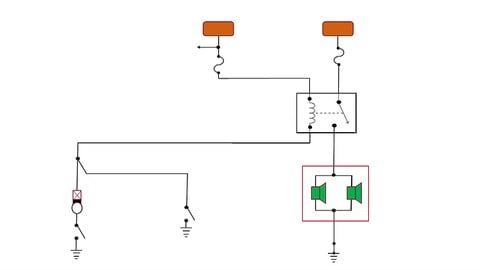
Do it Yourself - Automotive Electrical Diagnosis - Beginner (2026)
4.8 (1,897 Reviews)
- Provider: Udemy
- Time: 2.1h
$12.99
ROS 2 for Beginners Level 2 - TF | URDF | RViz | Gazebo (2025)
4.8 (1,869 Reviews)
- Provider: Udemy
- Time: 13.8h
$10.99
Advanced Kalman Filtering and Sensor Fusion (2021)
4.8 (1,033 Reviews)
- Provider: Udemy
- Time: 8.3h
$84.99

An Introduction to Profibus DP Networking (2026)
4.8 (735 Reviews)
- Provider: Udemy
- Time: 2.9h
$13.99
 Reviews

By Chris Dryhurst on 10/11/2025
I took mechatronics back in college and loved the course but was FAR too stressed out at the time to appreciate and explore the skillset. These courses brought me right back to my love of mechatronics and then some. Ian is fun and engaging, loves tossing in a good joke, and has a wealth of knowledge. You can really tell he is passionate about sharing with others. 10/10 would recommend starting your 'moving from classroom theory to real world application' robotics adventure with Ian.
By Tom Ragan on 3/13/2022
I learned a lot in this course. It was difficult to follow some of the programming as I was trying to understand the why's and how's of what we were doing. A lot of the time Ian just gave us the code and didn't explain the different commands in either of the languages we were using. In fact it was necessary for me to go to outside sources to get a better understanding of the reasons things worked the way they did. I did, however, enjoy the course and plan to work on making modifications to my robot and trying different sensors to make my robot more awesome than ever. I'm looking forward to your next course which I have already purchased. I hope you are able to complete those other courses you have talked about and I can continue to learn about robotics.
By Brett Hansen on 3/25/2021
It’s a great coarse to really understand how to program Arduino and motors. Step by step teaching. I found it important to watch the whole coarse first then go back to see what you missed. Great teacher, and he is very clear.
By Patrick Simmons on 11/14/2020
I find the presentation clear, well articulated, informative, and engaging
By Joshy T R on 11/7/2020
It's an interesting course for an emerging hardware programmer.
By Peter Antony Xavier on 10/26/2020
the 1st course was very good, i believe that this 2nd would be better
By Ahmed Mohammed Zahir Al-Nabhani on 10/16/2020
Very useful course for beginners and intermediate levels with excellent level of demonstration and step by step guide. Examples in this course can clarify how really are real world robots work and give you an idea of how to build a simple robotic project with customized setting. The instructor is very experienced person and knows exactly the hierarchy of information needed to build your knowledge in achieving the purpose of this course.
By David Penny on 10/8/2020
The topics in this course are broken down into easy to understand bits and I appreciate that.
By Jashnoor Singh Toor on 9/23/2020
It was a perfect match!
absolute!
By Ian Tomlin on 9/17/2020
Loved module one and loving this module so far. Well explained and interesting
By Norbert Csords on 8/27/2020
Jolly good.
By Samruddhi Keni on 8/21/2020
Its an amazing course. It is above expected.
 Quality Score
No CourseDuck member has rated this course yet. Taken it? Give each part a thumbs up or down.
Overall Score : 96 / 100

- Video Duration:
 13.1h
- Price: $14.99
- Provider: Udemy
- Updated:
 January 2020
- Level:
 All Levels
- Language:
 English
- Certificate:
 Yes
30-day money-back guarantee on most paid courses
Udemy Coupon Price Tracker
