
 Web Development
 Data Science
 Python
 SQL
SQL JavaScript
 Artificial Intelligence
 IT & Software
 IT Certifications
 Hacking
 AWS
AWS Arduino
 DevOps
 3D Modeling
 Graphic Design
 Photoshop
 Drawing
 Digital Painting
 UX Design
 Business
 Data Analysis
 Communication Skills
 Project Management
 Leadership & Management
 Human Resources
 Digital Marketing
 Social Media Marketing
 Marketing
 SEO
SEO Google Analytics
 Branding
 Excel
Excel Office Productivity
 SAP
SAP PowerPoint
 Microsoft Access
 SharePoint
 Finance & Accounting
 Trading & Investing
 Accounting
 Bitcoin
 Personal Finance
 Video Editing & Animation
 Photography
 Adobe Premier Pro
 Adobe Lightroom
 Personal Development
 Productivity
 Career Development
 Life Coaching
 Health & Fitness
 Meditation & Mindfulness
 Yoga
Yoga Music
Music Music Production
 Guitar
 Piano
Piano Singing
 Language Learning
 Teaching & Academics
 Engineering
 Math
Math Lifestyle
Introduction to Device Programming for IoT: C Edition
Want to become a part of the growing IoT developer community? This course teaches you how to write C-language software that controls input and output from sensors and electrical components connected to Raspberry Pi and Arduino-compatible embedded devices.
Created by: Matt Dixon
 Quality Score
Overall Score : 0 / 100
 Course Description
Begin with an intro to embedded programming, exploring embedded device types and the inputs and outputs for devices and sensors. Then work your way through a series of hands-on lab projects that teach you how to develop the hardware/software interface, help you to understand C programming for embedded devices, and explore basic data management for a resource-constrained device. From there, dive into embedded solutions that use your own circuit designs to solve real-world problems.
After completing this course, students will be able to develop embedded device systems that capture and process data from analog and digital sensors commonly found in IoT solutions.
NOTE: The lab project work in this course is based on the hardware found in the Microsoft IoT Pack for Raspberry Pi and the MXChip IoT DevKit.You may want to purchase in advance of starting the course.
This course is completely lab-based. There are no lectures or required reading sections. All of the learning content that you will need is embedded directly into the labs, right where and when you need it. Introductions to tools and technologies, references to additional content, video demonstrations, and code explanations are all built into the labs.
Some assessment questions will be presented during the labs. These questions will help you to prepare for the final assessment.
The course includes four modules, each of which contains two or more lab activities. The lab outline is provided below.
Module 1: Introduction to Embedded Device Programming
Lab 1: Preparing Your Development Environment
Lab 2 Developing Your First Embedded Device Application
Module 2: Data and Device Inputs
Lab 1: Building a Binary Counter
Lab 2: Getting Started with the MXChip Device
Module 3: Circuit Components and Sensor Hardware
Lab 1: Building Simple Circuits
Lab 2: Using Sensors
Lab 3: Building a Temperature Gauge
Module 4: Real-World Solutions
Lab 1: Building a Photo Cell Device
Lab 2: Comparing Digital and Analog Inputs

 Instructor Details

Matt is owner and founder of Front Range Systems, a software consulting company focusing on custom software solutions for its clients. Matt has over 16 years of professional development experience, and loves solving complex problems with simple solutions. He has helped organizations through mentorship and training and specializes in professional and enterprise solutions with various technologies including HTML5, AngularJS, ASP.Net, WPF and C#.
 More courses by Matt Dixon


More Arduino courses

Learn to Build a Computer (PC) in 2026 - all types!
4.9 (245 Reviews)
 Provider: Udemy
 Time: 6.1h
$74.99
Raspberry Pi For Beginners - 2026 Complete Course
4.8 (3,105 Reviews)
- Provider: Udemy
- Time: 10.6h
$89.99
Ultimate Guide to Raspberry Pi : Tips, Tricks and Hacks (2023)
4.8 (2,363 Reviews)
- Provider: Udemy
- Time: 5.2h
$69.99
Mastering Microcontroller: STM32-LTDC, LCD-TFT, LVGL (MCU3) (2026)
4.8 (487 Reviews)
- Provider: Udemy
- Time: 8.1h
$79.99
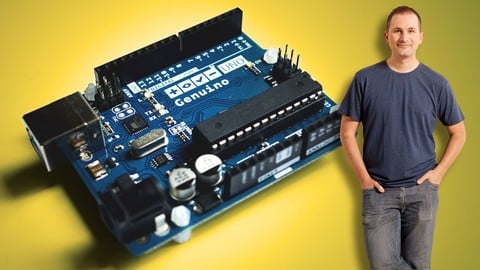
Arduino Step by Step: Getting Started (2024)
4.7 (8,714 Reviews)
- Provider: Udemy
- Time: 21.4h
$159.99
 Reviews
No reviews yet. Be the first to review this course!
Showing all 0 reviews
Could not load more reviews.
This course is no longer listed on edX. The courses below cover the same ground.
Browse Arduino coursesStill open: top Arduino courses


- Video Duration:
 4 Weeks - 2-3 hours per week
 - Provider: edX
- University:
 Institution
Microsoft
Institution
Microsoft - Level:
 Beginner
 - Language:
 English
 - Certificate:
 Yes
Yes
edX Coupon Price Tracker
