
 Web Development
 Data Science
 Python
 SQL
 JavaScript
 Artificial Intelligence
 IT & Software
 IT Certifications
 Hacking
 AWS
 Arduino
 DevOps
 3D Modeling
 Graphic Design
 Photoshop
 Drawing
 Digital Painting
 UX Design
 Business
 Data Analysis
 Communication Skills
 Project Management
 Leadership & Management
 Human Resources
 Digital Marketing
 Social Media Marketing
 Marketing
 SEO
 Google Analytics
 Branding
 Excel
 Office Productivity
 SAP
 PowerPoint
 Microsoft Access
 SharePoint
 Finance & Accounting
 Trading & Investing
 Accounting
 Bitcoin
 Personal Finance
 Video Editing & Animation
 Photography
 Adobe Premier Pro
 Adobe Lightroom
 Personal Development
 Productivity
 Career Development
 Life Coaching
 Health & Fitness
 Meditation & Mindfulness
 Yoga
 Music
 Music Production
 Guitar
 Piano
 Singing
 Language Learning
 Teaching & Academics
 Engineering
 Math
 Lifestyle
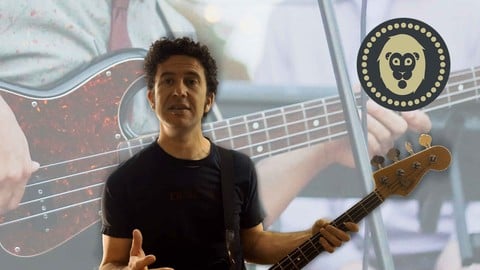
Learn to Improvise Jazz Bass - The Music Theory of Arpeggios (Udemy.com)
An intermediate video survival guide and workshop that demystifies jazz bass by unlocking harmonic arpeggio music theory
Created by: Music Chef
Last updated July 2019
 What you will learn
- Improvise better bass lines on day 1
- Discover how simple arpeggios can create dynamic jazz bass lines
- Gain confidence playing bass and improvising (in any style)
- Improve rhythm, groove and contour with targeted lessons
How it compares
Against the other 183 rated Udemy courses in Guitar on CourseDuck:
- Rating4.2 out of 5higher than 3% of them
- Reviews74#137 of 184 by number of reviews
- Length1 hourshorter than 92% of them
- Last updatedJuly 2019earlier than 65% of them
 Course Description
Jazz bass can be a fun to play. But, it can also seem overwhelming for many players. This video survival guide is short and sweet - focusing on music theory concepts like arpeggios, numerals, intervals and rhythm. Motivated jazz bassists will be encouraged to practice arpeggios against jam tracks, playing better improvisations on day 1. If you can already improvise a bass line over any set of changes, this course will be too basic for you. But, for everyone else, you'll be glad you invested your time to learn the material in this concise video workshop.
5-Stars - "This is an excellent course that helped expand my understanding and use of arpeggios." -Walt (Udemy Student)
Without the confidence to improvise a bold (and fun) bass line, jazz bass can become an ordeal. This course demonstrates an effective way to overcome common challenges by mastering arpeggios. You'll learn to use arpeggios and music theory to write (or improvise) bass parts that flow well and are fun to play. This workshop-style course is optimized to be short and sweet. Intermediate players may already know many of the concepts, but many non-experts will gain powerful new insights.
Improvise better bass lines on day 1.
Jazz bass is a lifelong pursuit for many players. It is impossible to imagine ever "knowing it all" when it comes to jazz. When I was a student (in both private and academic environments), nobody every suggested that I could transform my bass playing over the next 24 hours. But, looking back, I wish someone had helped me understand how and why the arpeggio could have helped me do EXACTLY that. Every time I've made a giant leap in my jazz bass playing, it was related to a deeper understanding of harmony (a.k.a. arpeggios). I've shared my insights with private students and bandmates for over a decade and now I'm explaining the whole process through these video lessons.
Each brief video lecture either focuses on a specific music theory concept (arpeggios, inversions, intervals, etc.) or highlights how they can be used in the real world. I'm assuming that you are going to take these principles and run with them. We'll focus on the essential skills that will give you the confidence you need to play jazz and improvise bass parts on stage and in rehearsal. I'll make clear recommendations for what you should practice and I've prepared bass tab and jam tracks to make your journey more immediate and enjoyable.
You'll learn to perform these valuable skills, essential to improvising good jazz bass lines:
Using numerals to identify chord progressions
Matching numerals to arpeggio qualities
Major, minor, dominant, augmented, half-diminished and diminished arpeggios
This course is a powerful primer for the right student - jazz bassists who already have a grasp of music theory fundamentals, but in need of practical strategy. Students should already understand the following music theory concepts:
Triads
Scales
Major, Minor and Dominant Chords
Proper Fretting Technique
Demystify jazz bass improvisation with arpeggios... I did.
As a bassist, you want to establish a reliable groove and keep listeners (and bandmates) engaged. In a word, you create the foundation, right? You'll get dynamic, adaptable tips for creating that foundation confidently in the real world... on stage. Plus, this approach unlocks any jazz standard or chord progression. Many jazz standards contain familiar harmonic patterns. There are patterns everywhere in music and mastering different arpeggios (major, dominant, diminished, etc.) on your bass is one of the most efficient and elegant ways to command your band and provide that foundation.
Think of it! Confidence, certainty AND spontaneity. Learn from my experience as a gigging musician. Your bandmates will notice (and appreciate) when your bass parts support them more effectively. I've cultivated this curriculum in the world's greatest jazz laboratory - thousands of live gigs that I've played. Don't delay your musical potential - if you're struggling with improvising jazz bass lines, this course will give you a significant boost!
This course represents the most useful lessons that I've learned. Plus, you'll benefit from my concise instruction - without wasting any time getting to the good stuff. You'll leverage your existing skills even further, while feeling more liberated (and creative)!
Contents and Overview
First, you'll get a series of "refresher" lessons that will cover the essential music theory concepts we'll be talking about. Very basic, but fundamental - the introduction section reviews common, but important music theory concepts. Next, you'll begin learning every common arpeggio that (Western) music theory has to offer:
Major
Minor
Dominant
Augmented
Half-Diminished (m7b5)
Diminished (Fully)
Section 2 concludes with practice recommendations integrated with a downloadable audio jam track. Plus, you'll get a quiz to help you evaluate whether or not you're ready to move on to the next section. These particular arpeggio lessons are crucial to developing a better way of thinking about chords and notes in terms of numbers and intervals. If you're struggling with "reading" changes in realtime, this approach (using arpeggio music theory) will thoroughly alter your perception of how a bass line can function under even the most complex jazz chord changes. You'll unlock your creative potential and begin feeling much, much more confident right away.
Using the downloadable jam tracks - a 12 bar blues - gives you the perfect sandbox for practicing and improving your use of arpeggios. From Louis Armstrong to Charlie Parker (and even the flamboyant harmonic progressions of Coltrane and Wayne Shorter) the 12 bar blues has always been the preferred jazz "sandbox". The more you "play" the more you'll learn.
Moving along, you'll discover (or rediscover) how inversions can open up a whole new world in your bass playing. Arpeggio inversions take practice, but you'll have a head start with easy-to-read bass tabs to get you started. You'll learn about "pedaling" and using inversions. This topic is extremely valuable for playing walking bass lines and I'll give you tips on how to "walk" confidently by using simple inverted arpeggios. These lessons also culminate in a hands on demo, practice recommendations and another quiz.

 Udemy Discount
The discount is applied through our link. Open the course from here and Udemy's current promotional price is applied at checkout on most courses, no code to type.
Some courses are excluded from Udemy's promotions. If the price does not drop, clear your browser cookies and use the button again.
Instructor Details
- 4.2 Rating
 74 Reviews
Music Chef
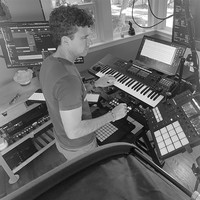
I'm a dynamic and creative composer with a passion for music and production technology. I have honed my skills as a production engineer, gigging artist, and academically trained film composer at Berklee College of Music. I delight in crafting powerful and immersive audio experiences for video games and media. Dedicated and curious, I possess over 20 years of experience in music composition, computer programming, sound design, and production techniques including sound design.
I am also a full-time professional musician who has broad teaching experience with guitar, bass, production and music theory. I perform live on bass, guitar and keyboards. In addition, I perform live electronic music improvisation with Maschine. I've devoted over 26 years to my own well-rounded musical education, focusing on a mastery of all aspects of modern music - from music theory to ear training; from live performance to composition and practice routines.
I specialize in bridging the gap between music and technology, focusing on using modern tools to demonstrate all aspects of music. I compose and perform with Ableton and Push 2, Maschine, Cubase, ProTools and Logic. I'm extremely comfortable using web-based tools and mobile devices in education, performance and composition. I have created custom MIDI and OSC interfaces for live performance.
 More courses by Music Chef

Music Theory Basics for Ableton Electronic Music Production (2017)
4.4 (102 Reviews)
 Provider: Udemy
 Time: 2.9h
$89.99
Ableton Wavetable Synthesizer Video Survival Guide Part 1+2 (2018)
4.3 (43 Reviews)
- Provider: Udemy
- Time: 3.3h
$54.99
More Guitar courses

Ultimate Beginner Electric Guitar Masterclass (2022)
4.9 (2,813 Reviews)
- Provider: Udemy
- Time: 12.3h
$119.99

Classical Guitar Essentials - The Basics Part 2 (2022)
4.9 (555 Reviews)
- Provider: Udemy
- Time: 4.3h
$79.99


Classical Guitar Essentials - Intermediate Part 2 (2022)
4.9 (177 Reviews)
- Provider: Udemy
- Time: 4h
$74.99

 Reviews

By Kay Königsmann on 5/8/2026
Teilweise schlechte Übersetzung des Gesprochenen. Für nicht-englische Muttersprachler nur bedingt geeignet. Ich würde den Kurs nicht noch einmal kaufen.
By Paul McDonald on 2/10/2024
As I know quite a bit of what is being taught here, I can follow the lessons, but at the same time I appreciate the tutor is introducing some terms an ideas that needed explanation for players at a different stage of development. For example, ‘enharmonic’ is suddenly thrown in at the tenth lesson, and considering the purpose of this course, this would have benefitted from explanation for viewers unfamiliar with the term.
By Fergus O’Keefe on 1/21/2024
Lucid clear explanations and playing examples of ideas that are hard to understand from reading about them.
By Gary “G-ROB” Robinson on 10/16/2023
Really appreciate the explanation of the tonic and the key but the numbers I will definitely study hard. Nobody has explained them like this! Onto section 2!
By NG Ka Lun on 6/25/2022
Great stuffs and well-explained. It could be better if the hand shapes and movements are not sometimes blocked by the banner in front. It would also be nice if there are some more demonstrations for illustration purpose and tab exercises when talking about grooves and bassline contour. Great course on the whole. Thank you.
By Caroline Mobilette on 5/10/2020
Great course, straight to the point, no bla bla, good content and bonus : nice to watch ( soft voice well recorded, soft black screen behind). Well done :)
By Hector Alvarado on 2/29/2020
Esta bastante basico...bueno sin duda, pero bien basico y mucho hablar.
By Wallace Nelson on 2/10/2020
The course is really good but the problem is the titles to what you are doing is blocking your fingers on some of the courses. I would love to give it 5 Stars but I can't see when you are moving to the Bass. I'm going to keep watching in hopes that it gets better. Besides that great Video. Here a thought maybe put that on the top right so it would be out of the way of your fingers.
By Miro Masar on 8/24/2018
Very useful course for advanced player on bass. Understanding lessons about chords progression, arpeggios, bass contour etc.
By Walt Panko on 6/8/2018
This is an excellent course that helped expand my understanding and use of arpeggios. One of the most important parts of the course is the explanation of using numbers instead of note names.
 Quality Score
No CourseDuck member has rated this course yet. Taken it? Give each part a thumbs up or down.
Overall Score : 84 / 100
- Video Duration:
 1h
- Price: $44.99
- Provider: Udemy
- Updated:
 July 2019
- Level:
 Intermediate
- Language:
 English
- Certificate:
 Yes
30-day money-back guarantee on most paid courses
Udemy Coupon Price Tracker
