
 Web Development
 Python
 SQL
SQL JavaScript
 Data Science
 Artificial Intelligence
 IT & Software
 IT Certifications
 Hacking
 Arduino
 AWS
AWS 3D Modeling
 Graphic Design
 Photoshop
 Drawing
 Digital Painting
 UX Design
 Business
 Data Analysis
 Communication Skills
 Project Management
 Leadership & Management
 E-Commerce
 Digital Marketing
 Social Media Marketing
 Marketing
 SEO
SEO Google Analytics
 Branding
 Office Productivity
 Excel
Excel Finance & Accounting
 Bitcoin
 Video Editing & Animation
 Photography
 Adobe Premier Pro
 Adobe Lightroom
 Personal Development
 Health & Fitness
 Music
Music Guitar
 Teaching & Academics
 Language Learning
 Engineering
 Lifestyle
Mastering Microcontroller: Timers, PWM, CAN, Low Power(MCU2) (Udemy.com)
Learn STM32 Timers, CAN, RTC, PWM, Low Power embedded systems and program them using STM32 Device HAL APIs step by step.
Created by: FastBit Embedded Brain Academy
Last updated August 2026
 What you will learn
- You will learn from scratch about STM32 Timers : Basic and General Purpose Timers
- Understand General purpose timer's Input capture apnd Output compare unit handling and Exercises
- Handling of Timer interrupts : Time base interrupts, capture interrupts, compare interrupts
- Understand about CAN filtering
- You will learn from scratch CAN Protocol, CAN Signalling, CAN Transceivers , Bus Access procedures
- Learn about CAN interrupts
- CAN Peripheral programming using STM32 device HAL drivers
- You will master Low power modes of the MCU : SLEEP,STOP and STANDBY
- You will understand different power domains of the MCU : VDD domain, 1.2V domain, backup domain
- Understand Microcontroller Wakeup Procedures using : RTC, wakeup pins,EXTI,etc.
- You will master RTC Features : CALENDAR, ALARM , TIME STAMP,WAKEUP UNIT
- RTC interrupts and wake up procedures
 Course Description
Update: English closed captions have been added, transcript available
Course code: MCU2
>>Welcome to the course which teaches you advanced Micro-controller programming. In this course you are going to learn and master Timers , PWM, CAN, RTC, Low Power modes of STM32F4x Micro-controller with step by step guidance. Highly recommended if you are seeking a career in the domain of Embedded software. <<
In this course, you will understand behind the scene working of peripherals with supportive code exercises. I have included various real-time exercises which help you to master every peripheral covered in this course and this course thoroughly covers both theory and practical aspects of Timers, PWM, CAN, RTC, Low Power modes of STM32F4x Micro-controller.
In Timer Section the course covers,
1. Simple time-based generation using the basic timer in both polling and interrupt mode
2. Timer interrupts and IRQ numbers, ISR implementation, callbacks, etc
3. General-purpose timer
4. Working with Input Capture channels of General-purpose timer
5. Interrupts, IRQs, ISRs, callbacks related to Input Capture engine of the general purpose timer
6. Working with output capture channels of the General purpose timer
7. Interrupts, IRQs, ISRs, callbacks related to Output Capture engine of the general purpose timer
8. PWM generation using output capture modes
9. PWM Exercises
10. Step by Step code development process will help you to master the TIMER peripheral
In CAN Section the course covers,
1. Introduction to the CAN protocol
2. CAN frame formats
3. Understanding a CAN node
4. CAN signaling (single-ended signals vs differential signals ) \
5. CAN Bus recessive state and dominant state
6. CAN Bit timing Calculation \
7. CAN network with Transceivers
8. Exploring inside view of CAN transceivers
9. CAN Self-test modes such as LOOPBACK, SILENT LOOPBACK, etc with code exercises.
10. Exploring STM32 bXCAN peripheral
11. self-testing of bxCAN peripheral with exercises
12. bXCAN block diagram
13. Tx/Rx path of the bxCAN Peripheral
14. CAN frame filtering and executrices
15. CAN in Normal Mode
16. Communicating between 2 boards over CAN
17. Code exercises
In the Power Controller Section the course covers,
1. ARM Cortex Mx Low Power Modes Normals Vs DeepSleep
2. STM32 SLEEP mode
3. STOP mode
4. STANDBY mode
5. Current measurement with different submode
6. Waking up MCU by using wakeup pins, EXTI, RTC, etc
7. Backup SRAM
8. Step by Step coverage with lots of code exercises.
In RTC Section the course covers,
1. RTC functional block diagram
2. RTC clock management
3. RTC calendar unit
4. RTC Alarm unit
5. RTC wake-up unit
6. RTC Time Stamp Unit
7. waking up MCU using RTC events
8. RTC interrupts
9. and lots of other details with step by step code exercises.
STM32 Device HAL framework
1. STM32 Device Hal framework details
2. APIs details
3. Interrupt handling
4. Callback implementation
5. Peripheral Handling and configurations
6. Step by Step explanation with code exercises.
==> Important note: This course is NOT about auto-generating code using STM32CubeMx software<==
Hardware used :
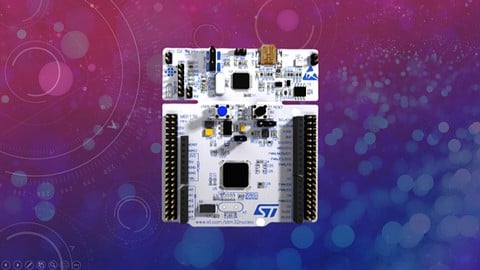
STM32F446RE-NUCLEO Board
CAN Transceivers for CAN Exercises
IDE :
Eclipse-based OpenSTM32 SystemWorkbench or STM32CubeIDE
Learning order of FastBit Embedded Brain Academy Courses,
If you are a beginner in the field of embedded systems, then you can take our courses in the below-mentioned order.
This is just a recommendation from the instructor for beginners.
1) Microcontroller Embedded C Programming: absolute beginners(Embedded C)
2) Embedded Systems Programming on ARM Cortex-M3/M4 Processor(ARM Cortex M4 Processor specific)
3) Mastering Microcontroller with Embedded Driver Development(MCU1)
4) Mastering Microcontroller: TIMERS, PWM, CAN, RTC,LOW POWER(MCU2)
5) Mastering Microcontroller: STM32-LTDC, LCD-TFT, LVGL(MCU3)
6) Embedded System Design using UML State Machines(State machine)
7) Mastering RTOS: Hands-on FreeRTOS and STM32Fx with Debugging(RTOS)
8) ARM Cortex M Microcontroller DMA Programming Demystified(DMA)
9) STM32Fx Microcontroller Custom Bootloader Development(Bootloader)
10) Embedded Linux Step by Step using Beaglebone Black(Linux)
11) Linux device driver programming using Beaglebone Black(LDD1)
Other programming courses
1) Master The Rust Programming Language : Beginner To Advanced

 Udemy Discount
The discount is applied through our link. Open the course from here and Udemy's current promotional price is applied at checkout on most courses, no code to type.
Some courses are excluded from Udemy's promotions. If the price does not drop, clear your browser cookies and use the button again.
Instructor Details

- 4.5 Rating
 4,289 Reviews
FastBit Embedded Brain Academy
Best selling microcontroller programming and RTOS course creators having over 65,000+ active students and dedicated co-instructor team to help you in your embedded programming journey.
We have published courses on embedded C, microcontroller programming, RTOS programming, embedded Linux, and Linux device driver development.
If you are starting your career in the domain of embedded programming or if you want to learn how to program the microcontroller and its peripherals coding from scratch, then you are at the right place.
Enroll in the courses created by us, and we hope you will not be disappointed.
What we do?
We leverage the power of the internet to bring online courses at your fingertip in the domain of embedded systems and programming, microcontrollers, real-time operating systems, firmware development, embedded Linux, and device drivers. Thanks to Udemy.
Our primary goal is to teach embedded systems enjoyably with examples and lots of animations, which help our students excel in this field.
We have carefully crafted all these online courses to help students access industry-standard professional training with a very low price tag, thus saving your time, effort, and money.
Try our courses, and we are sure that the courses will make you feel you made the right choice.
 More courses by FastBit Embedded Brain Academy

Microcontroller Embedded C Programming: Absolute Beginners (2026)
4.5 (17,139 Reviews)
 Provider: Udemy
 Time: 16.6h
$15.99
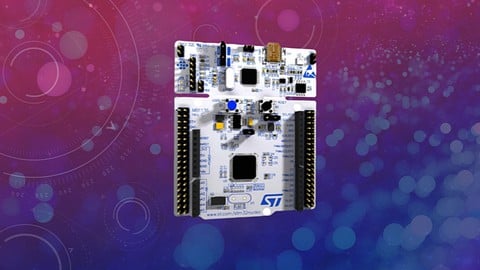
Mastering Microcontroller and Embedded Driver Development (2026)
4.5 (13,500 Reviews)
- Provider: Udemy
- Time: 28.6h
$14.99

Embedded Systems Programming on ARM Cortex-M3/M4 Processor (2026)
4.5 (7,332 Reviews)
- Provider: Udemy
- Time: 15.2h
$14.99

Embedded Linux Step by Step Using Beaglebone Black (2026)
4.7 (3,888 Reviews)
- Provider: Udemy
- Time: 15.8h
$11.99
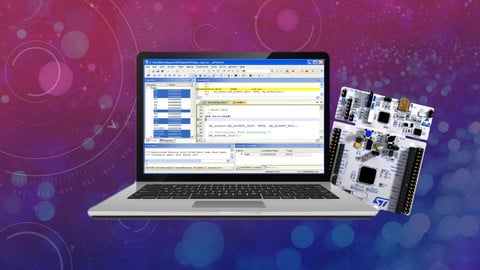
ARM Cortex M Microcontroller DMA Programming Demystified (2026)
4.7 (1,582 Reviews)
- Provider: Udemy
- Time: 9.8h
$99.99
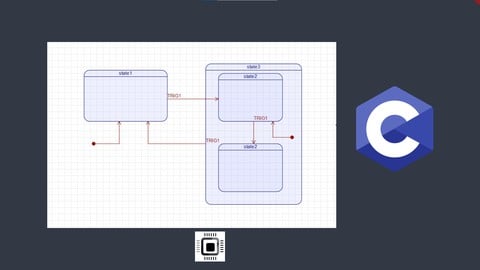
Embedded System Design using UML State Machines (2026)
4.5 (848 Reviews)
- Provider: Udemy
- Time: 12.2h
$79.99
More Arduino courses

Learn to Build a Computer (PC) in 2026 - all types!
4.9 (245 Reviews)
- Provider: Udemy
- Time: 6.1h
$74.99
Raspberry Pi For Beginners - 2026 Complete Course
4.8 (3,105 Reviews)
- Provider: Udemy
- Time: 10.6h
$89.99
Ultimate Guide to Raspberry Pi : Tips, Tricks and Hacks (2023)
4.8 (2,363 Reviews)
- Provider: Udemy
- Time: 5.2h
$69.99
Mastering Microcontroller: STM32-LTDC, LCD-TFT, LVGL (MCU3) (2026)
4.8 (487 Reviews)
- Provider: Udemy
- Time: 8.1h
$79.99
Arduino Step by Step: Getting Started (2024)
4.7 (8,714 Reviews)
- Provider: Udemy
- Time: 21.4h
$159.99
 Reviews

By Edmund Carvalho on 9/25/2025
provides basic introduction to all the mentioned topics like clocks, timers, CAN, low power, and some bonus content on mpu 6050 and RTOS. Implementing these concepts in professional code may require more knowledge and and experience sometimes felt like the course is slow and sometimes its rushed , i have difficulty remembering what all ive learned because the videos are soo long sometimes, need to take notes else you will have to watch the course multiple times
By Davide Leoni on 2/9/2025
I can absolutely recommend this course for those who have basic C skills and want to get a solid foundation knowledge about embedded programming (in particular for STM32 MCUs). The information is conveyed in such a way that the content is very easily understandable and very interesting to learn. Theory, hands-on development and testing are indeed very well balanced and the most important aspects of microcontrollers programming are covered. The provided slides are very useful too, with essential info and claryfing diagrams, as well as the code examples.
By S B on 10/31/2024
The software was confusing to handle at first, especially as it seems many of the steps weren't needed. Near the end of this course, there is very little context given to why and what is being used and the overall scope of the code is not explained well. There is basically no point in watching the last two sections, as they are almost useless with how little context is given.
By Zahid Faheem Habib on 2/10/2024
I had also taken other courses from this channel and they were all absolutely amazing. Although this time I'm not receiving answers to the questions I ask as I did in the previous courses, but still, the quality of the content is so good that I can't give it any lower than 5. Thank you for these great courses.
By Niharika Dabikar on 1/21/2023
It was a great experience to learn this course, each and every lecturer is very informative and I am glad that I found this lecture series which tells each and every detail for getting started for embedded programming in STMIDE, I also wanted such a course wherein I get to learn about each and every function is used and also when to interrupt and using which interrupts API we need to handle it, and everything was given in this course Thank you Sir for this wonderful course and heads-up for your patience in telling very minute details also
By Aditya Kumar on 3/28/2022
I got truble in installing the stm32cubemx software but ok asked question on forum and installed the latest version.
By Anderson Brito dos Santos on 12/31/2021
Another excellent course from FastbBit. MCU2 has a methodoly a little bit different from MCU1, since it uses the hal library instead of writing the drivers - I believe writing application code can be easier than writing drivers, so I think it might make more sense for many to take MCU2 before MCU1. I didn't give 5 stars because I feel it didn't have the same quality as the MCU1. I think there could be more application examples and also the quizzes are missing, as they reinforce learning - but still an excellent course. I definitely recommend it.
By Samuel Chinnakatti on 8/28/2020
I want learn about hardware part of the micro controller as an electrical and electronic engineer for my future job and for all needs . I have finished the MCU1 that is excellent . But the code is not perfectly working . with this course i believe i can know what all about finally I can do it . I am so much thankfull to you Kira sir . I learnt many this from your lectures and the code you taught. I am so much thankfull to you. Jesus is the saviour I believe . Jesus will help you. = samuel pele
By Balachander S K on 2/29/2020
The instructor kiran throws light on various advanced mcu peripherals which brings absolute clarity with plenty of rooms for applying our own minds and creating new project concepts out of it(I actually made a rpm from the timer input capture mode and generated pwm for varying rpms). One more advanced course explained in a hands on manner to experiment and see for ourselves. The instructor commitment and care for creating a wonderful course is evident from the effort and clarity given for each topic covered in this course.
By Jaak Jensen on 2/4/2020
Incredible intermediate course in Embedded Systems. Kiran is a fantastic teacher whose methods work for many different types of learning styles. I have purchased all the courses by Fast Bit and they have had a profound impact on my work as a developing electrical/embedded engineer. The current courses available cover almost everything you need to know to carry out advanced embedded systems work. Thank you Kiran!
 Quality Score
No CourseDuck member has rated this course yet. Taken it? Give each part a thumbs up or down.
Overall Score : 90 / 100
- Video Duration:
 29h
29h - Price: $79.99
- Provider: Udemy
- Updated:
 August 2026
 - Level:
 All Levels
 - Language:
 English
 - Certificate:
 Yes
Yes
30-day money-back guarantee on most paid courses
Udemy Coupon Price Tracker
