
 Web Development
 Data Science
 Python
 SQL
 JavaScript
 Artificial Intelligence
 IT & Software
 IT Certifications
 Hacking
 AWS
 Arduino
 DevOps
 3D Modeling
 Graphic Design
 Photoshop
 Drawing
 Digital Painting
 UX Design
 Business
 Data Analysis
 Communication Skills
 Project Management
 Leadership & Management
 Human Resources
 Digital Marketing
 Social Media Marketing
 Marketing
 SEO
 Google Analytics
 Branding
 Excel
 Office Productivity
 SAP
 PowerPoint
 Microsoft Access
 SharePoint
 Finance & Accounting
 Trading & Investing
 Accounting
 Bitcoin
 Personal Finance
 Video Editing & Animation
 Photography
 Adobe Premier Pro
 Adobe Lightroom
 Personal Development
 Productivity
 Career Development
 Life Coaching
 Health & Fitness
 Meditation & Mindfulness
 Yoga
 Music
 Music Production
 Guitar
 Piano
 Singing
 Language Learning
 Teaching & Academics
 Engineering
 Math
 Lifestyle
Perspective: Photography tools that make your pictures POP (Udemy.com)
Learn 200 years of artistic innovation in less than two hours. Transform flat pictures into 3D photos with Perspective.
Created by: Adam Marelli
Last updated April 2016
 What you will learn
- Say goodby to flat, lifeless photos and learn to make 3D pictures that POP!
- Learn the 5 types of Perspective that every professional photographer should know.
- Learn to create depth in every picture without leading lines or horizons, so you have the confidence to make great pictures anywhere in the world.
- Learn techniques that took over 200 years to evolve in less than 2 hours.
- Learn the mistakes most people make without knowing it.
- You don't need gimmicks like HDR or expensive gear to make award winning pictures.
- You will find these techniques in EVERY award winning photograph, on the cover of EVERY major magazine, and in EVERY museum around the world. These techniques work no matter what camera you use or what you take a picture of.
How it compares
Against the other 275 rated Udemy courses in Photography on CourseDuck:
- Rating4.2 out of 5higher than 12% of them
- Reviews896#62 of 276 by number of reviews
- Length1.1 hoursshorter than 86% of them
- Last updatedApril 2016earlier than 90% of them
 Course Description
Perspective…is one of the greatest inventions in the History of Art and most photographers are only ever taught the Cliff’s Notes to Perspective, leading lines.
What did Perspective do and why would you want to learn about it?
Perspective allowed flat, 2D pictures to transform into life-like, 3D images that revolutionized how we see. It is how we went from cave paintings to Michelangelo’s Sistine Chapel.
Renaissance artists invented the tools of Perspective so they could make flat walls feel like they were windows to another world. They brought the ceilings of cathedrals, the walls of palaces, and the most famous paintings of all time to life using Perspective.
- But how does Perspective work?
- Where does Perspective come from?
- How can photographers use it?
Up until now the best lessons of Perspective were reserved for exclusive art educations. But I will take these lessons out of their Ivory Towers and bring them to photographers around the world and share these tools for a fraction of the price that I paid for me university degree.
My Goal is Simple:
- I pull out the most essential ideas that took hundreds of years to evolve and put them into an 1.5 hour program designed specifically for you.
It took over 200 years for artists to develop a system of perspective. But you can learn everything you need to know in less than 2 hours, with this course.
What can you do with Perspective?
- Maximize depth of field and bokeh.
- Create depth without leading lines.
- Use geometry of streets, architecture and nature to support your vision.
- Combine Perspective techniques so your pictures will jump off of the print, screen, book, or whatever final format you choose.
It doesn’t matter if you photograph people, landscapes, still lives, weddings, travel, street or somewhere in between. These lessons can be applied to any type of photography and will make anything you do better.
What is a picture like without Perspective, flat, lifeless, and boring…and who wants pictures like that?!

 Udemy Discount
The discount is applied through our link. Open the course from here and Udemy's current promotional price is applied at checkout on most courses, no code to type.
Some courses are excluded from Udemy's promotions. If the price does not drop, clear your browser cookies and use the button again.
Instructor Details

- 4.2 Rating
 896 Reviews
Adam Marelli
In 2010, artist & photographer Adam Marelli opened the doors of his studio to train photographers in the lost lessons of classical art. After the success of his “One on One Mentoring Program” he was invited to give an experimental lecture at B&H Photo Event Space in New York City. The first lecture “Bridging the Gap” (170,000+ views) connected the worlds of art and photography for the first time, in a language designed for photographers. Following the success of his first lecture, he was invited for a second lecture “How to talk to Strangers” (over 180,000+ views) which was highest reviewed lecture in B&H Photo history.
When Marelli is not in the studio, he runs projects and workshops internationally under the “Adam Marelli Workshops” program. With a calendar of sold out workshops, he wanted to make his teachings available online to a larger audience because he knows that everyone can become a better photographer. Now all you have to do is join his lectures to see why he believes that Success is not Accidental.
 More courses by Adam Marelli

The Art of Seeing Photography training for the Artist in you (2016)
4.4 (1,325 Reviews)
 Provider: Udemy
 Time: 48 mins
$13.99

The Art of Finding Light: Photography for the artist in you (2016)
4.4 (895 Reviews)
- Provider: Udemy
- Time: 1.4h
$39.99
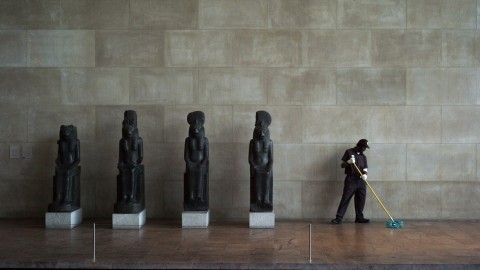
The Art of Figure to Ground: Photography's untaught secret (2016)
4.4 (713 Reviews)
- Provider: Udemy
- Time: 1h
$34.99
More Photography courses
Masterclass In Photography PART 4: Composition And Light (2024)
4.9 (181 Reviews)
- Provider: Udemy
- Time: 2.8h
$24.99
Masterclass In Photography PART 3: Creative Lens & Colour (2024)
4.9 (132 Reviews)
- Provider: Udemy
- Time: 2.1h
$24.99
Portrait Photography: Classic & Modern Photo Style (2024)
4.9 (125 Reviews)
- Provider: Udemy
- Time: 2.5h
$19.99

Film using ANY Camera! Basics of Shooting Video Correctly (2019)
4.8 (2,632 Reviews)
- Provider: Udemy
- Time: 3.2h
$19.99

Drone Photography | Shoot Professional Photos With Any Drone (2019)
4.8 (2,569 Reviews)
- Provider: Udemy
- Time: 2.1h
$12.99
 Reviews

By John Vansant on 4/19/2023
The quality of the instruction is outstanding, however, there are things that are left hanging. Like something is missing. Still very worth taking.
By Lorna Heacock on 6/4/2022
I really appreciate this class! I am going to re-watch it because I'm struggling a bit. I would appreciate more examples, perhaps with arrows pointing to the specific area you are refering to, especially in the very last segment. Thank you!
By Cindy Chase on 1/23/2021
I've taken the four short courses that make up this series, and I'm very glad I did. It doesn't matter what type of camera you use. The principles taught are fundamental to making great pictures, and Adam makes them easy to understand. He starts with basics in "The Art of Seeing," then shows us how to use contrast in "The Art of Figure to Ground." Then he explains how to find and use light effectively in "The Art of Finding Light." Finally, he shows us different types of perspectives in "Perspective: Photography Tools that Make Your Pictures POP."
By Vincent King on 12/8/2020
Great lectures. Clear and informative. Video feed was marred by several occassions when it froze and when I recovered it, the lecture had skipped several seconds past the point where it got stuck. In one case, it took me some time to figure out the parts that were lost.
By Shazia Haris on 11/9/2020
To an extent this was a good course but not what i had expected it to be. thanks Adam for the brief introduction to the types of perspective one can capture.
By Richard Dinkins on 4/24/2020
Would be better with a higher ratio of examples to verbal description.
By Angel Silva on 7/15/2019
Yes, it does give you an idea of different perspectives to see objects in focus. It helped me identify which perspectives I've been great with and additionally, the others I'm missing and what lacking experience with today. In further detail, I wasn't an art student. So taking this course, for me, helped me have a better understanding on different artistic perspectives; how previous artist used these perspectives before the invention of the camera; and how we could use those perspectives with a camera to create appealing photographs.
By Phillip Ziegler on 5/5/2017
Again even as a photographer and teacher of photography I found valuable learning here. Looking over my photos I found it hard to find any examples of multiple perspective. Leading lines to my subject yes. Some single point perspective of course. But seeing two and three point perspective opens up new possibilities. Again I would like to see more examples of what Adam is talking about. One of each isn't enough
By GaryC on 4/13/2016
This course by Adam Marelli on creating perspective in photography is great. I learned more about creating perspective in photography in the 90 minutes I spent in this course than I did from countless hours I spent reading photography books. Really. The course focusses on learning time-proven principles of creating perspective in art. These principles were discovered and developed by master artists long ago yet most photographers (and photography book authors) don't seem to know them. What this course does not focus on is gear. I appreciate this approach because the photographer can apply the principles learned to create better photos regardless of the gear they have. Adam's explanations of the principles are straightforward, they are easy to understand, and they make sense. (I am enrolled in Adam's other 3 course and they also take this refreshing no-meaningless-artsy-fluff-here approach.) Adam discusses each principle in turn and then demonstrates how it applies to photography using appropriate example photos and explanations of each. I do think the course could use a few additional example photos. More examples with varying subject matter would help the photographer more easily learn the principles and how to apply each in different scenarios. Overall, this is a great course. I recommend it to photographers who feel that their photos are flat and lifeless. If you learn the principles that Adam teaches in this course and then apply those principles to your photos I am sure you will take better photos.
By Floyd Wellershaus on 4/13/2016
This is the first review after section 2 or 3 ( I forget ). I appreciate the art history learning points, balanced by the modern photography that supports the points. It helps drive things home, when I start to realize that perspective is something that artists, and photographers have to develop within the two dimensional frame, and to see how it is done and has been done. However, at this point I am not quite understanding on a visceral level, all of the lines of perspective that you are illustrating. For example, in Poussin's Holy Family of the Stairs, I only can see the center single vanishing point of perspective. The red lines that go across the picture don't make sense to me. Another example is in Lecture 3 of Sect. 1 , at 11:17. The buildings at a corner perspective. I am not seeing the lines you are trying to illustrate on the left side. I actually do see a different linear vanishing point that goes from the front of the picture back towards the star shaped light. But not the horizontal one you illustrated. One thing of interest to me, that I noted, but don't understand why, is in Raphael's School of Athens. In it, I can see the center linear perspective that has a vanishing point. The lines are created by the buiding. But it seems that the two people conversing towards the middle of the scene, should be correspondingly smaller than the line of people in the front, to support it. In the lantern also, I can see the single point of vertical perspective, but not the horizontal ones you are illustrating. So, at this point, I seem to easily understand single point linear perspective, but not really seeing the horizontal lines. Thank you, floyd This is the part at the end of the course. Overall an excellent course for me. Your teaching/talking style is easy and straight forward. If anything, you may assume sometimes that I know more than I do. Right. What level do you assume the average viewer is at. I may be at a lower level. :-) I have taken all the courses you offer to date, and I find that I need to go back and review the other ones. My memory isn't that great. I would like to see a new course maybe, that actually combines all of the courses together. For that course, not so much art history and teaching about the theories. We've already done that. But rather, just putting them together in lots of scenes, lots of pictures. Sure, I know, I should be doing that myself with practice, and I am. But I still would like to see it done by you in a course that I can get some takeaways from. Here are just some notes I jotted down during the second half of the course to add to the review. Atmospheric perspective. Very cool ! It helps to know the bit about scenes blending together to create atmosphere. I feel that will be a useable point. I am also very glad to learn about the small room, single small window way of creating atmosphere. I have heard it many times before, even from you, but not in this context ( atmospheric perspective ). It seems to hit home. Can't wait to try it. I usually avoid these types of dark situations. I think I'm afraid of missing the exposure, or having a noisy picture due to using too much ISO. I will attempt to practice exposing in these situations more. What's very cool is that I made the above comment like a minute before you expressed that some photographers are afraid of the dark shots etc... It shows that you are in touch with my reality as far as photography goes. Kudos ! Planar perspective" Good to know that foreground, middlegroud,backround etc.. is all a function of Planar perspective. I feel sure that will help bring some stuff together for me in the future. I think I will be able to make great use of this lecture. The idea of planes that need to be more discreet and separate from each other, yet overlapping, ( I have heard this called layers ) to create depth ! The idea of using people , or really any subjects at different distances to create planar depth or perspective is very useful. Again I will reiterate. I always enjoy your courses, and look forward to whatever you have to share or teach. Thanks for another great one Adam. Best Regards, Floyd
 Quality Score
No CourseDuck member has rated this course yet. Taken it? Give each part a thumbs up or down.
Overall Score : 84 / 100

- Video Duration:
 1.1h
- Price: $34.99
- Provider: Udemy
- Updated:
 April 2016
- Level:
 All Levels
- Language:
 English
- Certificate:
 Yes
30-day money-back guarantee on most paid courses
Udemy Coupon Price Tracker
