
 Web Development
 Data Science
 Python
 SQL
 JavaScript
 Artificial Intelligence
 IT & Software
 IT Certifications
 Hacking
 AWS
 Arduino
 DevOps
 3D Modeling
 Graphic Design
 Photoshop
 Drawing
 Digital Painting
 UX Design
 Business
 Data Analysis
 Communication Skills
 Project Management
 Leadership & Management
 Human Resources
 Digital Marketing
 Social Media Marketing
 Marketing
 SEO
 Google Analytics
 Branding
 Excel
 Office Productivity
 SAP
 PowerPoint
 Microsoft Access
 SharePoint
 Finance & Accounting
 Trading & Investing
 Accounting
 Bitcoin
 Personal Finance
 Video Editing & Animation
 Photography
 Adobe Premier Pro
 Adobe Lightroom
 Personal Development
 Productivity
 Career Development
 Life Coaching
 Health & Fitness
 Meditation & Mindfulness
 Yoga
 Music
 Music Production
 Guitar
 Piano
 Singing
 Language Learning
 Teaching & Academics
 Engineering
 Math
 Lifestyle
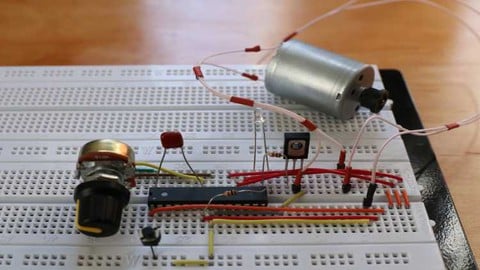
AVR microcontrollers: C language, electronic devices. (Udemy.com)
AVR microcontrollers: I/O, ADC, PWM, etc.. Programming microcontroller C language, practical work. Atmega, XMEGA series.
Created by: Oleksandr Aleshchenko
Last updated December 2022
 What you will learn
- Microcontrollers AVR: I/O pins, PWM, ADC, EEPROM, timers, etc.
- Microcontroller structure and Programming Introduction
- C Programming Basics, C language for AVR.
- Business projects using AVR microcontroller
- LEDs and Pushbuttons
- LCD Screens and Seven Segment Displays
- Motor and Keypad.
- Analog to Digital Conversion
- Timers and Counters
- Wireless devices controlled by AVR
How it compares
Against the other 335 rated Udemy courses in Engineering on CourseDuck:
- Rating4.1 out of 5higher than 13% of them
- Reviews69#308 of 336 by number of reviews
- Length9.5 hourslonger than 72% of them
- Last updatedDecember 2022earlier than 63% of them
 Course Description
Attention! All earned funds will go to support the Ukrainian army in the fight against Russian invaders.
This course is for beginner and advanced electronics engineers who want to gain and increase experience in developing embedded systems on AVR microcontrollers. I think that AVR ATMEL microcontrollers are the most advanced 8-bit microcontrollers. All ARDUINO projects are built by using these microcontrollers. After completing the course, the student will receive the necessary knowledge about I/O ports, ADC, PWM, EEPROM, timers, interrupts. Much attention in this course will be paid to interfaces with external devices - sensors, wireless devices, real time clocks, external EEPROM, etc.. We will take a look the UART (USART) serial interface, SPI interface, TWI (two wire interface), the connection by 1-wire bus. The course will consider connections to the microcontroller of various devices - display devices (LED, 7-segment LED displays, LCD), matrix keyboards and so on. Students will get the experience of programming AVR microcontroller on C language. This course includes business projects also. Finished codes sources of this projects I will send students in private messages. The course shows complete programs and videos of working devices. Work projects will be included in this course also. This training course is constantly expanding. Feedback with students. Individual lessons and project support.
I kindly ask you to carefully read the curriculum and description of the course and do not make purchases with the aim of further refund. The course contains enough material in the public domain for you to appreciate the presentation style. Sorry, my english isn't nice))

 Udemy Discount
The discount is applied through our link. Open the course from here and Udemy's current promotional price is applied at checkout on most courses, no code to type.
Some courses are excluded from Udemy's promotions. If the price does not drop, clear your browser cookies and use the button again.
Instructor Details

- 4.1 Rating
 69 Reviews
Oleksandr Aleshchenko
I was born in 1960. In 1982 I graduated from the University of Radio Electronics in Kharkov, Ukraine. Electronics is my hobby and profession. In 1995 I started to study microcontrollers. At the same time, I began to develop various electronic devices for medicine, mainly for dentistry. First of all, these are physiodispensers for implantology, dental lasers and endomotors. The equipment works in many countries of the world. Physiodispensers and endomotors are currently manufactured in India.
 More Engineering courses
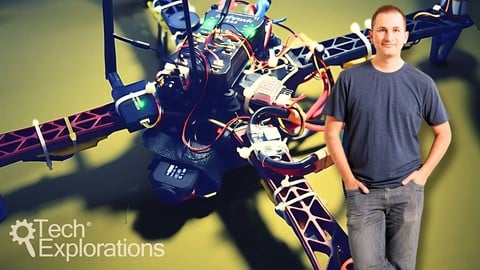
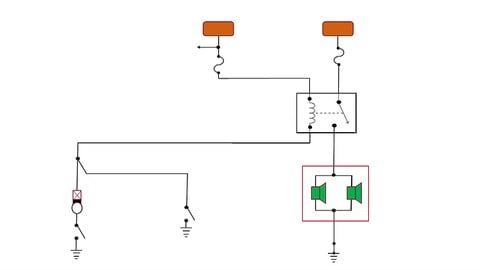
Do it Yourself - Automotive Electrical Diagnosis - Beginner (2026)
4.8 (1,897 Reviews)
 Provider: Udemy
 Time: 2.1h
$12.99
ROS 2 for Beginners Level 2 - TF | URDF | RViz | Gazebo (2025)
4.8 (1,869 Reviews)
- Provider: Udemy
- Time: 13.8h
$10.99
Advanced Kalman Filtering and Sensor Fusion (2021)
4.8 (1,033 Reviews)
- Provider: Udemy
- Time: 8.3h
$84.99

Digital Electronics: Robotics, learn by building module II (2020)
4.8 (942 Reviews)
- Provider: Udemy
- Time: 13.1h
$14.99

 Reviews

By Eva Kica on 12/3/2022
seems interesting)
By KJ Dhami on 8/5/2022
Instructor talks very slowly and monotone
By Nouridini Degbembia on 4/30/2021
Der Schaltungsaufbau ist nicht gut erklärt. Schade !
By James Sweet on 11/10/2020
This course covers most of the basic concepts needed to build develop practical hobby projects using C on AVR microcontrollers. It is not fancy but it gets the job done, starting to create some working projects without spending too much time on theory and abstract concepts. You will do best if you already have some basic electronics knowledge and know how to read schematics.
By Sivasubramanian.n on 10/23/2020
Good code examples and the circuit reference, all essential device connections are explained
By Sai Deep on 9/6/2020
very slow kind of teaching
By Sagar Nayakanti on 8/30/2023
 Quality Score
No CourseDuck member has rated this course yet. Taken it? Give each part a thumbs up or down.
Overall Score : 82 / 100
- Video Duration:
 9.5h
- Price: $49.99
- Provider: Udemy
- Updated:
 December 2022
- Level:
 Intermediate
- Language:
 English
- Certificate:
 Yes
30-day money-back guarantee on most paid courses
Udemy Coupon Price Tracker
