
 Web Development
 Data Science
 Python
 SQL
 JavaScript
 Artificial Intelligence
 IT & Software
 IT Certifications
 Hacking
 AWS
 Arduino
 DevOps
 3D Modeling
 Graphic Design
 Photoshop
 Drawing
 Digital Painting
 UX Design
 Business
 Data Analysis
 Communication Skills
 Project Management
 Leadership & Management
 Human Resources
 Digital Marketing
 Social Media Marketing
 Marketing
 SEO
 Google Analytics
 Branding
 Excel
 Office Productivity
 SAP
 PowerPoint
 Microsoft Access
 SharePoint
 Finance & Accounting
 Trading & Investing
 Accounting
 Bitcoin
 Personal Finance
 Video Editing & Animation
 Photography
 Adobe Premier Pro
 Adobe Lightroom
 Personal Development
 Productivity
 Career Development
 Life Coaching
 Health & Fitness
 Meditation & Mindfulness
 Yoga
 Music
 Music Production
 Guitar
 Piano
 Singing
 Language Learning
 Teaching & Academics
 Engineering
 Math
 Lifestyle
Awesome Electronics Course. Electronics from Soup to Nuts (Udemy.com)
Everything you need to know about Electronic Basics. The first Step into Understanding Electronics & There Components.
Created by: albert spinosa
Last updated August 2026
 What you will learn
- This is a complete basic course in Electronics. Students will learn about Current flow and how Electronic Circuits Work
How it compares
Against the other 335 rated Udemy courses in Engineering on CourseDuck:
- Rating4.5 out of 5higher than 55% of them
- Reviews447#165 of 336 by number of reviews
- Length36.5 hourslonger than 97% of them
- Last updatedAugust 2026more recently than 92% of them
 Course Description
This course starts off with a Brief History of Electronics. It then introduces the first time student to Current Flow, Voltage and Resistance. The course also offers an introduction of Ohm's Law with several examples explained and the student are presented with Problems that they can solve, with the answers that follow.
The next section covers the Basics In AC and DC Voltage. AC and DC Current and Current Direction. Defines the term quantity Ampere also Covers Basic characteristics of Resistance and Explains the Color Code System and the Tolerance System for Fixed Resistors and other Passive Components that provide Resistance in an Electronic Circuit. This is first step for someone who is entering the field of electronics.
The Math section will cover many different Math Topics Related to the Decimal Numbering System. Al explains the mechanics involved in Addition, Subtraction, Multiplication and Division with both positive and negative numbers' Al explains fractions and decimal fractions along with Algebra basics. Section ends with an introduction to Trigonometry. All Concepts are backup with Problems so student can reinforce the material that was just explained.
The Next Section (Circuit Analysis) takes the Student thru Calculating Voltage, Current and Resistance on a Series, Parallel and Series Parallel Circuits! Al gives the student a step by step instruction on how to solve these circuit properties. After finishing this course the student should have a very good understanding of Voltage drops, Current Division and Power consumption in a Electronic Circuit.
Advance Circuit Analysis Covers Kirchhoff's Circuit Laws and Network Theorems , Super Position, Thevenin Theorem and Norton Conversions. Al Gives a detailed explanation on each of these Circuit Analysis Techniques. This course is Broken into two Sections. Section one is Kirchhoff's Circuit Laws and Section two, network theorems and how they are used to analysis a circuit. Each section is accompanied with problems that the student can perform to reinforce their learning experience.
Capacitance Basic Section, Al Explains what is a Coulomb, and how to determine the charge on a capacitor. How Capacitance reacts in a AC Circuit (Capacitance Reactance) and DC Circuits. What is an RC Time Constant’s? How waveforms are calculated in a RC Circuit. How capacitors add in series and Parallel Circuits.
Inductance Basic Section, Al Explains the principle of Inductance and Inductive Reactance. The Circuit Examples will show how Current and Voltage are affected in a Pure Inductive Circuit and how these properties change as Resistance is added to the mix, in addition to this frequency of the Ac source voltage will be discussed and will show how the phase angle between the Voltage and current will be affected.
Al Explains how Capacitive Reactance (XC) and Inductive Reactance(XL) and Resistance (R) behaves in Alternating Voltage Circuits. Series R L C Circuits & Parallel R L C Circuits are Explained. AL Explains how to find total Impedance ( Z) of the circuit and how the phase angle are calculated with both Current and Voltage. The student should have a understanding of ohms law and basic math skills to take full advantage of this.
The next section Resonance & Resonance Effect. Al Explains a Series Resonant circuit, calculation of the resonant frequency. The characteristics of XC and XL at Resonance. What is tuning. Al Explains the Resonance Frequency Equation for the correct solution . Al also Explains Calculations of Current in a Series Resonant Circuit. Voltage across Resonant Components.
RLC Section, Al Explains R C Low Pass & R L Low filters for Cut off frequency (fc) & phase Angle. Al Explains R C High pass & R L High pass filters for Cut off frequency (fc) & Phase Angle.
Semiconductor Basics Section. Al explains semiconductor Basics, Valance Electrons in Conductors. The difference between semiconductors & conductors. Describes the doping process in, semiconductor material. What is N & P type Material ? Majority & Minority Carries Explained .Diode Curves and Characteristics, of forward and reverse Current flow, by using the Characteristic Diode Curve. Physical Diode Packaging Explained. Electron flow thru Diodes Explained. Schematic Symbol of Diode, Cathode and Anode placement explained. Placement of Physical Diode Explained. How to test a diode, with an ohm meter. A simple diode application Explained. Half Wave rectification, how to calculate peak voltage and the Average DC voltage of a half wave rectification circuit. Basic capacitor filter action is also explained. Full wave rectification, full wave bridge rectification explained and the introduction of the transformers. The Average DC Value of a full wave Rectifier explained. Introduction the two types of junction transistors PNP and NPN . Details reverse and forward bias on the junction transistor(s). Introduction of the three elements of the transistor. Al Explains the Schematic Symbols of the transistor (NPN & PNP). Physical packaging of the transistors shown and explained. How to test a transistor with an ohm meter. Introduction alpha and Beta properties of the transistors along with Ie = Ib + Ic. Explanation of alpha and Beta properties of the transistors along with Ie = Ib + Ic. Introduces Load -line (s)with a common emitter circuit . Explanation of both DC and AC transistor parameter’s using the load line. How to find RL using the load line. Phase shift in a common emitter transistor. Explanation of the common Collector Circuit ( also called the emitter follower) Circuit action. Common Base configuration circuit action explained. Summary of the three transistor Configurations, Common Emitter, Common Collector and Common Base.

 Udemy Discount
The discount is applied through our link. Open the course from here and Udemy's current promotional price is applied at checkout on most courses, no code to type.
Some courses are excluded from Udemy's promotions. If the price does not drop, clear your browser cookies and use the button again.
Instructor Details

- 4.5 Rating
 447 Reviews
albert spinosa
Albert Spinosa has been in the Electronics /Computer Industry Since the Early Eighties. I have been a Electronics Instructor for over 15 years and have instructed well over 15 Years. I have a very good method for instructing students in the Vocation of Electronics.
Albert Spinosa also worked in the Electronic Field usually in the R&D Product Development Division. Al has worked on one of the first Video Games in the Eighties, and Robotic Systems at GCA Corporations along with SX 70 Camera electronic evaluations at Polaroid Corporation.
 More Engineering courses

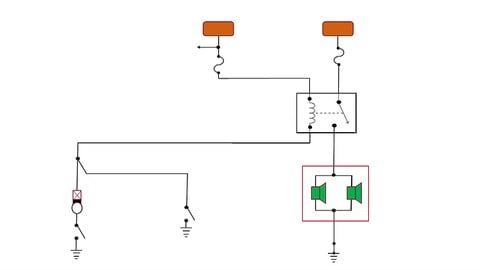
Do it Yourself - Automotive Electrical Diagnosis - Beginner (2026)
4.8 (1,897 Reviews)
 Provider: Udemy
 Time: 2.1h
$12.99
ROS 2 for Beginners Level 2 - TF | URDF | RViz | Gazebo (2025)
4.8 (1,869 Reviews)
- Provider: Udemy
- Time: 13.8h
$10.99

Advanced Kalman Filtering and Sensor Fusion (2021)
4.8 (1,033 Reviews)
- Provider: Udemy
- Time: 8.3h
$84.99

Digital Electronics: Robotics, learn by building module II (2020)
4.8 (942 Reviews)
- Provider: Udemy
- Time: 13.1h
$14.99

 Reviews

By Alayna Sarah on 3/9/2024
Albert Spinosa's "Electronics from Soup to Nuts" course is outstanding! With a perfect blend of clarity and depth, Spinosa navigates through electronics concepts seamlessly, making it accessible for learners of all levels.
By Kelly G. Veiga on 2/28/2024
Instant enlightenment! The instructor's passion for electronics shines through in every lecture, making the learning experience enjoyable and enlightening. It's like attending a captivating seminar on the wonders of electronics.
By Robert Mallory on 2/8/2024
Interested in renewing my electronics knowledge, originally was taught electronics in 1974-5 (US Army) at Ft. Devens, Ayers, MA. Now retired and wanting to keep the brain active. Also have a 'rescue' dog, 7yr old Bella, a Boston Terrier-Lab mix, sometimes called a Boston Lab.
By Maxim Skopin on 11/26/2022
Thank you, Albert, for explanation of Thevenin and Norton methods. And colors of resistors, it's very useful in my work. Other themes in this course I am know.
By Charles Hall on 10/23/2022
This course is actually a combination of several courses, ranging all the way from electronics math through a discussion and demonstration of how various electronic components and circuits work. The math is extensive, some of which I had studied years ago and some that for me was somewhat new, but all of it was relevant to the actual electronic circuit calculations that followed. There are dozens of problems to work and compare to the solutions the instructor provides. The instructor is excellent. He clearly knows this field and gives careful consideration as to how to explain it in the best way possible. He is clearly enthusiastic about this field and eager to share his knowledge. In lots of cases when he presents something new, he takes a few minutes to review that which came before, which is helpful. He has put a LOT of time and effort into creating this course and he does his absolute best to give the students understanding. I am just a hobbyist who doesn't have a lot of time to practice, but I think this course would be very appropriate for someone who is in an apprentice role and who has the opportunity to work alongside an experienced technician. Overall, I would recommend this course to anyone who is beginning in this field and who wants to really understand the principles and applications of electronic technology.
By Anonymized User on 8/4/2020
Almost half of the course deals with mathematics at primary school level even 8+5 or 8-(+5)... If there was more about electronics instead of uneccessary math lessons it would much better course. When you buy this course, are buying about 20 hours of valuable material insted of 36 hours.
By John C. Gahan on 6/15/2020
i was the electronic engineer in dictaphone company in dublin ireland i am a retired electronic engineer and gave lectures in electronics for over 20 years can you let me know about other courses that you do perhaps lasers thank you you are a good scientist excellent course thank you al
By Joseph Robinson on 5/18/2020
I have a degree in EE just have not really used the degree in my IT career. I took the course to refresh my memory. I find that Albert Spinosa is one of those people who are just meant to teach. I think he is doing a fine job. This course brings together all the basic math formulas I recall learning. As in all educational courses, you get out of it, what you put into it. And it is great that you can go back to the courses for review in the future. This I intend to do while taking more courses in the future so as to understand electrical Engineering concepts and theory in other courses.
By Don MacArthur on 2/13/2020
Great review of basic electronics including a deep dive into the necessary math. My only criticism is that Al says 'okay' and "alright" a lot which can be distracting. His pronunciation of 'short' or 'shorted' cracks me up. It sounds he's saying 'shart or 'sharted'.
By AISSA MEBREK Hichem on 7/17/2019
Very nice Course and good explanation of the basic workings of the electrical and electronic . You have a nice calm voice and your courses are always nice to watch this Teacher gives some of the best, most detailed explanations. thank you for great course .
 Quality Score
No CourseDuck member has rated this course yet. Taken it? Give each part a thumbs up or down.
Overall Score : 90 / 100

- Video Duration:
 36.5h
- Price: $15.99
- Provider: Udemy
- Updated:
 August 2026
- Level:
 Beginner
- Language:
 English
- Certificate:
 Yes
30-day money-back guarantee on most paid courses
Udemy Coupon Price Tracker
