
 Web Development
 Data Science
 Python
 SQL
 JavaScript
 Artificial Intelligence
 IT & Software
 IT Certifications
 Hacking
 AWS
 Arduino
 DevOps
 3D Modeling
 Graphic Design
 Photoshop
 Drawing
 Digital Painting
 UX Design
 Business
 Data Analysis
 Communication Skills
 Project Management
 Leadership & Management
 Human Resources
 Digital Marketing
 Social Media Marketing
 Marketing
 SEO
 Google Analytics
 Branding
 Excel
 Office Productivity
 SAP
 PowerPoint
 Microsoft Access
 SharePoint
 Finance & Accounting
 Trading & Investing
 Accounting
 Bitcoin
 Personal Finance
 Video Editing & Animation
 Photography
 Adobe Premier Pro
 Adobe Lightroom
 Personal Development
 Productivity
 Career Development
 Life Coaching
 Health & Fitness
 Meditation & Mindfulness
 Yoga
 Music
 Music Production
 Guitar
 Piano
 Singing
 Language Learning
 Teaching & Academics
 Engineering
 Math
 Lifestyle
Complete ARM Cortex-M Bare-Metal Programming (TM4C123) (Udemy.com)
No Libraries used : Cortex-M Internals, Master Pointers, Structures, Memory Navigation, Debugging, CMSIS,Assembly etc
Created by: Israel Gbati
Last updated November 2021
 What you will learn
- Be able write firmware using bare-metal embedded-c
- Write Embedded programs using just pointers and and memory addresses
- Write more professional and efficient Embedded programs.
- Understand the Cortex-M Architecture
- Understand Load - Store Architecture
- Understand ARM Cortex-M Debugging
- Write UART drivers using ASSEMBLY code
- Thoroughly understand the CMSIS core
- Write firmware using only bare-metal embedded-c
- Write TIMER drivers using ASSEMBLY code
- Write Interrupt drivers using bare-metal embedded-c
- Write Analog-to-Digital Converter (ADC) drivers using bare-metal embedded-c
How it compares
Against the other 295 rated Udemy courses in Arduino on CourseDuck:
- Rating4.2 out of 5higher than 26% of them
- Reviews874#43 of 296 by number of reviews
- Length22.3 hourslonger than 94% of them
- Last updatedNovember 2021earlier than 67% of them
 Course Description
Welcome to the Complete ARM Cortex-M Bare-Metal Programming (TM4C123) course.
This course assumes no prior knowledge of either cortex-m or embedded-c programming.
All it requires from students is curiosity.The course takes a practical approach to cover key areas such as pointers ,structures, memory navigation and the Cortex-M Software Interface Standard. The main aim of this course is to provide learners with practical skills and a strong foundation that they can build upon to start producing well written code which runs efficiently and leverages the key aspects of the ARM Cortex-M ecosystem. This course has many key sections.
The goal of the assembly peripheral section is to teach you how to navigate the microntroller reference manual and datasheet to extract the right information to professionally build peripheral drivers and firmware. To achieve this goal, no libraries are used in this course, purely ARM Assembly Language and bare-metal embedded C
By the end of this section you will be able configure microcontroller peripherals like ADC, UART, GPIO, TIMER etc in assembly. You will also master the ARM architecture, ARM Instruction Set Architecture (ISA) and building professional embedded firmware in assembly for ARM processors.
Please take a look at the full course curriculum.
REMEMBER : I have no doubt you will love this course. Also it comes with a FULL money back guarantee for 30 days! So put simply, you really have nothing to loose and everything to gain.
Sign up and lets start toggling some register bits.

 Udemy Discount
The discount is applied through our link. Open the course from here and Udemy's current promotional price is applied at checkout on most courses, no code to type.
Some courses are excluded from Udemy's promotions. If the price does not drop, clear your browser cookies and use the button again.
Instructor Details

- 4.2 Rating
 874 Reviews
Israel Gbati
Author of Bare-Metal Embedded C Programming: Develop High-Performance Embedded Systems with C for Arm Microcontrollers.
With extensive experience in embedded firmware development, I specialize in real-time systems, low-level programming, medical device architecture, embedded signal processing, and embedded AI. My professional journey has been centered around Arm Cortex-Microcontrollers, delivering robust solutions used in cutting-edge industries.
Passionate about simplifying complex concepts.
 More courses by Israel Gbati
Embedded Systems Bare-Metal Programming Ground Up™ (STM32) (2023)
4.6 (3,916 Reviews)
 Provider: Udemy
 Time: 24.6h
$99.99

x86 Assembly Language Programming From Ground Up™ (2025)
4.6 (1,715 Reviews)
- Provider: Udemy
- Time: 14.1h
$10.99
Build Your Own RealTime OS (RTOS) From Ground Up™ on ARM 1 (2023)
4.3 (1,180 Reviews)
- Provider: Udemy
- Time: 9.3h
$74.99
FreeRTOS From Ground Up™ on ARM Processors (REVISED) (2023)
4.4 (994 Reviews)
- Provider: Udemy
- Time: 23.5h
$69.99
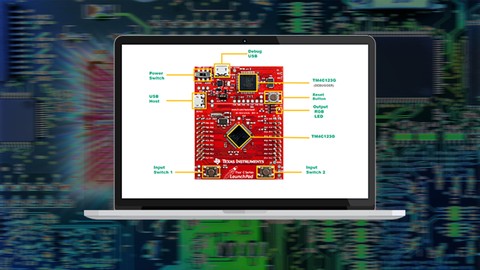
Introduction to ARM Cortex-M Assembly Programming (FREE) (2020)
4.4 (967 Reviews)
- Provider: Udemy
- Time: 4.2h
Free

ARM Cortex-M : Modular Embedded Systems Design (FREE!) (2019)
4.5 (935 Reviews)
- Provider: Udemy
- Time: 7.6h
Free
More Arduino courses

Learn to Build a Computer (PC) in 2026 - all types!
4.9 (245 Reviews)
- Provider: Udemy
- Time: 6.1h
$74.99
Raspberry Pi For Beginners - 2026 Complete Course
4.8 (3,105 Reviews)
- Provider: Udemy
- Time: 10.6h
$89.99
Ultimate Guide to Raspberry Pi : Tips, Tricks and Hacks (2023)
4.8 (2,363 Reviews)
- Provider: Udemy
- Time: 5.2h
$69.99
Mastering Microcontroller: STM32-LTDC, LCD-TFT, LVGL (MCU3) (2026)
4.8 (487 Reviews)
- Provider: Udemy
- Time: 8.1h
$79.99
Arduino Step by Step: Getting Started (2024)
4.7 (8,714 Reviews)
- Provider: Udemy
- Time: 21.4h
$159.99
 Reviews

By Robin Laird on 5/19/2023
The instructor is no longer maintaining course material nor is he answering questions or fixing problems with the material - I would find another, updated course. A lot of information is presented, which is a plus. Moves fairly fast, which is also a plus. Would like to have tool setup as first section, so that in down-time, I could experiment with tools. Tool installation is lacking Windows 10 instructions, which required me to do my own research (several hours) to figure out how to make course development board work under Windows. Some of the basic concepts in the assembly code sections are simply wrong, so the instructor is teaching concepts incorrectly (e.g., register to memory transfers). Some of the sections are arranged incorrectly, and repeat information from previous sections.
By MN M on 11/24/2022
Good starting point. Stuff like why startup file for lm4fxx is used instead of tm4c123ghp6m when simulating could be explained thoroughly. Better yet ways to make it work could be discussed. Reference to datasheet is bare minimum. In my view, this course can not be used as a standalone in learing about tiva uc.
By Tiago Trocoli on 2/10/2021
It's a very good course because it has many practical activities. However, in some cases, SLIDES are required since it is hard to follow some concepts. Moreover, in some cases, explanations about the hardware components are required. For example, in the ADC part, the teacher doesn't provide any explanation about them, only the registers. That makes the lecture superficial. So, I suggest two improvements: - Use SLIDES in explanations, always. - Explain the hardware components (ex: ADC) in lectures that lack them.
By Nicholas Gautier on 11/1/2020
I found this course to be much more involved with my needs and I was able to follow along with the instructor - which is what I need. I am very grateful that the instructor reminds the student as to why a specific action is done - despite it might had been three chapters back. I find that extremely helpful as one would have to do a small week or two hiatus - life and work happens, and sometimes one may easily forgot. I really do enjoy this course and I can easily follow along. However, one major complaint I have regarding this entire course, there is no information regarding what hardware and materials required for this course. I do not mind - buying the extra equipment, but I need to know what is required so I can follow along and understand how things work.
By Pruthvi Bhupal on 10/28/2018
One of the best Embedded courses out there. Concepts are very lucid clear. ADC, PWM , UART, SPI, I2C are missing but it will help you to understand these. LCD display project was well explained including the all the CMSIS concepts. Looking forward to all of his courses. Hoping that he makes a driver development course.
By Michael Mundy on 4/2/2018
The instructor is very personable and extremely knowledgeable. He doesn't just gloss over concepts. He explains everything in great detail, yet it never seems overly long or dull. He's also great about responding to questions.
By Chitransh Kulshreshtha on 4/1/2018
This course has enabled me to understand the bare metal programming and with its incremental learning also helped me in understanding common professional practice and how to read the header files. Since I had a minimal prior experience, this course has also helped me understand the directives and their importance. CMSIS section offers a good understanding about coding with CMSIS compliance. There were couple of lectures where target device configurations were not told earlier which took a bit of time to get back on track. I would strongly recommend this course to Engineers, hobbyist looking for embedded learning and interested in learning how different files are written and together they run an embedded system. Thank you Israel.
By Martin Lippl on 2/4/2018
Please eliminate all those small errors you make while entering code. EDIT: Thanks, Israel. I didn't expect you to answer. Those small errors aren't something you have to correct tomorrow right away, but maybe as an intermediate goal. Cheers!
By Amanuel Assefa on 1/2/2018
Very good Introductory course on ARM Cortex M Microcontrollers. I liked how the course explained memory addressing by using raw pointers first, and then expanded on using the pre-existing headers provided by the respective microcontroller vendors. Good introduction on CMSIS as well.
By Krisztián Szekeres on 12/29/2017
This course is really understandable, and very useful for beginners. Maybe some C coding experience is good to have to understand for the first time. Of course the trainer describes every segment of the work that we're doing, so there is no problem about it. I'm listening the course since 3 days, but I feel myself confident in programming. Thanks!
 Quality Score
No CourseDuck member has rated this course yet. Taken it? Give each part a thumbs up or down.
Overall Score : 84 / 100
- Video Duration:
 22.3h
- Price: $74.99
- Provider: Udemy
- Updated:
 November 2021
- Level:
 All Levels
- Language:
 English
- Certificate:
 Yes
30-day money-back guarantee on most paid courses
Udemy Coupon Price Tracker
