
 Web Development
 Data Science
 Python
 SQL
 JavaScript
 Artificial Intelligence
 IT & Software
 IT Certifications
 Hacking
 AWS
 Arduino
 DevOps
 3D Modeling
 Graphic Design
 Photoshop
 Drawing
 Digital Painting
 UX Design
 Business
 Data Analysis
 Communication Skills
 Project Management
 Leadership & Management
 Human Resources
 Digital Marketing
 Social Media Marketing
 Marketing
 SEO
 Google Analytics
 Branding
 Excel
 Office Productivity
 SAP
 PowerPoint
 Microsoft Access
 SharePoint
 Finance & Accounting
 Trading & Investing
 Accounting
 Bitcoin
 Personal Finance
 Video Editing & Animation
 Photography
 Adobe Premier Pro
 Adobe Lightroom
 Personal Development
 Productivity
 Career Development
 Life Coaching
 Health & Fitness
 Meditation & Mindfulness
 Yoga
 Music
 Music Production
 Guitar
 Piano
 Singing
 Language Learning
 Teaching & Academics
 Engineering
 Math
 Lifestyle
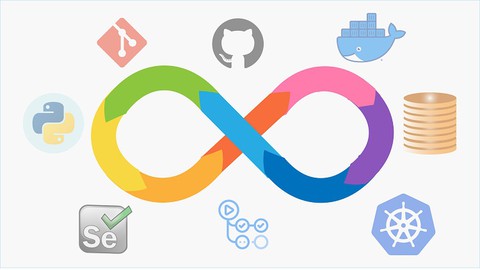
Complete DEVOPS Pipeline with Python Web App AWS Devops CICD (Udemy.com)
Learn CI CD & Devops skill. Build Devops pipeline using Docker, Kubernetes, Git, Github, Flask SQLAlchemy, Pytest, AWS
Created by: Pranjal Srivastava
Last updated November 2022
 What you will learn
- Learn to build Continuous Integration Continuous Deployment pipeline
- Build CI CD tool to update docker image after any update
- Learn to create dockerfile
- Learn the fundamental concepts of Docker
- Learn the fundamental concepts of Kubernetes
- Learn to create Kubernetes YAML files
- Learn to deploy high availability, fault tolerance, scalable application
- Learn all the basic and advanced git commands
- Learn different types of branches like master, developer, feature, release and hotfix branch
- Learn fundamental concepts of Version Control System
- Learn to use Github actions for CI CD pipeline
- Learn to build python flask web application
- Learn to use SQL Alchemy
- Lean to create HTML pages using HTML, CSS and bootstrap
How it compares
Against the other 219 rated Udemy courses in DevOps on CourseDuck:
- Rating3.9 out of 5higher than 8% of them
- Reviews139#190 of 220 by number of reviews
- Length3.3 hoursshorter than 73% of them
- Last updatedNovember 2022earlier than 61% of them
 Course Description
What is Devops Pipeline?
A Devops pipeline is set of automated processes and tools that the development (Dev) and operations (Ops) teams implement to build, test, and deploy software faster and easier.
How do you make a DevOps pipeline?
Plan: It is the first and most important step in Devops Pipeline where you have to decide your product's goals and determining the resources necessary to achieve those goals.
Code: It comes after where you will do code development and code review of your product
Build: In this step you will build the source code into one desired format, compile, test and deploy in a particular place of the infrastructure.
CI/CD: CI/CD stands for continuous integration (CI) and delivery (CD) where it will check and verify the source code from Source Code Management and build it.
Test: Automatic tests ensure that no bugs will be implemented in production.
Release: The application code has passed the testing phase and now it is ready to be deployed.
Deploy: In this step, OPs team will deploy application from staging stage to production stage
Operate and Monitor: Here OPs team will operate and monitor the application and take action in any kind of failure.
What you will learn in this course?
In this course, you will learn about the tools which will complete the Devops pipeline and make robust application for you.
Git:
What is Git in Devops?
Git is an open-source and distributed version control system that lets you manage and keep track of your source code history.
Github:
What is Github in Devops?
Github is git repository hosting service used for code sharing, bug tracking, feature request and much more.
What is difference between git and Github?
Git is a version control system that lets you manage and keep track of your source code history. GitHub is a cloud-based hosting service that lets you manage Git repositories.
What are Tools and Libraries used for creating application in this course?
PyCharm is an integrated development environment (IDE) for python programing language.
Flask is a python web framework.
HTML is the standard markup language for Web pages.
CSS is a style sheet language use to style a HTML document.
SQLAlchemy is an open-source SQL toolkit and object-relational mapper which gives full power and flexibility of SQL.
Selenium is used to automate web browser interaction.
Pytest is unit testing framework that allows users to write test codes.
Ngrok allows to expose a web server running on your local machine to the internet.
Github Actions:
What is Github Action in Devops?
Github Action enables you to include Continues Integration (CI) and continuous deployment (CD) capabilities and many other features directly in your repository.
Docker:
What is Docker in Devops?
Docker is an open source containerization platform enables developers to package applications into containers.
Why use Docker?
Docker solved the 'it works on my machine' headache by making applications platform independent. With Docker you can simply build, ship and run your application
Docker Hub:
What is Docker Hub?
Docker Hub is a cloud-based repository for finding and sharing container images with your team.
What are alternatives of Docker Hub?
AWS ECR, Azure Container Registry, Quay are the alternatives of Docker Hub.
Kubernetes:
What is Kubernetes in Devops?
Kubernetes is an open-source container orchestration for automating deployment, scaling, and management of containerized applications.
What is unique about this course?
This course is one stop shop where you will learn web development, continuous integration, continuous deployment, containerization, writing neat and quality code, devops concepts and much more with python programing language.
This course is fully based on pragmatic approach without any kind of bogus content. A short, precise and practical oriented course for IT pros just like you.

 Udemy Discount
The discount is applied through our link. Open the course from here and Udemy's current promotional price is applied at checkout on most courses, no code to type.
Some courses are excluded from Udemy's promotions. If the price does not drop, clear your browser cookies and use the button again.
Instructor Details

- 3.9 Rating
 139 Reviews
Pranjal Srivastava
I am an Instructor, Devops engineer, machine learning enthusiast, cloud expert and passionate developer.
I have authored 78 courses with over 115,000 students worldwide across 175+ countries on wide array of technologies like devops, containerization, machine learning, Linux, programming languages and cloud computing platforms like Microsoft Azure, Amazon Web Service and IBM Cloud.
 More courses by Pranjal Srivastava
COMPLETE AWS Masterclass - From Zero to Hero (2024)
4.0 (224 Reviews)
 Provider: Udemy
 Time: 9.1h
$54.99
Build REST API using Python, Flask and Postman (2023)
4.0 (159 Reviews)
- Provider: Udemy
- Time: 1.7h
$11.99
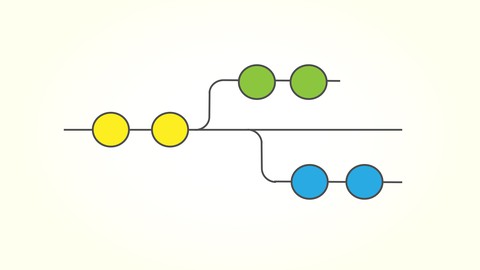
Learn Git, Github and Github Actions for DevOps CI/CD (2023)
3.6 (156 Reviews)
- Provider: Udemy
- Time: 1.7h
$12.99
Azure Solution Architect Certification- AZ 300 and AZ 303 (2022)
3.6 (106 Reviews)
- Provider: Udemy
- Time: 9.6h
$64.99
Master Containerization with AWS: Amazon ECS, EKS, Fargate (2022)
4.0 (96 Reviews)
- Provider: Udemy
- Time: 2.3h
$11.99
Cloud Computing with Microsoft Azure BUNDLE (2023)
3.6 (84 Reviews)
- Provider: Udemy
- Time: 18.3h
$59.99
More DevOps courses

Certified Kubernetes Administrator (CKA) with Practice Tests (2026)
4.7 (93,948 Reviews)
- Provider: Udemy
- Time: 26h
$27.99
Docker & Kubernetes: The Practical Guide (2026)
4.7 (38,168 Reviews)
- Provider: Udemy
- Time: 23.7h
$22.99
HashiCorp Certified: Terraform Associate 2026
4.7 (32,153 Reviews)
- Provider: Udemy
- Time: 25.5h
$27.99
Azure Kubernetes Service with Azure DevOps and Terraform (2026)
4.7 (6,546 Reviews)
- Provider: Udemy
- Time: 28.1h
$129.99

 Reviews

By Buddhini Ekanayake on 6/27/2025
that was really nice and good experience for beginners to get the proper idea about these concepts.
By Akhil Gorak on 10/30/2024
No detail explanation, moving very fast and very hard to track.
By Ahmed Belhaj on 3/8/2023
this my github , regarding the flask app https://github.com/Theemiss
By Luciano Bono on 4/28/2022
La transcripción es muy mala
By Raul Gomez on 9/29/2021
Temas muy puntuales y bien resumidos.
By Meidan on 9/17/2021
Nice course but very hard to follow as the mouse cursor is not visible and there is very rapid changes between screens.
By Raghunandana Krishna Murthy Sanur on 8/18/2021
Excellent course and explains how a simple app can be deployed using DevOps lifecycle.
By Gustavo Alberto Ortega Martínez on 7/15/2021
Lack of explanation in general, the teacher assumes the student have knowledge about all the tools that are using in the course
By Nelson Javier Celis Cruz on 7/11/2021
The instructor go pretty fast at the beginning but Is a great course
By Marcela Rangel López on 7/9/2021
He does'nt delve into the concepts, but its explanation is good.
 Quality Score
No CourseDuck member has rated this course yet. Taken it? Give each part a thumbs up or down.
Overall Score : 78 / 100
- Video Duration:
 3.3h
- Price: See price on Udemy
- Provider: Udemy
- Updated:
 November 2022
- Level:
 All Levels
- Language:
 English
- Certificate:
 Yes
30-day money-back guarantee on most paid courses
Udemy Coupon Price Tracker
