
 Web Development
 Python
 JavaScript
 SQL
SQL Artificial Intelligence
 Data Science
 IT & Software
 IT Certifications
 Hacking
 AWS
AWS Arduino
 3D Modeling
 Graphic Design
 Photoshop
 Drawing
 UX Design
 Illustrator
 Business
 Data Analysis
 Shopify
 Digital Marketing
 Social Media Marketing
 Marketing
 SEO
SEO Google Analytics
 Branding
 Excel
Excel Office Productivity
 Finance & Accounting
 Bitcoin
 Video Editing & Animation
 Photography
 Adobe Premier Pro
 Adobe Lightroom
 Personal Development
 Health & Fitness
 Music
Music Guitar
 Teaching & Academics
 Language Learning
 Engineering
 Lifestyle
Control Systems Made Simple | Beginner's Guide (Udemy.com)
Learn fundamentals of Mechanical & electrical system modeling, simulation and control with this unique practical course!
Created by: Prof. Ryan Ahmed, PhD, MBA
Last updated September 2018
 What you will learn
- Develop mathematical models for mechanical and electrical systems
- Develop control strategies to achieve desired system response
- Apply Proportional Integral Derivative (PID) controllers to real world applications
- Implement PID Control strategies in Simulink
- Tune controller parameters for optimal system performance
- Draw free body diagrams and analyze forces acting on any system
- Develop transfer functions to describe the behavior of mechanical and electrical systems
- Analyze electrical circuits using Kirchhoff's circuit law
- Develop mathematical models for Battery systems and DC motors
- Simulate Battery Systems and DC motors in MATLAB/Simulink
 Course Description
This course covers the basics of modeling, simulations and control of mechanical and electrical systems. The course is divided into 3 main sections:
1. Mechanical systems modeling,
2. Electrical systems modeling
3. Control systems design
Section #1: Mechanical System Modeling
The section covers the basics of how to derive mathematical models from scratch, draw free body diagrams, apply Newton’s laws of motion and simulate mechanical systems using MATLAB/Simulink. This section also covers Laplace domains, transfer function development, and system simulations using several inputs such as impulse and step inputs.
Section #2: Electrical System Modeling
This section covers electrical system modeling fundamentals. It covers how to mathematically model basic elements such as capacitors, resistors and inductors, how to apply Kirchoff’s circuit law to solve various electrical circuit. The section also covers advanced topics such as how to model DC motors, and batteries in MATLAB/Simulink environment.
Section #3: Control systems fundamentals/Design
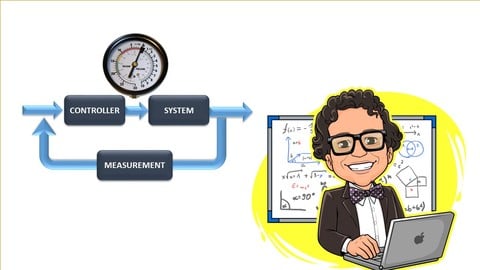
This section includes the basics of control system and the steps required to build any control system. This section covers one of the most famous controllers known as PID or Proportional Integral Derivative controller. The section includes basics of how to perform block diagram model reduction and how to assess dynamic system performance. Furthermore, the section covers how to perform PID tuning to achieve the best desired system performance.

 Udemy Discount
The discount is applied through our link. Open the course from here and Udemy's current promotional price is applied at checkout on most courses, no code to type.
Some courses are excluded from Udemy's promotions. If the price does not drop, clear your browser cookies and use the button again.
Instructor Details

- 4.6 Rating
 1,412 Reviews
Prof. Ryan Ahmed, PhD, MBA
I'm Dr. Ryan Ahmed, professor, engineer, and founder of Stemplicity, where we help people get past the hype and actually build things with AI, Agentic AI, Cloud, and Data Science.
Over the past 10 years, I've taught 1 million learners across 160 countries — 700,000+ enrolled in my Udemy courses, 260,000+ subscribers on the "Prof. Ryan Ahmed" YouTube channel, and 120,000+ on Coursera. I also run corporate AI training for teams at HSBC, RBC, Discover, and Barclays across the US, Canada, and the UK. I held leadership roles at GM, Samsung, and Stellantis in Canada and the U.S., working on electric and autonomous vehicle technologies.
I hold a MASc, PhD, and MBA from McMaster University. I’m also a licensed Professional Engineer and a Stanford-certified program manager with over 60+ published research papers in AI and battery systems.
But credentials are the least interesting part. Here's what I actually believe: "AI is the biggest opportunity of our lifetime", and most people are sitting it out because they think they need to code or have a PhD. You don't. If you're willing to show up and try, I'll help you get good at this.
 More courses by Prof. Ryan Ahmed, PhD, MBA

ChatGPT 6 Astra, Copilot, Midjourney, & DallE - The AI Bible (2026)
4.5 (21,879 Reviews)
 Provider: Udemy
 Time: 13.1h
$89.99
![Mastering Microsoft 365 CoPilot & AI Agents [2026]](/programming/data-analysis/images/6436607_551a_3.jpg?v=1789443512)
Mastering Microsoft 365 CoPilot & AI Agents [2026]
4.5 (11,743 Reviews)
- Provider: Udemy
- Time: 21.9h
$19.99
![The Complete Claude Code & Claude Cowork Masterclass [2026]](/programming/data-analysis/images/7066971_118a_4.jpg?v=1789492559)
The Complete Claude Code & Claude Cowork Masterclass [2026]
4.6 (8,843 Reviews)
- Provider: Udemy
- Time: 21.8h
$19.99
MATLAB/SIMULINK Bible | Go From Zero to Hero + ChatGPT! (2025)
4.6 (7,605 Reviews)
- Provider: Udemy
- Time: 8.2h
$18.00

Python & Machine Learning for Financial Analysis (2024)
4.7 (4,821 Reviews)
- Provider: Udemy
- Time: 23h
$84.99
More Engineering courses
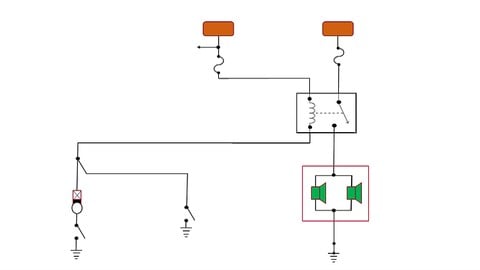
Do it Yourself - Automotive Electrical Diagnosis - Beginner (2026)
4.8 (1,893 Reviews)
- Provider: Udemy
- Time: 2.1h
$59.99
Advanced Kalman Filtering and Sensor Fusion (2021)
4.8 (1,033 Reviews)
- Provider: Udemy
- Time: 8.3h
$84.99

Digital Electronics: Robotics, learn by building module II (2020)
4.8 (942 Reviews)
- Provider: Udemy
- Time: 13.1h
$99.99

Ultimate Electrical Circuits for Electrical Engineering (2026)
4.8 (814 Reviews)
- Provider: Udemy
- Time: 36.5h
$99.99

Robotics & Mechatronics 3: Digital Twin Machines | Unity (2023)
4.8 (376 Reviews)
- Provider: Udemy
- Time: 9.3h
$84.99
 Reviews

By Francisco Javier Ramírez Ruiz on 4/8/2023
El curso es ameno y bien explicado, aunque es a nivel básico y me gustaría que profundizará un poco más el algunos temas y tuviera la opción de herramientas libres de control con Scilab u Octave, para quien no tiene la licencia de Matlab.
By Moreshwar Salpekar on 10/1/2022
On the positive side, the course has lot of practical work, and the instructor provides a clear explanation which makes learning easier and better. The captions are good but can be made better What I would have loved as addition: 1. Use of more recent versions of Matlab. The instructor uses 2014 and I used 2020b. Though blocks are changed, there are changes 2. I would have loved more details on Battery as I make models on my own 3. I would have loved combination of battery with DC motor given that the instructor has worked and works in EVs and autonomous vehicles but that may be me only. 4. The equation used in Lecture 24 is same as that used in lecture 20 and 21. i expected practical for lecture 23. Maybe I am missing the link.
By Fernando Teixeira on 11/1/2020
Concise and straightforward, sometimes basic, but very useful to me, mainly because nor even all topics are familiar to me. Recommended to all who are interested in Matlab. Thanks professor Ahmed!
By Zuhair Omar on 4/2/2020
Good course for understanding basic of Models and how to simulate using MATLAB & Simulink, Also it covers basic explanation of PID controllers.
By Amandeep kaur on 3/27/2020
Actually good course for beginners. Learnt numerous concept from it. However, MATLAB screen was blurr many times, therefore, it became difficult to note down the actual values of parameters.
By Saurabh Kumar on 3/21/2020
Very nice but requires some sort of technical explanation in the projects about how the equations are working and functioning. Apart from it, it's excellent.
By Sanya Gode on 2/23/2020
the course was very informative and the teaching method explanation assignments were amazing it helped me a lot to enhance my knowledge. resources are very helpful.thank you
By Mohammed zubair ahmed on 2/4/2020
It was quite a recap for what I had already studied n my course curriculum, the instructor was better than my university professor to explain how to actually use the MATLAB tool for theoretical understandings
By Ayodeji Rotibi on 7/10/2019
This is my best course yet! My main interest is to understand Control System without the complexity associated with mathematics. I guess i will refer back to this course several times in the next few months.
By Stew JW on 7/29/2018
Useful course for someone like me who doesn't come from an engineering degree background and who is largely self taught on the topics covered. The best part for me was the the use Simulink to test these mathematical models. I dropped a star since the resources are missing from the course. There was also a slight problem for those of us who only have Matlab with Simulink since the impulse function is only present in the Simulink DSP module, which I don't have.
 Quality Score
No CourseDuck member has rated this course yet. Taken it? Give each part a thumbs up or down.
Overall Score : 92 / 100
- Video Duration:
 7.5h
7.5h - Price: $64.99 Track Price 11.99 Track Price
- Provider: Udemy
- Updated:
 September 2018
 - Level:
 All Levels
 - Language:
 English
 - Certificate:
 Yes
Yes
30-day money-back guarantee on most paid courses
Udemy Coupon Price Tracker
