
 Web Development
 Data Science
 Python
 SQL
 JavaScript
 Artificial Intelligence
 IT & Software
 IT Certifications
 Hacking
 AWS
 Arduino
 DevOps
 3D Modeling
 Graphic Design
 Photoshop
 Drawing
 Digital Painting
 UX Design
 Business
 Data Analysis
 Communication Skills
 Project Management
 Leadership & Management
 Human Resources
 Digital Marketing
 Social Media Marketing
 Marketing
 SEO
 Google Analytics
 Branding
 Excel
 Office Productivity
 SAP
 PowerPoint
 Microsoft Access
 SharePoint
 Finance & Accounting
 Trading & Investing
 Accounting
 Bitcoin
 Personal Finance
 Video Editing & Animation
 Photography
 Adobe Premier Pro
 Adobe Lightroom
 Personal Development
 Productivity
 Career Development
 Life Coaching
 Health & Fitness
 Meditation & Mindfulness
 Yoga
 Music
 Music Production
 Guitar
 Piano
 Singing
 Language Learning
 Teaching & Academics
 Engineering
 Math
 Lifestyle
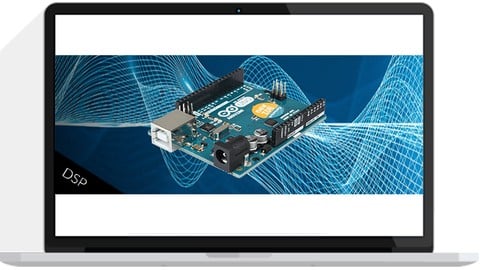
Digital Signal Processing(DSP) From Ground Up™ using Arduino (Udemy.com)
Practical DSP on Arduino : FFT, Filter Design, Convolution, IIR, FIR, Hamming Window, Linear Systems,
Created by: Israel Gbati
Last updated November 2021
 What you will learn
- Develop and test the Convolution Kernel algorithm on Arduino
- Develop and test the Discrete Fourier Transform (DFT) algorithm on Arduino
- Develop and test the Inverse Discrete Fourier Transform (IDFT) on Arduino
- Develop and test the Fast Fourier Transform (FFT) algorithm on Arduino
- Perform spectral analysis on ECG signals using Arduino
- Design and develop Windowed-Sinc filters on Arduino
- Design and develop Finite Impulse Response (FIR) filters on Arduino
- Design and develop Infinite Impulse Response (IIR) filters on Arduino
- Use ARM CMSIS-DSP library on Arduino
- Develop the FFT-Convolution algorithm on Arduino
- Develop the First Difference algorithm on Arduino
- Develop the Running Sum algorithm on Arduino
- Develop the Moving Average filter algorithm on Arduino
- Develop the Recursive Moving Average filter algorithm on Arduino
How it compares
Against the other 295 rated Udemy courses in Arduino on CourseDuck:
- Rating4.0 out of 5higher than 11% of them
- Reviews153#155 of 296 by number of reviews
- Length7.5 hourslonger than 63% of them
- Last updatedNovember 2021earlier than 67% of them
 Course Description
With a programming based approach, this course is designed to give you a solid foundation in the most useful aspects of Digital Signal Processing (DSP) in an engaging and easy to follow way. The goal of this course is to present practical techniques while avoiding obstacles of abstract mathematical theories. To achieve this goal, the DSP techniques are explained in plain language, not simply proven to be true through mathematical derivations.
Still keeping it simple, this course comes in different programming languages and hardware architectures so that students can put the techniques to practice using a programming language or hardware architecture of their choice. This version of the course uses the Arduino board and programming language.
By the end of this course you should be able develop and test the Convolution Kernel algorithm on arduino, develop and test the Discrete Fourier Transform (DFT) algorithm on arduino, develop and test the Inverse Discrete Fourier Transform (IDFT) algorithm on arduino, design and develop Finite Impulse Response (FIR) filters on arduino, design and develop Infinite Impulse Response (IIR) filters on arduino, develop Windowed-Sinc filters on arduino, build Modified Sallen-Key filters, build Bessel, Chebyshev and Butterworth filters, develop the Fast Fourier Transform (FFT) algorithm on arduino, even give a lecture on DSP and so much more. Please take a look at the full course curriculum.

 Udemy Discount
The discount is applied through our link. Open the course from here and Udemy's current promotional price is applied at checkout on most courses, no code to type.
Some courses are excluded from Udemy's promotions. If the price does not drop, clear your browser cookies and use the button again.
Instructor Details

- 4.0 Rating
 153 Reviews
Israel Gbati
Author of Bare-Metal Embedded C Programming: Develop High-Performance Embedded Systems with C for Arm Microcontrollers.
With extensive experience in embedded firmware development, I specialize in real-time systems, low-level programming, medical device architecture, embedded signal processing, and embedded AI. My professional journey has been centered around Arm Cortex-Microcontrollers, delivering robust solutions used in cutting-edge industries.
Passionate about simplifying complex concepts.
 More courses by Israel Gbati
Embedded Systems Bare-Metal Programming Ground Up™ (STM32) (2023)
4.6 (3,916 Reviews)
 Provider: Udemy
 Time: 24.6h
$99.99

x86 Assembly Language Programming From Ground Up™ (2025)
4.6 (1,715 Reviews)
- Provider: Udemy
- Time: 14.1h
$10.99
Build Your Own RealTime OS (RTOS) From Ground Up™ on ARM 1 (2023)
4.3 (1,180 Reviews)
- Provider: Udemy
- Time: 9.3h
$74.99

FreeRTOS From Ground Up™ on ARM Processors (REVISED) (2023)
4.4 (994 Reviews)
- Provider: Udemy
- Time: 23.5h
$69.99
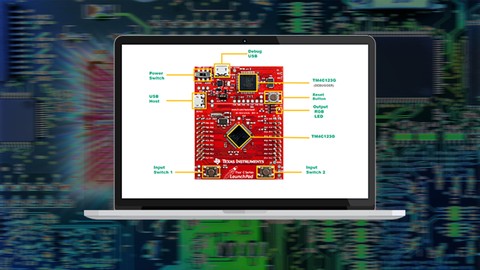
Introduction to ARM Cortex-M Assembly Programming (FREE) (2020)
4.4 (967 Reviews)
- Provider: Udemy
- Time: 4.2h
Free

ARM Cortex-M : Modular Embedded Systems Design (FREE!) (2019)
4.5 (935 Reviews)
- Provider: Udemy
- Time: 7.6h
Free
More Arduino courses

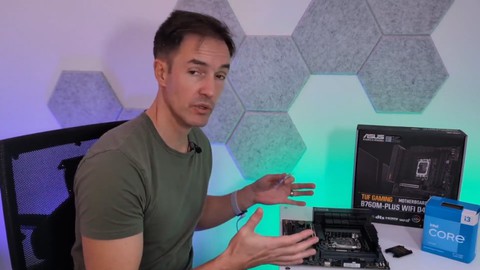
Learn to Build a Computer (PC) in 2026 - all types!
4.9 (245 Reviews)
- Provider: Udemy
- Time: 6.1h
$74.99
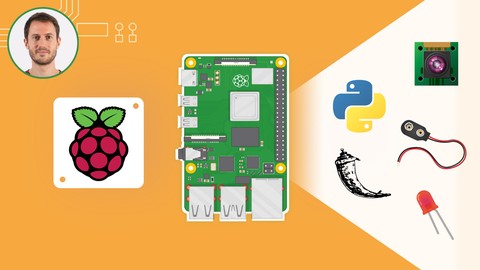
Raspberry Pi For Beginners - 2026 Complete Course
4.8 (3,105 Reviews)
- Provider: Udemy
- Time: 10.6h
$89.99

Ultimate Guide to Raspberry Pi : Tips, Tricks and Hacks (2023)
4.8 (2,363 Reviews)
- Provider: Udemy
- Time: 5.2h
$69.99
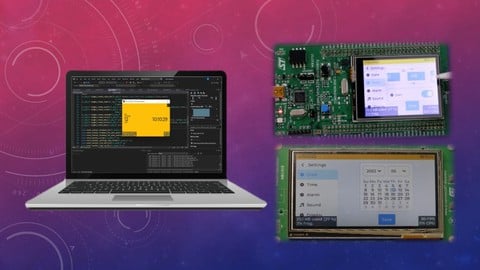
Mastering Microcontroller: STM32-LTDC, LCD-TFT, LVGL (MCU3) (2026)
4.8 (487 Reviews)
- Provider: Udemy
- Time: 8.1h
$79.99
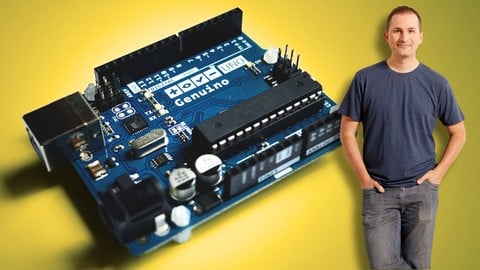
Arduino Step by Step: Getting Started (2024)
4.7 (8,714 Reviews)
- Provider: Udemy
- Time: 21.4h
$159.99
 Reviews

By George Thomas on 6/7/2022
I was impressed with the course through Section 11. Then disappointment for the rest. Problems include: 1. Some background on pointers and arrays when convolution is introduced would be helpful. 2. FFT is introduced but no explanation of how it is used with Arduino for DSP. 3. No coding examples or exercises after moving average filter. 4. Why is MATLAB Section included in the course? Its relation to the previous sections, dsp, or Aduino is not explained.
By Josias van der Merwe on 5/6/2022
Very informative, starts with the basics, provide the required theoretical background and then provide the implementation with an example.
By Mert Gülsoy on 6/26/2021
I like the way that the content is presented. Also teacher sometimes make mistakes. That is also good because it also improves the student. Thank you.
By Ashutosh Parmar on 4/10/2021
Great course for DSP theory and practical. Implementation of various DSP algorithms in C++ is nicely explained.
By Adams Von Zeidler on 7/15/2020
Verygood exlanation on the DFT algioritm and how to code it. I just missed more practical examples with the recurring filters and real applications. A Real time processing exampe would be a good addition.
By Sami Aldalahmeh on 11/2/2019
The course seems to be repetitive now. Implementing a function by C coding then using the CMSIS library. I prefer if the CMSIS library functions are explained or how to map the C code to arduino hardware.
By John Slough on 8/27/2019
Again, my comment about needing to have the source available so we do not have to start/stop to code our sketch and then having to trouble shoot all the typos. If we had the source liberally commented we would better understand all the nuances of what is actually being done in the sketch. I have to spend at least triple (probably 4x) the time of the actual video for each lesson
By Simon Huckle on 12/8/2018
1st Review). I know Arduino quite well, but haven't used it for a few years, so quite useful. My uno is working fine, but I seem to have an issue with Nano, but the blink programme idea to test was a good reminder. Halfway Review). This is for me, an incredibly useful course for me, I will have to restart it and do it again, but I have moved forward in my understanding, and quite frankly quite an eye opener, really enjoying it. Two negatives, I'm slightly irritated that the expectation of using it on a range of arduino's has started to move towards using it for any small batch processing to the Arduino Due, and the continuous advertising of Cortex -M off-putting. I assume the course has a dual revenue stream. Overall still very engaged. I have an arduino Mega from another project and that also copes with full SIG_LENGTH so far at least, maybe worth a mention, still very good and I'm starting to get to grips with it, excellent
By Kai Würtz on 12/3/2018
Der Kurs gibt eine Übersicht/Einstieg in die DSP. Viele Sachen sind gut verständlich erklärt. Manche aber auch zu wenig, so dass ich mir diverse Videos auf Youtube dazu angeschaut habe um dies besser zu vertiefen/verstehen. Da der Kurs auch damit beginnt, wie man die DSP Library unter Arduino installiert, hätte ich mir erhofft, damit auch Beispiele für Filter und FFT zu sehen. Doch leider gibt es genau hier nicht ein einziges Beispiel. Das einzige Beispiel für Filter ist der Moving Average. Aber dieser ist in der normalen C++ verfasst. Für die FFT und anderen Filter gibt es kein Programmier-/Anwendungsbeispiel. Grundsätzlich ein schöner Kurs um in die Thematik wieder einzusteigen. Allerdings mit zu wenig Tiefe um dies wirklich praktisch verwenden zu können. Ich hätte nach der Berschreibung eigentlich erwartet, dass ich die Themen unter Arduino anwenden kann. Das ist nicht so.
By Othman Ait Maatallah on 9/25/2018
The concepts in this course are built from the ground and kept moving up with the appropriate pace for non-expert people. The codes and concepts used in the course are explained in separate videos. For instance, a concept such as Convolution is explained in one video then implemented from scratch in the following video. This course kept all its promises!
 Quality Score
No CourseDuck member has rated this course yet. Taken it? Give each part a thumbs up or down.
Overall Score : 80 / 100
- Video Duration:
 7.5h
- Price: $44.99
- Provider: Udemy
- Updated:
 November 2021
- Level:
 All Levels
- Language:
 English
- Certificate:
 Yes
30-day money-back guarantee on most paid courses
Udemy Coupon Price Tracker
