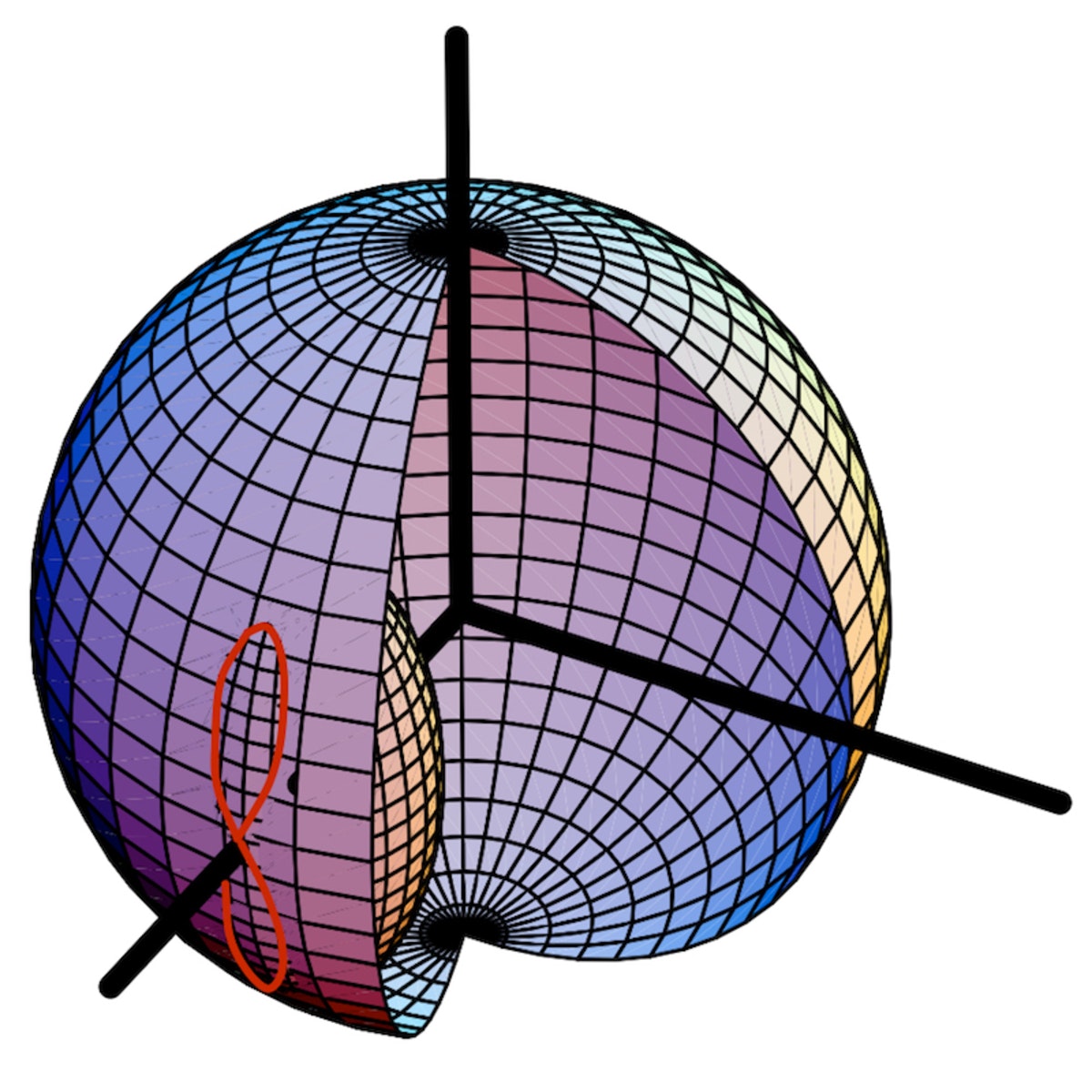

Kinematics: Describing the Motions of Spacecraft

Spacecraft Dynamics and Control covers three core topic areas: the description of the motion and rates of motion of rigid bodies (Kinematics), developing the equations of motion that prediction the movement of rigid bodies taking into account mass, torque, and inertia (Kinetics), and finally non-linear controls to program specific orientations and achieve precise aiming goals in three-dimensional space (Control). The specialization invites learners to develop competency in these three areas through targeted content delivery, continuous concept reinforcement, and project applications.The goal o

Created by: Hanspeter Schaub

icon
Quality Score

Content Quality
/
Video Quality
/
Qualified Instructor
/
Course Pace
/
Course Depth & Coverage
/

Overall Score : 96 / 100

icon
Course Description

The movement of bodies in space (like spacecraft, satellites, and space stations) must be predicted and controlled with precision in order to ensure safety and efficacy. Kinematics is a field that develops descriptions and predictions of the motion of these bodies in 3D space. This course in Kinematics covers four major topic areas: an introduction to particle kinematics, a deep dive into rigid body kinematics in two parts (starting with classic descriptions of motion using the directional cosine matrix and Euler angles, and concluding with a review of modern descriptors like quaternions and Classical and Modified Rodrigues parameters). The course ends with a look at static attitude determination, using modern algorithms to predict and execute relative orientations of bodies in space.After this course, you will be able to...* Differentiate a vector as seen by another rotating frame and derive frame dependent velocity and acceleration vectors* Apply the Transport Theorem to solve kinematic particle problems and translate between various sets of attitude descriptions* Add and subtract relative attitude descriptions and integrate those descriptions numerically to predict orientations over time* Derive the fundamental attitude coordinate properties of rigid bodies and determine attitude from a series of heading measurements

icon
Instructor Details

placeholder

Hanspeter Schaub is the Glenn L. Murphy Chair of Engineering and Professor in Aerospace Engineering Sciences at the University of Colorado Boulder and is the current graduate chair of the aerospace engineering sciences department. He has nearly 20 years of research experience, of which four years are at Sandia National Laboratories. His research interests are in nonlinear dynamics and control, astrodynamics, relative motion dynamics, and relative motion sensing. This has led to approximately 122 journal and 187 conference publications, and a 3rd edition textbook on analytical mechanics of space systems. In the last decade, he has developed the emerging field of charged astrodynamics. Schaub has been the ADCS lead in the CICERO mission and the ADCS algorithm lead on a Mars Mission. He has been awarded the H. Joseph Smead Fellowship, the Provosts Faculty Achievement Award, the Faculty Assembly Award for excellence in teaching, as well as the Outstanding Faculty Advisor Award.

icon
More cinema 4d courses

Cinema 4D from Scratch: Project Based Cinema 4D Course

$11.99

Cinema 4D - Looping 3D Animation for Instagram and GIF

$11.99

Learn 3D Complete from Scratch in Blender Cinema 4D Unity C#

$11.99

Cinema 4D Masterclass: The Ultimate Guide for Beginners

$11.99

3D Character Creation in Cinema 4D: Modeling a 3D Robot

$11.99

Learning Maxon Cinema 4D - A Beginners Training Course

$11.99

icon
Reviews

4.8

26 total reviews

5 star 4 star 3 star 2 star 1 star
% Complete
% Complete
% Complete
% Complete
% Complete

By Samuel L on 22-Jun-19

Course material is great, Prof Schaub is an excellent lecturer, but one thing that makes this course disappointing is that neither himself nor his TA is ever around to interact with the course mates. I was expecting a bit more activity with the mentorship and some QNA, but all of the cross-checkings of work are between classmates (so it could be the case of the blind leading the blind really...) and we are pretty much left alone. This makes it no different than watching videos on our own on Khan Academy or Youtube (zero interaction really). Otherwise, the content and material is good and well structured. Disclaimer - this is grad level stuff, so make sure your linear algebra and calculus is pretty solid.

By Clemens R on 27-Dec-18

Very good course! Few of the quizzes have the wrong answers marked as correct which can be confusing when learning the material (see the discussion forum for specifics).

By Nicolás P on 8-Feb-19

Very good material and exercises!

By CEDRIC T on 10-Nov-19

Excellent course, even for non specialist or space professional. High quality course that can become very hard, especially if you haven't been doing maths for a while. However , it's a high reward if you succeed the course with a good grade, as it demonstrates you can handle work intensive assignments and programming.

By Vishish on 11-Sep-19

Great course! Great lectures! Easy to understand.

By Craig Z on 29-Jul-19

This a very difficult course but worth it if you put the time into it. This is an advanced graduate-level class and is relies heavily on previous concepts in physics, linear algebra, and calculus. Would not suggest taking it if you are not strong in all three.

By Rashi J on 3-Jun-19

if you are an aerospace engineering student and would like to get into orbital mechanics/ control and dynamics of satellites or celestial bodies, it's a decent course (series) to take.

By Aleksandr G on 5-May-19

Very useful compilation of attitude determination math. Could be applied in many engineering fields, not only spacecraft control.Special thanks to lector Dr. H. Schaub. He is really know how to teach. I also recommend to visit he's web page, which is very useful. http://hanspeterschaub.info/main.html

By JOHN Q on 5-May-17

wonderful course. very interesting

By Barath C on 7-Mar-18

Awesome course! Gave a strong theoretical base.

By Pratik W on 13-Sep-17

Great Course! Given the advanced nature of this subject, Prof Schaub has successfully carved out an extremely neat course structure. His lectures provide valuable and clear insights into the concepts at play. The assignments are thorough and engaging as well. This course has already added substantial value to my background in Aerospace. I'm looking forward to enrolling in other similar courses!

By María A A B on 19-Oct-17

This is a great course for beginners in kinematics, I enjoy it and learn so much. However, you need to have a good math background.