
 Web Development
 Data Science
 Python
 SQL
 JavaScript
 Artificial Intelligence
 IT & Software
 IT Certifications
 Hacking
 AWS
 Arduino
 DevOps
 3D Modeling
 Graphic Design
 Photoshop
 Drawing
 Digital Painting
 UX Design
 Business
 Data Analysis
 Communication Skills
 Project Management
 Leadership & Management
 Human Resources
 Digital Marketing
 Social Media Marketing
 Marketing
 SEO
 Google Analytics
 Branding
 Excel
 Office Productivity
 SAP
 PowerPoint
 Microsoft Access
 SharePoint
 Finance & Accounting
 Trading & Investing
 Accounting
 Bitcoin
 Personal Finance
 Video Editing & Animation
 Photography
 Adobe Premier Pro
 Adobe Lightroom
 Personal Development
 Productivity
 Career Development
 Life Coaching
 Health & Fitness
 Meditation & Mindfulness
 Yoga
 Music
 Music Production
 Guitar
 Piano
 Singing
 Language Learning
 Teaching & Academics
 Engineering
 Math
 Lifestyle
Music Theory - Chord Progressions & Harmony for Composition (Udemy.com)
Learn to write beautiful chord progressions using triads, extensions, functional harmony, and more!
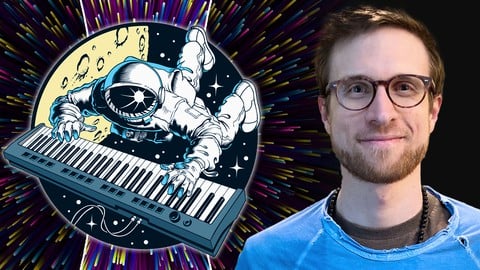
Created by: Max Konyi
Last updated March 2023
 What you will learn
- How to build and use the most important chord types
- What the natural chords of every key are
- What functional harmony is and how to use it in chord progressions
- How to harmonize a melody
- How to figure out the key of a song or chord progression
- Chord substitutions
- Chord decoration using extensions
How it compares
Against the other 270 rated Udemy courses in Music on CourseDuck:
- Rating4.8 out of 5higher than 84% of them
- Reviews378#91 of 271 by number of reviews
- Length7.4 hourslonger than 78% of them
- Last updatedMarch 2023earlier than 53% of them
 Course Description
Welcome!
"It is not the particular frequency or timbre which gives the desired effect, but the harmony."
- Hazrat Inayat Khan
How it Works:
Part 3 is dedicated to writing chord progressions from the ground up.
The goal is freedom, ease, and understanding while composing diatonic harmony in major and minor keys.
The method is a series of lessons and specific exercises:
Each lesson is highly detailed and easy to understand.
The exercises immediately utilize the new information, ensuring that nothing remains theoretical—you will know exactly how to use everything in your own compositions.
There will be no sight-reading, no exams, no quick-fixes, and no diploma to hang on your wall. There will be deep listening, compositional challenges, personal reflection, and many hours of effective practice.
Is this a music theory course?
Definitely! However, it is theory in service of composition.
What type of composition?
The type most natural to you, whatever that may be. Musical Warp Drive deals with universal music principles rather than genre-specific details. These insights and ideas apply as much to dubstep as they do to country.
What to Expect:
Part 3 of the Warp Drive series will provide you all the knowledge and experience needed to begin writing beautiful chords and progressions.
The course is separated into several sections:
The Basics:
This section deals with the standard triadic chords found in major and minor keys, as well as how to begin composing with them effectively. A lot of important terminology is clearly defined and specific exercises are given to make sure everything is fully understood.Working with Melody:
Since the most common use of harmony is to provide context and support for a melody, it's important to understand the relationship between the two early on. You will learn to write melodies for chord progressions and, conversely, write chords for an existing melody. Additionally, the basics of functional harmony are shown and applied to harmonizing melodies.Other Triads:
Here we begin investigating chord types beyond major and minor. Suspended, augmented, and diminished chords are examined and demonstrated. Both the theory and practical application of each chord quality are shown in detail.
Sevenths and Sixths:
An in-depth look at the most important four-note chord types. This section opens the door into a whole new world of emotion and harmonic flavor. A deep understanding of these sounds lays the foundation for further exploration during the rest of the course.Extended Chords
Ninths, elevenths, and thirteenths! A detailed look into chords with five or more notes. The information here will demystify exactly how and when to use these structures in a variety of different contexts.Putting It All Together
Some final exercises that combine everything at once, along with a demonstration and advice for the road ahead.
The Musical Warp Drive series:
Part 1: Fundamentals, Mind & Ear
Part 2: Melody, Scales & Modes
Part 3: Diatonic Harmony
Important!
This course on harmony is Part 3 of the Musical Warp Drive series. The first two parts are not required but recommended. Please read the following list and make sure you understand these concepts as they will not be explained in-depth during this particular course:
Note names and the chromatic scale
Keyboard/piano layout
Intervals (major third, perfect fifth, minor seventh, etc.)
What it means to be in a key
Simple chords and how to build them (major and minor)
Simple scales and how to build them (major and minor)
Number system basics (naming chord progressions using numbers: I-IV-ii-V)
Rhythm basics (note lengths, time signature, etc.)
If any of this confuses you, I highly recommend at least going through Part 1 of Musical Warp Drive first. All of this (and much more) is thoroughly explained in that course. You can find Part 1 here on Udemy. This course, Part 3, build upon and expands these basic concepts.
Who Is This Course For?
Warp Drive courses are applicable to a wide variety of people. They are genre-neutral, meaning the information and exercises will benefit you no matter the style you work in. Producers, beatmakers, composers, songwriters, and instrumentalists can all equally make use of the content. Personally, I am both a conventional instrumentalist/musician as well as a computer-based composer/producer, so you can be assured I understand both perspectives very well.
I designed these courses for people, like myself, who are serious about their music and wish to compose at their highest potential. All theory taught is immediately used to write music. There is no substitute for experience!
If you are a total beginner, I recommend gaining some musical experience before diving into these courses. I do not teach how to play an instrument or how to use a DAW here. However, Part 1 of Musical Warp Drive goes over the basics of keyboard playing and contains a bunch of simple exercises to get you going, if that's what you're looking for.
Who Am I?
As a music teacher, I've been helping people play, enjoy, and understand this magical art form for the last 17 years. I teach both online and locally at a music school here in Canada. The guitar is my primary instrument but I also play piano, bass, and drums. Besides teaching, writing music is very close to my heart and I'm fortunate to work professionally as a composer. I love writing in a variety of styles and am grateful to have been involved in many diverse projects.
If you'd like to get to know me better, you can always find me on YouTube making beats, doing live composition, and creating tutorials related to music and digital production. Just search my name! Also, check out the free previews of this course here on Udemy.

 Udemy Discount
The discount is applied through our link. Open the course from here and Udemy's current promotional price is applied at checkout on most courses, no code to type.
Some courses are excluded from Udemy's promotions. If the price does not drop, clear your browser cookies and use the button again.
Instructor Details

- 4.8 Rating
 378 Reviews
Max Konyi
Musically, my path has been one of self-study, allowing for an open exploration of the topics that capture my curiosity. I play a variety of instruments and spend much of my time composing. I have also been working as a music teacher for over 17 years, for which I'm very grateful. The musicians that have influenced me most, and whom I consider my primary teachers, are W.A. Mathieu, Ted Greene, Pat Metheny, and J.S. Bach.
Ear training is a topic close to my heart and I've created an app called Sonofield Ear Trainer, which is available for free on your mobile device. You can find it in the app store or via sonofield dot com.
Beyond music, I have a passion for philosophy and metaphysics, nature, and video games.
To all of you pursuing your love of music (or whatever else it may be), I applaud and thank you. Share your gifts with the world and let your authentic expression shine! Together, we can infuse our society with beauty and love, respect, and compassion.
 More courses by Max Konyi
Music Theory - Fundamentals for Composition in Any Genre (2021)
4.8 (1,644 Reviews)
 Provider: Udemy
 Time: 7.8h
$79.99
Music Theory - Melody, Scales & Modes for Composition (2021)
4.9 (464 Reviews)
- Provider: Udemy
- Time: 5.8h
$11.99
More Music courses
Music Theory Comprehensive Complete: Parts 13, 14, & 15 (2026)
5.0 (315 Reviews)
- Provider: Udemy
- Time: 8.4h
$16.99

Jazz Piano - Ultimate Beginners Course for Piano & Keyboard (2025)
4.9 (2,224 Reviews)
- Provider: Udemy
- Time: 8.1h
$15.99

Music Composition with the Piano: Ultimate Keyboard Theory (2020)
4.9 (1,679 Reviews)
- Provider: Udemy
- Time: 7.8h
$16.99

Electronic Music Production with Ableton Live [2025]
4.9 (1,088 Reviews)
- Provider: Udemy
- Time: 14.8h
$19.99
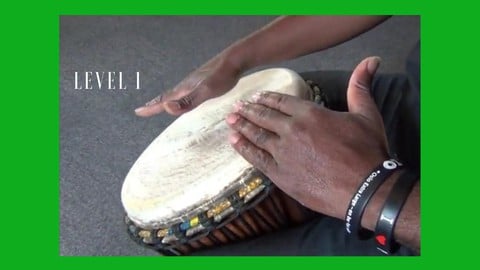
How to Play Djembe,Drum & Rhythm and teach Children. Level 1 (2020)
4.9 (533 Reviews)
- Provider: Udemy
- Time: 2.1h
$69.99
 Reviews

By Paul Jones on 1/29/2025
There was some really good content in this course, I have not quite got all the way to the end yet. The problem I had with this course was that, at various times, the instructor would say that he would get to it in the non-diatonic section; as far I can tell, there is no non-diatonic section. This was a bit of a let down for me. The course was all about creating chord progressions that are diatonic and functional and I was hoping to see some content that was non-diatonic as well. The course just seems incomplete in my opinion.
By Johannes Fritsch on 12/20/2024
I find the course excellent. I dabbled in composition for a while writing pieces on Musescore, then took a teacher for a while. I was repeatedly found out for poor chord progressions and felt a bit lost. This course is excactly what I was missing. It is all about chord progressions, the different types of chords and their functions, harmonizing melodies vs melodizing harmonies - it's all the topics I run into when writing music. This course is bang on both regarding the topics and the presentation. Great!
By Stephen Garber on 10/13/2024
Excellent information and filled with important knowledge of harmony and chords. I enjoy listening to the videos. I like how you teach on how to use these chords as well as how to practice them in the keyboard. Excellent Job! I also like how you show in the screen every important point the one need's to know so that can write this imformation down in Word to keep this information for study and future reference.
By Huseyin Dik on 6/23/2024
It contains a lot of usable information and illustrates it all in an understandable way. Those interested in the course should know that it is the continuation of the same teacher's melody, scales and modes training. I'm waiting for this teacher's next training.
By Mick McCarthy on 3/18/2024
Awesome course, found it from Max's YouTube videos and so happy I did. Started with the harmony one as that's the area I feel I need most improvement, but since picked up the melody one and very much looking forward to that (as well as the future non-diatonic harmony one!)
By Bo Soderstrom on 9/14/2023
Some of it (about half of it) was basic stuff that I am already familiar with. That which I was not very, or not at all, familiar with was good. It is a bit of a problem that I do not play piano, I only play guitar. I have a friend that plays piano and when I compare the sound of a particular voicing of a chord played by the guitar with the same voicing played by the piano, it does not sound exactly the same. I don't know if that is a flaw in my hering or if that is actually a common experience.
By LS Wang on 5/18/2023
These 3 chourses is exactly what I'm looking for, and beyond my expectation. By self learning, I always wanted to dive deeper to the harmony but most other theory courses I found, only tells you how to build chords (which I could easily found in free articles or youtube resources), and end up only knowing how to play on instrument when you see it, without really knowing the chord itself and no idea how to apply in real practice to creating sound/progression. This course is what I'm looking for, I really feel like learning what's really going on
By Malek El Yaman on 8/17/2022
Amazing course. Very thorough. Holds your hand and walk to you step-by-step through the various chords and how they are used. Lessons very detailed and logical. Hammers down the ideas through repetition. Very clear exclamations. The homework assignments are very helpful to submit everything you learn. I highly recommend it. I would like to go back and Do the course again for full benefit. important note: the previous review I had left was by accident, I actually meant it for another course.
By laodawei § on 6/11/2022
The course was very extensive in the study of chords and harmony. I would have liked to learn something about harmony using modes which were presented in the melody class. All in all, a very good course.
By Christopher Holland on 2/10/2022
I thoroughly enjoyed this course. I will be going through all 3 of Max's music theory courses again because they are just filled to the brim with not only understanding music theory at a highly competent level, but they give you the ability to communicate with other musicians and discuss these concepts. I give all 3 of this instructor's courses the highest rating and recommendation.
 Quality Score
No CourseDuck member has rated this course yet. Taken it? Give each part a thumbs up or down.
Overall Score : 96 / 100
- Video Duration:
 7.4h
- Price: $10.99
- Provider: Udemy
- Updated:
 March 2023
- Level:
 Intermediate
- Language:
 English
- Certificate:
 Yes
30-day money-back guarantee on most paid courses
Udemy Coupon Price Tracker
