
 Web Development
 Data Science
 Python
 SQL
 JavaScript
 Artificial Intelligence
 IT & Software
 IT Certifications
 Hacking
 AWS
 Arduino
 DevOps
 3D Modeling
 Graphic Design
 Photoshop
 Drawing
 Digital Painting
 UX Design
 Business
 Data Analysis
 Communication Skills
 Project Management
 Leadership & Management
 Human Resources
 Digital Marketing
 Social Media Marketing
 Marketing
 SEO
 Google Analytics
 Branding
 Excel
 Office Productivity
 SAP
 PowerPoint
 Microsoft Access
 SharePoint
 Finance & Accounting
 Trading & Investing
 Accounting
 Bitcoin
 Personal Finance
 Video Editing & Animation
 Photography
 Adobe Premier Pro
 Adobe Lightroom
 Personal Development
 Productivity
 Career Development
 Life Coaching
 Health & Fitness
 Meditation & Mindfulness
 Yoga
 Music
 Music Production
 Guitar
 Piano
 Singing
 Language Learning
 Teaching & Academics
 Engineering
 Math
 Lifestyle
Solar Power Your Home: Safe Money, Go Green [3] (Udemy.com)
[Module 3] Powering On: Mastering Inverters and Controllers for Efficient Energy Conversion
Created by: Jesse Gorter
Last updated November 2024
 What you will learn
- Inverter Types and Selection: String inverters, microinverters, power optimizers
- Inverter Configuration and Setup: Configuring settings, MPPT, monitoring
- Charge Controller Fundamentals: PWM, MPPT, charging algorithms
- System Monitoring and Control: Monitoring performance, troubleshooting
- Compatibility and Integration: Ensuring compatibility, integrating energy storage
- Hybrid Inverters, Inverter-Chargers and Battery Inverters: Pros & Cons and System Blueprints
- Grid meters and Financial Compensation Options for feeding power back to the grid
- The operating principles and essential details of PV Solar Charge Controllers: IV Curves and MPPT Algorithms
- Case Studies of the latest technology available: Inverter, Charger, PV controllers and Grid Meters
How it compares
Against the other 335 rated Udemy courses in Engineering on CourseDuck:
- Rating4.5 out of 5higher than 55% of them
- Reviews168#245 of 336 by number of reviews
- Length1.3 hoursshorter than 92% of them
- Last updatedNovember 2024more recently than 55% of them
 Course Description
Hello Solar Energy Enthusiast!
My goal is to make sure you will enjoy this course! Since you are reading this, it means you are looking for a reliable source of information related to grid-tied solar energy systems: Through this course, I will share with you my extensive knowledge and experience.
And lucky you! Through this course you will get a condensed version of all the fundamentals you need to be aware of. I have included several short multiple choice questions, though which you can self-test whether you have absorbed the knowledge adequately throughout the course. And to spice it up, we will also take numerous virtual excursions to websites of manufacturers of different components of your solar system. Through this approach, we makes sure that we bridge the following gaps:
We make sure that you get the relevant and unbiased knowledge from an experienced professional
You have the possibility to test your knowledge and freely browse through the content of the course as per your preferences
We will bridge the gap between theory & real-life examples by reviewing numerous product options which you might come across as you will be shopping for your system components
I am glad you are interested in this course: It will teach you all the relevant knowledge, without any 'fluff', and includes several brief multiple-choice questions to test your knowledge.
I have created this course for you, fueled by my academic background in Renewable Energy Engineering and extensive field experience in the design and installation of PV Energy Systems. You are getting a very good deal: I will summarize for you all that I have learned over the years, and all you have to do is push the button and starting soaking up the information. Lucky you!
During this course, we will review and learn about the following topics:
The output characteristics of a PV Solar Cell
The IV Curve and relationship between current and voltage
The correlation between irradiance and PV performance
The difference between the Open Circuit Voltage and Short Circuit Current
The location of the Maximum Power Point, and how to track it
Where to find the IV Curve details of a PV Module you consider to buy
How to interpret the specification sheet information of a particular PV Module
The relationship between the PV Module voltage and power output
The principles of IV Curve stacking
PV Cell Open Circuit Voltage increments versus Short Circuit Current combinations
Parallel and Series connection of PV Cells and the stacking effect
Case study of a real life PV Module: How to find the Voc, Isc an MPP values
Module test protocols: NMOT versus STC testing
Maximum Power Point Tracking: the interactions on the IV Curve
The MPPT algorithm principles explained
Case Study of a MPPT PV Charge Controller: The performance and design characteristics explained
Temperature derating factors of a charge controller
Overdesigning your PV array compared to the charger specification values
The maximum current values for a MPPT charger
The effect of temperature on your PV module voltage output
Pulse Width Modulation and charging algorithms
Charging behavior with PWM devices
Battery voltage versus Vmpp with PWM chargers
Efficiency loss during Pulse Width Modulation charging
Case study of available PWM chargers: Design and performance limits
Input & Output connections on chargers
User Interfaces: advantages and disadvantages
The advantage of stacking multiple chargers in one system
Case Study of available MPPT PV Chargers: Connection types, Terminal sizes and Design parameters
The difference between String Inverters and Central Inverters
The concepts and functionality of Hybrid Inverters
Blue print and operation examples of a Grid Tied Hybrid Inverter with a PV Array and a Energy Storage System
Dedicated versus integrated Inverter-Chargers
Blue print examples of a Grid Tied PV System with both String Inverters and Hybrid Inverters
Case Study: 2kVA and 3kVA 120VAC Inverter-Chargers
Separate functionality and operation values for Integrated Inverter-Chargers
Case Study: All in one Hybrid Inverter, the design and operation values
The difference between the current and voltage Total Harmonic Distortion values [THDI, THDU]
The concept of Anti Islanding for Grid Tied PV Energy Systems
The different terminologies used related to Anti Islanding
Blue print of a typical Distributed Energy System with Energy Storage [DESS]
Theoretical case study of a DESS within a power grid during power outages
The basic differences between Uni- and Bidirectional Grid Meters
The concept of SMART Bidirectional Grid Meters
Feed-in Tariff, Net Metering and the Successor Tariffs explained
The principle of Time Of Use [TOU] compensation for Grid Tied Systems
Blue prints of a Grid Tied System with various Grid Meters and financial compensation models
Read-Out principles of analog unidirectional grid meters
Power Purchase Agreements, Net Metering Vs. Net Billing, Market Rate Metering and other models explained
The main outline of this course is as follows:
PV Controllers
IV Curve
Stacking Effect
MPPT Algorithm
PWM Chargers
Charger options
Inverters
String Inverters
Hybrid Inverters
Inverter-Chargers
Anti Islanding Protection
Grid Meters
The different Financial Compensation Models
Grid Meter options and Read-Out Examples
The different Grid Feed-In Agreements
Take action now! Educate yourself by starting this course, so that you will be able to make well-informed decisions for your system. TIP: Udemy offers a very generous refund policy in case the course content turns out different than what you expected.
See you soon!
Jesse
Jesse Gorter
Renewable an Sustainable Energy Engineer, Master of Engineering
Mechanical Engineer, Energy Technology, Bachelor of Engineering

 Udemy Discount
The discount is applied through our link. Open the course from here and Udemy's current promotional price is applied at checkout on most courses, no code to type.
Some courses are excluded from Udemy's promotions. If the price does not drop, clear your browser cookies and use the button again.
Instructor Details

- 4.5 Rating
 168 Reviews
Jesse Gorter
Jesse now shares his engineering skills and expertise in this easy to grasp & to-the-point course. Simple and clear illustrations and pleasant graphics make you want to watch the content from start to finish. The course format follows the Person In Presentation [PIP] approach: You watch Jesse teaching you everything you need to know, while the background shows the full-screen dynamic presentation with all the visual course content.
Specialized in Off-Grid Energy Systems, with a focus on Solar Power and Generator/Solar Hybrid systems. More than ten years of hands-on experience in the design, installation and commissioning of Off-Grid Energy Systems with both Lithium Ion and Industrial Lead Acid battery banks.
Jesse has a Master of Engineering [Meng] Degree in Renewable and Sustainable Energy Engineering from the Carleton University in Ottawa, Canada, and a Bachelor or Engineering [Beng] degree in Mechanical Engineering with a specialization in Energy Technology from The Hague University in The Netherlands.
Early career experience is based in the technology sector of oil & gas energy metering systems, as well as biogas-to-natural gas decentralized upgrading technologies. Prior to his career developments in remote and off-grid power energy systems, Jesse realized construction and commissioning of medium to large scale Straight Vegetable Oil [SVO] and biofuel plants.
 More courses by Jesse Gorter

Solar Power Your Home: Safe Money, Go Green [4] (2024)
4.4 (289 Reviews)
 Provider: Udemy
 Time: 1.1h
$54.99
More Engineering courses

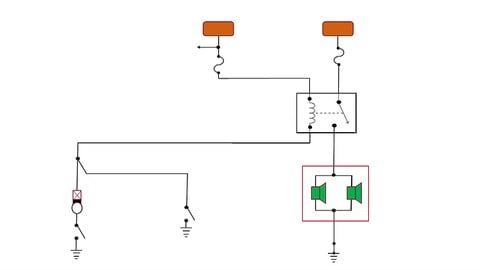
Do it Yourself - Automotive Electrical Diagnosis - Beginner (2026)
4.8 (1,897 Reviews)
- Provider: Udemy
- Time: 2.1h
$12.99
ROS 2 for Beginners Level 2 - TF | URDF | RViz | Gazebo (2025)
4.8 (1,869 Reviews)
- Provider: Udemy
- Time: 13.8h
$10.99

Advanced Kalman Filtering and Sensor Fusion (2021)
4.8 (1,033 Reviews)
- Provider: Udemy
- Time: 8.3h
$84.99

Digital Electronics: Robotics, learn by building module II (2020)
4.8 (942 Reviews)
- Provider: Udemy
- Time: 13.1h
$14.99

 Reviews

By Yuan-Syun Cheng on 5/15/2024
Good course. The highlight of the course is the application of theory into practice by doing online excursions and doing a dive into the detailed information indicated in the datasheets.
By Tillman Zschucke on 3/27/2024
I cannot give enough praise to Jesse! This and also the course on panels is such a treasure trove of information! Jesse presents this in a very clear and concise manner and his English is very easy to understand. Frankly because of such (rare) gems of videos I always come back to Udemy because learning from someone who really understands what he is talking about is real pleasure!
By Zahid Hussain on 12/11/2023
Good course, use of white board makes things to understand more easily
By Tom Solo on 9/24/2023
It's a very good match. I appreciate Jesse's clear, concise instruction style and the well-structured format. Also the graphics are well-presented. Excellent.
By Amantha Maharaj on 6/19/2023
The course was very clear and well presented by a very knowledgable presenter.
By Suki Matharu on 6/1/2023
Course content is very simple to understand. Explained in a layman’s terms.
By JT Engelbrecht on 2/14/2023
Good Stuff. I wish more was said about how the system could be laid out and which can work while the utility line is down.
By Rob Young on 12/30/2022
It was a great review for me. I took a course in 2008 and tested for my NAPCEP. Unfortunately I was not able to apply the training at the time. I found this course well done by Mr Gorter. There were a few questions that were not clear that I will address separately with the instructor.
By Paulo Andres Jara Santibanez on 8/28/2022
So far so good, but i really miss some downloadable infographic material, or some .pdf with the key points shown on each class. At the moment i am just taking some screenshots of some valuable informgraphy for future review..
By Paul Kellet on 6/27/2022
Great course, easy to follow, well explained and well presented!
 Quality Score
No CourseDuck member has rated this course yet. Taken it? Give each part a thumbs up or down.
Overall Score : 90 / 100

- Video Duration:
 1.3h
- Price: $54.99
- Provider: Udemy
- Updated:
 November 2024
- Level:
 All Levels
- Language:
 English
- Certificate:
 Yes
30-day money-back guarantee on most paid courses
Udemy Coupon Price Tracker
