
 Web Development
 Data Science
 Python
 SQL
 JavaScript
 Artificial Intelligence
 IT & Software
 IT Certifications
 Hacking
 AWS
 Arduino
 DevOps
 3D Modeling
 Graphic Design
 Photoshop
 Drawing
 Digital Painting
 UX Design
 Business
 Data Analysis
 Communication Skills
 Project Management
 Leadership & Management
 Human Resources
 Digital Marketing
 Social Media Marketing
 Marketing
 SEO
 Google Analytics
 Branding
 Excel
 Office Productivity
 SAP
 PowerPoint
 Microsoft Access
 SharePoint
 Finance & Accounting
 Trading & Investing
 Accounting
 Bitcoin
 Personal Finance
 Video Editing & Animation
 Photography
 Adobe Premier Pro
 Adobe Lightroom
 Personal Development
 Productivity
 Career Development
 Life Coaching
 Health & Fitness
 Meditation & Mindfulness
 Yoga
 Music
 Music Production
 Guitar
 Piano
 Singing
 Language Learning
 Teaching & Academics
 Engineering
 Math
 Lifestyle
The Art of Doing: Electronics for Everyone (Udemy.com)
Start designing, building, and playing with your own circuits today!
Created by: Michael Eramo
Last updated December 2022
 What you will learn
- Fundamental electronic components such as resistors, capacitors, diodes, transistors, and integrated circuits. Learn how they operate and build!
- How to use various laboratory equipment such as power supplies, multimeters, function generators, and oscilloscopes.
- Both DC and AC applications of electronic circuits including transistor switches and amplifiers, RC timing circuits, and filters.
- The LM 358 Operational Amplifier - how to wire it up using a single supply as a crude comparator, non-inverting amplifier, and inverting amplifier.
- The LM 555 Timer - how to wire it up in bistable, monostable, and astable mode.
- The CD 4017 Decade Counter - how to wire it up as a 10 LED flasher and music sequencer.
- 10 "Circuit Challenge Problems" putting your knowledge (what you've learned in the course) to the test.
How it compares
Against the other 335 rated Udemy courses in Engineering on CourseDuck:
- Rating4.8 out of 5higher than 95% of them
- Reviews343#175 of 336 by number of reviews
- Length11.6 hourslonger than 78% of them
- Last updatedDecember 2022earlier than 63% of them
 Course Description
Years ago I bought an Arduino and I can remember how awesome it felt to hook it up, write a program, and blink an LED! My next question was "How on earth would you do that without an Arduino?!?". Don't get me wrong, I think Arduino's and all sorts of microcontrollers are awesome, but to me, it abstracted things a little too much. I'm an avid guitarist and a gear head; I love guitar effects pedals. Inside those stomp boxes, you won't find an Arduino. What you will find is the guts of an analog circuit: resistors, diodes, capacitors, transistors, and integrated circuit chips...all working together to create, bend, and shape a waveform.
I know there are tons of YouTube videos out there showing various analog circuits but the vast majority of them are the same: a time lapsed video of someone populating a breadboard or PCB with music playing in the background. No explanation of what they were doing or why they were doing it, no breakdown of the role of each and every component in the circuit, no conveying of understanding at not just a mathematical level but even a conceptual level. That is not learning and as someone who wanted to learn, to dive deeper into the subject, so I could figure out how to blink an LED without an Arduino and eventually more, it was a frustrating experience.
These are the reasons I decided to create this course. These are the reasons I hope you enroll in this course; because I can help lift those learning frustrations for you and help you gain an appreciation for analog electronics.
In this highly interactive course we will go through and cover the following circuit components. Exploring how they operate (with just enough math to hopefully convey understanding), interact with one another, and behave with DC and AC signals.
Resistors
Potentiometers,
Light Dependent Resistors
Push Buttons
Capacitors
Diodes
LEDs
Speakers
Microphones
Transistors
Operational Amplifiers
555 Timers
Decade Counters
And More!
We will build/explain/explore classic circuits and then have some fun with some more creative circuits through direct instruction, "Challenge Circuits" where you can test your knowledge at various points in the course, and "Build Together Circuits" where we will build and learn together. Example circuits include:
Tri-Color LED Mixer
Voltage Dividers
Transistor Switches
RC Timing Circuits
Fading LED Circuits
Astable Multivibrators
RC Low Pass, High Pass, and Band Pass Filters,
Transistor Amplifiers (Common Emitter Amplifier)
A Sound to Light Circuit
Op Amp Comparators, Non-Inverting Amplifiers, and Inverting Amplifiers
A Crude Motion Detector and Volume Meter
555 Timer Circuits in Bistable, Monostable, and Astable Mode
A Toy Theremin, Toy Piano, and Atari Punk Console
4017 Decade Counter 10 LED Chaser
Voltage Controlled Oscillators
A 4 Step Music Sequencer
An 8 Step Music Sequencer
And More!!!
The presentation of material will constantly alternate from a slideshow shared directly from my computer screen with up close pictures of the circuit I am building for reference to live cameras with viewpoints of my breadboard, oscilloscope, and multimeters watching me build in real time. I will teach, then build, explain, then build with the hopes that you build along with me and at no point in the process experience confusion, frustration, or a lack of desire to continue.
The course was designed so a student could follow along with a breadboard, 9 volt battery, minimal components (parts list included), and a multimeter. There are times when I will use equipment such as a function generator or oscilloscope but I understand those are expensive items and they are not integral items to the course. There is also the option to follow along with various online circuit simulators.
I hope you enroll in this course today and together we can figure out "How the heck would I do that without and Arduino?!?"

 Udemy Discount
The discount is applied through our link. Open the course from here and Udemy's current promotional price is applied at checkout on most courses, no code to type.
Some courses are excluded from Udemy's promotions. If the price does not drop, clear your browser cookies and use the button again.
Instructor Details

- 4.8 Rating
 343 Reviews
Michael Eramo
Hello, my name is Michael Eramo. I am a life long learner, a self-taught programmer, and an experienced educator. I hold official Bachelor's degrees in Music, Education, and Physics, as well as a Masters degree in Mathematics. I also hold a certificate in Software Development from Microsoft.
I have years of experience as a high school Physics teacher, Computer Science Teacher, and college Mathematics teacher. I am part of the New York State Master Teacher Program a network of more than 800 outstanding public school teachers throughout the state who share a passion for their own STEM learning and for collaborating with colleagues to inspire the next generation of STEM leaders.
I am passionate about learning new things and teaching what I know to those around me in a way that is engaging, meaningful, and with purpose.
 More courses by Michael Eramo

The Art of Doing: Python Projects to Master the Fundamentals (2025)
4.7 (1,072 Reviews)
 Provider: Udemy
 Time: 39.7h
$79.99

The Art of Doing: Video Game Creation With Python and Pygame (2021)
4.6 (837 Reviews)
- Provider: Udemy
- Time: 17.3h
$74.99

The Art of Doing: Dive Into Android Development with Kotlin (2022)
4.7 (191 Reviews)
- Provider: Udemy
- Time: 17.2h
$64.99

The Art of Doing: Python Network Applications with Sockets! (2022)
4.8 (139 Reviews)
- Provider: Udemy
- Time: 14.5h
$64.99
More Engineering courses

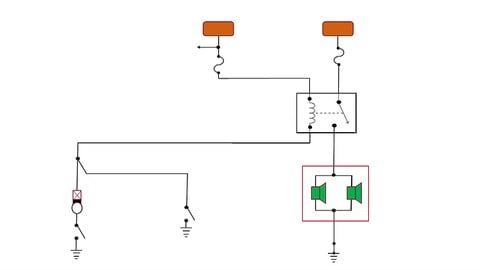
Do it Yourself - Automotive Electrical Diagnosis - Beginner (2026)
4.8 (1,897 Reviews)
- Provider: Udemy
- Time: 2.1h
$12.99

ROS 2 for Beginners Level 2 - TF | URDF | RViz | Gazebo (2025)
4.8 (1,869 Reviews)
- Provider: Udemy
- Time: 13.8h
$10.99
Advanced Kalman Filtering and Sensor Fusion (2021)
4.8 (1,033 Reviews)
- Provider: Udemy
- Time: 8.3h
$84.99

Digital Electronics: Robotics, learn by building module II (2020)
4.8 (942 Reviews)
- Provider: Udemy
- Time: 13.1h
$14.99

 Reviews

By Patrick Stevens on 7/5/2025
Hands-on, practical, very well thought out and presented, including not just the “how’s”, but also the “why’s”. Principles are presented without being overly abstract. It is as its title says: “Electronics For Everyone.”
By Warren Vaughan on 2/12/2025
I liked it and think I learned quit a bit though got a little lost during the decade counter portion. I think this could have been in part because I used a circuit building app on my pc instead of actually building it(EveryCircuit) and it didn't have the specific decade counter that the instructor was using. I think it would be helpful for those using a circuit building app to show a sketch of the circuit and explain a bit more about how the circuit works using this sketch as a teaching aid.
By Oliver G on 12/3/2024
I was looking to get a basic knowledge in electronics for years but always hesitated due to the fear that learning using only a book would be cumbersome for me and probably won't turn out fruitful- THIS COURSE finally jumpstarted my adventure into electronics, wondefully explained with nice examples and little challenges, not too little not too much! Congratulation! You are an inspiration of an teacher and it again shows that even the most complicated topics can be nicley explained through clear and structured guidance! Only a little suggestion (which I already read in other comments) I gues that adding schematics of the curcuits we build would benefit the students from getting used to seeing and quickly recognizing the single components and overal functioning of these curcuits but that a minor thing! Thank you for this course, I will recommend it!
By Steve Nace on 6/19/2024
This is a fantastic course. The content is logically organized. Explanations are clear and practical with an emphasis on underlying concepts. The format of explanation followed by demonstration is very effective. Finally, the instructor is engaging, friendly, and easy to understand. This is one of my favorite Udemy courses yet.
By Paul Smith on 2/8/2024
I am really enjoying this course. The videos, slides and demonstrations are incredibly helpful in explaining exactly what is happening. I have struggled to fully understand the difference between serial and parallel circuits. This course has explained and demonstrated the differences beautifully. Thanks.
By Wendell Kelsey on 6/23/2023
Exactly what I was looking for. I make guitars and I am trying to learn how to make a piezo preamp and an audio mixer to combine and mix the signals from 6 separate pickups, (one per string). But my knowledge of electronics is limited to installing volume and tone controls in electric guitars (mostly copying circuits from drawings). This course was perfect, as the instructor is also a guitar enthusiast who makes his own stompboxes. Beyond that, he is also very good at explaining what is happening in the circuits, and the theories, laws and mathematics underlying it all. The audio and video quality is excellent and it was easy to understand his accent and the words he was saying in English (something not necessarily easy to find on Udemy). I recommend this course to any person who wants to explore electronics as a hobby. Or, if you are into Arduino, ESP32, etc,. and coding, if you want to understand how the micro computer can interact with the physical world.
By Joseph Sanal on 11/28/2022
This is the best beginner electronics course on the web. Teacher has a great, relaxed voice and makes the concepts super clear. the experience this far has been like watching a thriller movie ... especially the section on npn amlifiers. no o/p then add a capacitor ... gain improves and you get the expected o/p. nxt was the diode in the dancing light project. I will never forget these concepts again.
By Albert Castillo on 8/31/2022
Am 64 getting into hobby electronics for retirement next summer. enjoyed this course, really enjoyed the final build ( the 8 step sequencer - but only had enough potentiometers to make mine a 4 step - worked fine though, and enjoyed tinkering with it ). Thanks for your time putting this together. Albert C.
By Devin Henkel on 7/8/2022
I thought the concepts were communicated clearly and the subject matter was fun. Wish we could have covered some additional components (inductors, transformers, etc.) Overall, great course for beginners.
By Mark Owensby on 3/4/2022
I really enjoyed this course. It gave an great introduction into DC, AC, RC timing, High/Low Pass Filters, LM555 timer chip, CD4017 Decade Counter, etc. It was very easy to follow each project construction. Using an Oscilloscope to examine output wave-forms provided a lot of clarity. I learned a lot.
 Quality Score
No CourseDuck member has rated this course yet. Taken it? Give each part a thumbs up or down.
Overall Score : 96 / 100

- Video Duration:
 11.6h
- Price: $10.99
- Provider: Udemy
- Updated:
 December 2022
- Level:
 Beginner
- Language:
 English
- Certificate:
 Yes
30-day money-back guarantee on most paid courses
Udemy Coupon Price Tracker
