
 Web Development
 Data Science
 Python
 SQL
 JavaScript
 Artificial Intelligence
 IT & Software
 IT Certifications
 Hacking
 AWS
 Arduino
 DevOps
 3D Modeling
 Graphic Design
 Photoshop
 Drawing
 Digital Painting
 UX Design
 Business
 Data Analysis
 Communication Skills
 Project Management
 Leadership & Management
 Human Resources
 Digital Marketing
 Social Media Marketing
 Marketing
 SEO
 Google Analytics
 Branding
 Excel
 Office Productivity
 SAP
 PowerPoint
 Microsoft Access
 SharePoint
 Finance & Accounting
 Trading & Investing
 Accounting
 Bitcoin
 Personal Finance
 Video Editing & Animation
 Photography
 Adobe Premier Pro
 Adobe Lightroom
 Personal Development
 Productivity
 Career Development
 Life Coaching
 Health & Fitness
 Meditation & Mindfulness
 Yoga
 Music
 Music Production
 Guitar
 Piano
 Singing
 Language Learning
 Teaching & Academics
 Engineering
 Math
 Lifestyle
Crash Course Electronics and PCB Design (Udemy.com)
Learn Analog / Digital Electronics and PCB Design from the Ground up with Altium CircuitMaker and Labcenter Proteus
Created by: Andre LaMothe
Last updated July 2026
Our take
Based on the ratings of 19,513 students, a sample of their written reviews and the syllabus, as the course stood in July 2026. No course pays to be reviewed.
A 112 hour electronics course that starts at the electron and ends with three real printed circuit boards laid out in Altium CircuitMaker. The syllabus shows 161 lectures across nine sections, and the biggest block, about 33 hours, is a single Electrical Engineering 101 run. The topic list runs from Ohm's Law through circuit analysis, AC and DC, filters, amplifiers, transistors and FETs. It suits patient self-learners, embedded developers who need the hardware side, and engineering students who want to see the whole major before they start. It is not a quick PCB tutorial. The requirements say as much: many one hour lectures, a breadboard and parts, and a lot of patience.
Andre LaMothe is the draw. Reviewers say he explains hard math and physics clearly and praise the hands-on side, and the description promises every circuit worked on the board, simulated in Proteus, then built on camera. One 62 year old student wrote that after two months the RCL and AC theory finally clicked. A working electrical engineer called it the best course he has taken. The complaints are fewer but real. One reviewer found the early physics confusing without high school physics, another could not find descriptions of what the section 8 projects actually do, and the bundled textbook is over 20 years old. A one star review calls it disorganised and points to free YouTube instead.
Value depends on how much someone wants. With 120,000 students, a 4.7 rating from over 19,500 reviews and a refresh in July 2026, the numbers back it up. Expect to buy parts and a breadboard to get the full benefit. For the whole path from Ohm's Law to manufacturing files, this is the one to take. For PCB layout alone, it is a long road to get there.
Pros
- Every circuit is worked on the board, simulated in Proteus, then built on camera in high definition.
- Ends with three real products designed in CircuitMaker and taken all the way to manufacturing files.
- Refreshed in July 2026, with an 800 page engineering textbook included as a PDF.
- Students from a 10th grader to a 62 year old say the math and physics finally make sense.
Cons
- 112 hours and many one hour lectures. Even the requirements warn it needs a lot of patience.
- Early sections assume some high school physics, and a few students found them confusing.
- The bundled textbook is over 20 years old, and the section 8 project briefs are hard to find.
The delivery is outstanding, the quality of the lectures is phenomenal, the course goes in depth and has the perfect balance of theory and practice, which are both important.
Listed as all levels, but it really suits beginners with high school math, a Windows PC and a breadboard, not people after a quick tool tutorial.
 What you will learn
- Students will be able to analyze and construct basic analog and digital circuits. As well as design printed circuit boards, assemble and get them running.
- Students will be able to leverage this knowledge to build and produce electronic products completely themselves.
- Students will be able to use numerous CAD and design tools such as schematic entry, PCB layout and routing, circuit simulators, MATLAB, and more.
- Students will learn how to use basic electronics lab equipment such as oscilloscopes, power supplies, signal generators, and more.
- Students will learn hands on techniques such as circuit construction with solderless breadboards, wire wrapping, and soldering.
- New Students use Code V O L T A G E
Course content
9 sections · 161 lectures · 112 hours of video
- 1The Starting Line 1 free preview1 lecture · 11 min
- 2Introduction to Electronics 3 free previews25 lectures · 16 hours
- 3Advanced Circuit Analysis Techniques and Tools 1 free preview5 lectures · 4 hours
- 4Electrical Engineering 101 - And Here Comes the Crash Course Part...Buckle Up! 2 free previews49 lectures · 33 hours
- 5Introduction to Digital Logic Systems, Boolean Algebra, Timing Diagrams and TTL 1 free preview8 lectures · 3.9 hours
- 6Taking Digital to the Next Level with Small, Medium, and Large Scale Integration 1 free preview18 lectures · 8.7 hours
- 7Printed Circuit Board Design and Technology with CircuitMaker3 lectures · 2.8 hours
- 8Graduating to Design Engineer: CircuitMaker Fundamentals and Real-World Projects 2 free previews25 lectures · 18 hours
- 9Crash Course Bonus Lectures 27 free previews27 lectures · 25 hours
Who it is for
The instructor says it suits
- Anyone interested in learning electronics and/or printed circuit board design.
- Programmers interested in learning about how the machines they code with actually work and the electronics inside them.
- Electrical or Computer Engineering students that would like to see what the major is all about end to end as a head start in their degree.
- Someone that is a hacker/hobbyist that has some experience with electronics, but wants to take it to the next level and obtain a much deeper understanding of electronics and circuit analysis/design.
What you need before you start
- A modern Windows PC (or VM) capable of running various CAD and design tools used in this course such as Altium CircuitMaker, Labcenter Proteus, Matlab, and more.
- A High School or equivalent understanding of mathematics.
- Since the course is about electronics, to get the full benefit of the course, you will need to follow along and build the circuits. Thus, access to breadboards, power supplies, tools, parts, etc.
- A lot of patience! This is a university level course with many 1 hour lectures. There's a lot of material to cover, and we are here to learn this cold, inside and out!
How it compares
Against the other 335 rated Udemy courses in Engineering on CourseDuck:
- Rating4.7 out of 5higher than 88% of them
- Reviews19,513#3 of 336 by number of reviews
- Length112 hourslonger than 100% of them
- Last updatedJuly 2026more recently than 88% of them
 Course Description
But, unlike other courses that are highly technical and math based. Crash Course Electronics was designed to be taken as a journey with the instructor. Each lecture building on the last, each new concept like a new puzzle approached in many different ways. The most complex topics and mathematical concepts are distilled down into understandable lectures and we have a lot of fun doing it! I had to learn this stuff at one point and remember how hard it was, so I approach each lecture as if we are both learning for the first time and make no assumptions about what you know or don't know.
As we progress through the lectures, expect to see every circuit and idea worked out on the black board, virtuallysimulated (with LabcenterProteus), and built by hand right in front of your eyes in high def, ultra clean video and audio. Not only will you learn all the theory and practical aspects of Electrical Engineering, but my 35+ years of experience with electronics will be downloaded to your brain with countless real-world tips and tricks that will take you from a hobbyist to a deep understanding of the subject matter.
Then when we have all the basic electronictheory under our belts, buckle in for something you have never seen -- we will build, not one, not two, but three complete products! We will talk about the design, the motivation, look up parts, background information, and then design the circuits together like colleagues, lay them out in AltiumCircuitMaker, route them, verify and produce manufacturing files. If that wasn't enough, we will take those files and go out on internet and send them to a number of online manufactures and get them ready for production, all you have to do is hit SUBMIT!
Last, but not least -- the course is based on my college textbook "Design Your Own Video Game Console" aka"The Black Art of Video Game Console Design"-- this 800+ page book is includedfree of charge (the PDF version) with the course. Although, we won't be talking about game consoles in this course, we will be using the text for its theory,electrical engineering and PCB design chapters.
Who this course is for:
Anyone interested in learning electronics and/or printed circuit board design.
Programmers interested in learning about how the machines they code with actually work and the electronics inside them.
Electrical or Computer Engineering students that would like to see what the major is all about end to end as a head start in their degree.
Someone that is a hacker/hobbyist that has some experience with electronics, but wants to take it to the next level and obtain a much deeper understanding of electronics and circuit analysis/design.

 Udemy Discount
The discount is applied through our link. Open the course from here and Udemy's current promotional price is applied at checkout on most courses, no code to type.
Some courses are excluded from Udemy's promotions. If the price does not drop, clear your browser cookies and use the button again.
Instructor Details

- 4.7 Rating
 19,513 Reviews
Andre LaMothe
I hold degrees in Mathematics, Computer Science and Electrical Engineering from San Jose State University. Iama Computer Scientist, Electrical and Embedded Engineer that specializes in hardware design, gaming, AI, and robotics. I have written many books, articles and papers on the aforementioned subjects and taught Computer Science and Electrical Engineering courses atUC Santa Cruz as well as online for many years.
I am currently the CEOof Nurve Networks LLC, a full stackembedded development company in Austin, Texas, USA. Before that I was CEOof Xtreme Games LLC, a PCgame development company in Silicon Valley.
 More courses by Andre LaMothe
Crash Course Arduino and Microcontroller Development (2026)
4.7 (1,668 Reviews)
 Provider: Udemy
 Time: 111.4h
$94.99

Fast and Furious Game Development with JavaScript and AI (2026)
4.7 (263 Reviews)
- Provider: Udemy
- Time: 46.6h
$89.99
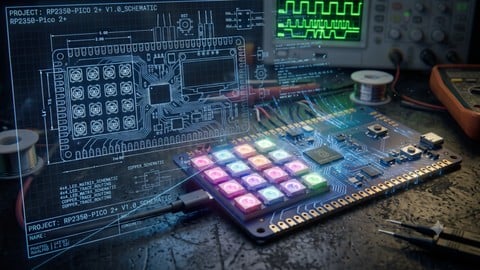
The Black Art of Hardware Design with Raspberry Pi Pico 2 (2026)
4.7 (43 Reviews)
- Provider: Udemy
- Time: 10.9h
$34.99
More Engineering courses

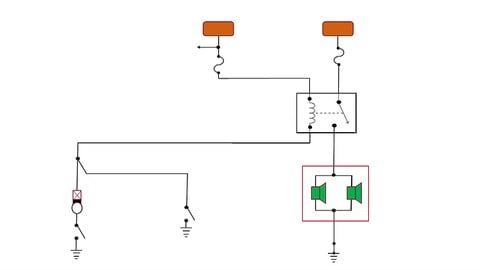
Do it Yourself - Automotive Electrical Diagnosis - Beginner (2026)
4.8 (1,897 Reviews)
- Provider: Udemy
- Time: 2.1h
$12.99

ROS 2 for Beginners Level 2 - TF | URDF | RViz | Gazebo (2025)
4.8 (1,869 Reviews)
- Provider: Udemy
- Time: 13.8h
$10.99

Advanced Kalman Filtering and Sensor Fusion (2021)
4.8 (1,033 Reviews)
- Provider: Udemy
- Time: 8.3h
$84.99

Digital Electronics: Robotics, learn by building module II (2020)
4.8 (942 Reviews)
- Provider: Udemy
- Time: 13.1h
$14.99

 Reviews

By Sayed Imtiaz Tamim on 11/14/2020
The instructor speaks fluently without so many fillers and in my opinion his lectures are easier to understand because of his choice of vocabulary not going crazy with complex words to make himself sound like a pro.
By Raed Hosny Mohammed on 11/14/2020
I supposed I know some on electricity and basic electronic component, but even after 20% i discover that i know nothing, the course is very advanced for me and it is hard to understand in many circumstance, i believe for those beginners you need to know some basics first at least for electricity before applying for this one.
By Olivier Djatchue-Tchokothe on 11/7/2020
I've complete only 5% of the course. but I learned a lot about electronic
By Raphael on 11/7/2020
Andre does a great job with a lot of passion and experience
By Bruno-Pierre on 11/7/2020
This course is awesome ! It shows very practical knowledge of how to build things and design circuits. I am only at 20% of the course and enjoy it a lot. Andrew is a very good teacher. Even if I my native language is french, I can understand very well the explanation of everything.
By Charles W Carson on 11/1/2020
I enjoy the crash course! It is all thumbs up!!! thx
By Tafara Ernest Mapuranga on 10/27/2020
Awesome, he starts from the beginning. It's amazing, even though I have to skip the first lectures. I love everything about this course.
By Wolfgang Bischoff on 10/23/2020
It is awesome that someone takes the time to share their excellent knowledge in a easy to understand way. This is a very, very good course!
By Arul Kumaran R on 10/19/2020
Very insightful and practical approach.
By Crystal Bell on 10/18/2020
This course was absolutely Amazing!!! It was also extremely informative and very well structured!!!
By Luis Madrigal Partida on 10/10/2020
Excellent teacher.
By Jay Edwards on 10/6/2020
very clear, nicely presented, excellent resources. It's early days but if it keeps being this good I'd say this is one of the best courses I've found on Udemy thus far.
 Quality Score
No CourseDuck member has rated this course yet. Taken it? Give each part a thumbs up or down.
Overall Score : 94 / 100

- Video Duration:
 112h
- Price: $139.99
- Provider: Udemy
- Updated:
 July 2026
- Level:
 All Levels
- Language:
 English
- Certificate:
 Yes
- Lectures:161 in 9 sections
- Students:120,100
- Subtitles:12 languages
- Udemy badge:Bestseller
30-day money-back guarantee on most paid courses
Udemy Coupon Price Tracker
