
 Web Development
 Data Science
 Python
 SQL
SQL JavaScript
 Artificial Intelligence
 IT & Software
 IT Certifications
 Hacking
 AWS
AWS Arduino
 DevOps
 3D Modeling
 Graphic Design
 Photoshop
 Drawing
 Digital Painting
 UX Design
 Business
 Data Analysis
 Communication Skills
 Project Management
 Leadership & Management
 Human Resources
 Digital Marketing
 Social Media Marketing
 Marketing
 SEO
SEO Google Analytics
 Branding
 Excel
Excel Office Productivity
 SAP
SAP PowerPoint
 Microsoft Access
 SharePoint
 Finance & Accounting
 Trading & Investing
 Accounting
 Bitcoin
 Personal Finance
 Video Editing & Animation
 Photography
 Adobe Premier Pro
 Adobe Lightroom
 Personal Development
 Productivity
 Career Development
 Life Coaching
 Health & Fitness
 Meditation & Mindfulness
 Yoga
Yoga Music
Music Music Production
 Guitar
 Piano
Piano Singing
 Language Learning
 Teaching & Academics
 Engineering
 Math
Math Lifestyle
Evaluating User Interfaces
In this Specialization, you will learn industry-standard theory and methods for developing successful user interfaces (UIs). Upon completing this Specialization, you will have fluency with the user research, prototyping and evaluation techniques necessary for creating intuitive interfaces that facilitate good user experiences. You will also have demonstrated this fluency through an in-depth Capstone Project that can be shown to prospective employers in the fast-growing field of UI design.Concepts and techniques covered include structured approaches for helping you understand your user base and
Created by: Loren Terveen
 Quality Score
Overall Score : 90 / 100
 Course Description
 Instructor Details

- 4.5 Rating
 19 Reviews
Loren Terveen
Loren Terveen is a Professor of Computer Science at the University of Minnesota. Before joining the University of Minnesota, he received his PhD in Computer Sciences from the University of Texas at Austin, and then spent 11 years at AT&T Labs / Bell Labs. Terveen is an expert in the areas of human-computer interaction and social computing. He has published over 100 scientific papers, holds 9 patents, has advised several startup companies, consulted on intellectual property cases, and has held many leadership positions in his profession, including serving as President of ACM's Special Interest Group on Computer-Human Interaction. Terveen's current areas of research emphasis are: peer production systems and the quantitative analysis of social media data. He has led projects that have: revealed new information about how valuable content is created on Wikipedia, produced and deployed new interface designs to enhance participation in online communities, developed a new location-based messaging system, combined wiki and geographical information systems technologies to create novel interfaces that let people enter and access information about places in their local communities, and created the first fully functional geographical wiki. In all his work, he seeks to use knowledge gained from empirical studies to build novel systems that solve real problems.
 More courses by Loren Terveen

More Interaction Design courses
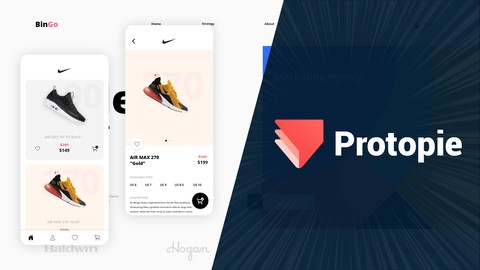
ProtoPie: Design Interactive Prototypes | from Zero to Hero (2020)
4.5 (191 Reviews)
 Provider: Udemy
 Time: 5h
$59.99


Master in New Product Development, Design & Engineering (2026)
4.4 (142 Reviews)
- Provider: Udemy
- Time: 4.6h
$19.99
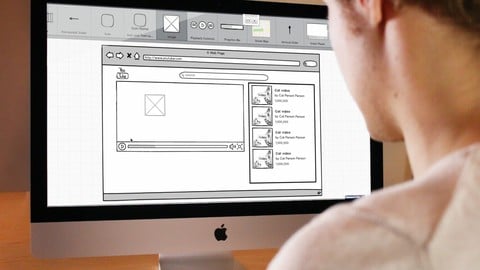
Rapid Prototyping for Entrepreneurs| Build a Demo in 2 hours (2025)
4.3 (1,670 Reviews)
- Provider: Udemy
- Time: 7.3h
$84.99

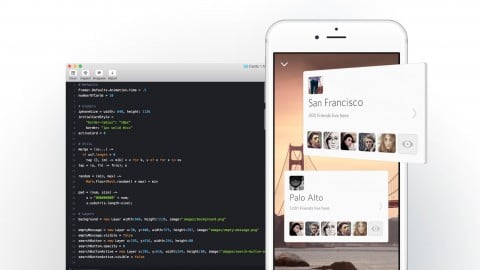
Framerjs: Innovative prototyping and design with interaction (2018)
4.1 (357 Reviews)
- Provider: Udemy
- Time: 9.1h
$19.99
 Reviews

By Kris M on 6-Sep-19
The course (the set of 4 courses) started out SO good. The pace was quick, content and format engaging, and it showed you from the perspective of "hey, this is what we are looking at in real life, here are the pros and cons to look for, etc". It was great! By course 3 it was getting so bogged down with BLAH BLAH BLAH that I could hardly see straight. Suddenly we went from engaging content to mind-numbing boredom. The kind where keeping your eyes open, or even clicking that 'next video' link, was enough to set your whole body into a rigor mortis of NOOOOOOOOOOO. : ( Which is really disappointing because UI/UX is interesting!! Basically this went from hands on tech-vocational training to the doldrums of a standard school format (which is proven ineffective and doesn't give you the skills you need - you have to learn those AFTER you complete the schooling)The videos just seemed to go on and on in this way. I lost all concept of gaining knowledge and it became a marathon of trying to inch my way forward and to hit the finish line. I don't understand how we went from such a strong start to what came after. Course 1 was the best. I was really excited about everything. Then over time it's like the content just sort of got left to drift and fall flat and not just be TO-THE-POINT. Overall some of the content was still A+ but just lost in the way content was approached/delivered. I truly believe this could be fixed and the course could be stellar throughout.
By Irina M on 8-Apr-19
Minnesota University team! You are doing great job! Thanks a lot! Very good courses
By Styliani-Despoina K on 19-Jan-19
Not much as I was expected, not very structured and the weekly courses not equally distributed
By Александр ÐÂ on 21-Jun-18
Awesome course, that teaches about whole bunch of usability tests for UI. You will learn how to make your own personal usability inspection and how to conduct usability tests with users
By Kamalanathan A on 11-Jan-18
Designing and Development team will realize the impact of usability and be able to fine tune in their products.
By Sujit K on 4-Dec-17
Wonder courses for novice and advance users. The courses are not only theory based, at the end of every week there are assignment & quiz, which helps a lot.
By Vivek S on 24-Oct-17
This was a nice learning experience for me. Knowing about various and complicated design evaluation
Showing 12 of 19 reviews
Could not load more reviews.

- Video Duration:
 20h
20h - Price: Free
- Provider: Coursera
- University:
 University of Minnesota
 - Language:
 English
 - Certificate:
 Yes
Yes
Coursera Coupon Price Tracker
