
 Web Development
 Data Science
 Python
 SQL
 JavaScript
 Artificial Intelligence
 IT & Software
 IT Certifications
 Hacking
 AWS
 Arduino
 DevOps
 3D Modeling
 Graphic Design
 Photoshop
 Drawing
 Digital Painting
 UX Design
 Business
 Data Analysis
 Communication Skills
 Project Management
 Leadership & Management
 Human Resources
 Digital Marketing
 Social Media Marketing
 Marketing
 SEO
 Google Analytics
 Branding
 Excel
 Office Productivity
 SAP
 PowerPoint
 Microsoft Access
 SharePoint
 Finance & Accounting
 Trading & Investing
 Accounting
 Bitcoin
 Personal Finance
 Video Editing & Animation
 Photography
 Adobe Premier Pro
 Adobe Lightroom
 Personal Development
 Productivity
 Career Development
 Life Coaching
 Health & Fitness
 Meditation & Mindfulness
 Yoga
 Music
 Music Production
 Guitar
 Piano
 Singing
 Language Learning
 Teaching & Academics
 Engineering
 Math
 Lifestyle
FPGA Embedded Design, Part 1 - Verilog (Udemy.com)
Learn FPGA embedded application design starting with the basics and leaving with your own working designs.
Created by: Eduardo Corpeño
Last updated March 2022
 What you will learn
- Design hardware behavior with the Verilog Hardware Description Language
- Simulate Verilog Modules.
- The curriculum will take you by the hand through learning Verilog.
- In the series, you'll learn how to simulate your designs, how to make them real in an FPGA, and finally how to design and use your own Soft Processor
- This first course is about the Verilog Hardware Description Language.
- This is NOT a System Verilog course. However, learning Verilog is a starting point if you want to learn System Verilog (Similar to learning C prior to C++).
How it compares
Against the other 335 rated Udemy courses in Engineering on CourseDuck:
- Rating4.4 out of 5higher than 39% of them
- Reviews1,142#76 of 336 by number of reviews
- Length3.7 hoursshorter than 63% of them
- Last updatedMarch 2022earlier than 67% of them
 Course Description
Do you feel you've learned enough about microcontrollers? Do you want to learn more embedded application design techniques? How about a technique that will allow you to design high-performance systems the way professional equipment designers do?
If you're still interested, this curriculum is for you. The FPGA Embedded Design series will teach you the exquisite art of FPGA design.
So what is an FPGA anyway?
Before moving on, let me tell you that an FPGA is not a microcontroller. It's not a computer. Well, at least not if you don't want it to be a microcontroller or computer.
The simplest explanation of an FPGA I've found is that it's a shape shifter! It's an integrated circuit that will behave as the logic circuit you'd like, and the way of letting it know the desired behavior is, yes, you guessed it, through programming.
But you will not do this with a Programming Language, but with a Hardware Description Language!
In this course, you'll learn Verilog, which is one of the most widely used Hardware Description Languages (along with VHDL). You'll learn the concurrent paradigm in the Verilog code and how to design digital systems with this powerful language. You'll also learn that there are many purposes of an HDL: System design, simulation, implementation in either a traditional chip, or the popular FPGA alternative.
Don't let this opportunity pass. Take the first step into the other side of embedded systems: FPGA Embedded Design.

 Udemy Discount
The discount is applied through our link. Open the course from here and Udemy's current promotional price is applied at checkout on most courses, no code to type.
Some courses are excluded from Udemy's promotions. If the price does not drop, clear your browser cookies and use the button again.
Instructor Details

- 4.4 Rating
 1,142 Reviews
Eduardo Corpeño
I'm an Electrical and Computer Engineer. I've been teaching Electrical and Computer Engineering at undergraduate and graduate for nearly 20 years.
I love hardware, software and teaching.
I have 11 courses on Udemy so far: One about a technique to solve engineering problems easily, a series of 4 courses (so far) on the electronics and algorithms behind microcontroller platforms, a series on FPGAs, and a series on RISC-V.
Among the subjects in the classes I teach on campus, my strongest are Electrical Circuit Theory, Electronic Devices, Digital Design, Computer Architecture, Microcontrollers, Assembly and C Programming for Embedded Applications, Hardware Description Languages, Field Programmable Gate Arrays, Artificial Intelligence, Printed Circuit Board Design and Real Time Operating Systems.
Along with two of my finest colleagues, I created one of the first MOOCs in Spanish, an introduction to the Raspberry Pi. I also contributed in the translation of "The RISC-V Reader", by Turing Award laureate David Patterson and Andrew Waterman.
I recently got a Master of Science in Computer Science at Georgia Tech and I loved every minute of it.
 More courses by Eduardo Corpeño
Beyond Arduino: Electronics for Developers & Makers - (GPIO) (2026)
4.4 (319 Reviews)
 Provider: Udemy
 Time: 6.1h
$74.99
Beyond Arduino, Pt 3: Interrupt Driven Embedded Applications (2022)
4.3 (90 Reviews)
- Provider: Udemy
- Time: 3.2h
$49.99
Beyond Arduino, Part 2: Analog Input Output (2022)
4.4 (86 Reviews)
- Provider: Udemy
- Time: 3.8h
$54.99
Beyond Arduino, Part 4: C for Embedded Applications (2020)
4.4 (71 Reviews)
- Provider: Udemy
- Time: 6h
$54.99
More Engineering courses

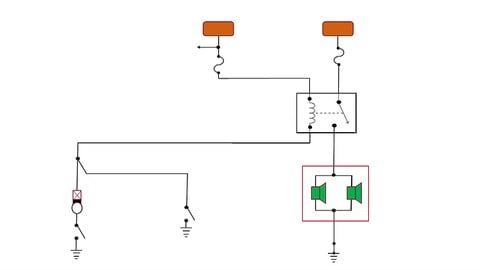
Do it Yourself - Automotive Electrical Diagnosis - Beginner (2026)
4.8 (1,897 Reviews)
- Provider: Udemy
- Time: 2.1h
$12.99
ROS 2 for Beginners Level 2 - TF | URDF | RViz | Gazebo (2025)
4.8 (1,869 Reviews)
- Provider: Udemy
- Time: 13.8h
$10.99

Advanced Kalman Filtering and Sensor Fusion (2021)
4.8 (1,033 Reviews)
- Provider: Udemy
- Time: 8.3h
$84.99

Digital Electronics: Robotics, learn by building module II (2020)
4.8 (942 Reviews)
- Provider: Udemy
- Time: 13.1h
$14.99

 Reviews

By Ellen Larsson on 10/29/2024
It was a good starter, clearly laid out. I would've liked some clarifications on what you 'ideally' should do - should registers be declared in the module (); after, or in the test bench? what are pros and cons? What are some differences? assignment 5 and 6 could've had one easier assignment before building up confidence and skill taking them, and a few variant examples could've been presented after, discussing differences.
By Robert Mayo on 12/20/2020
So far so good.
By Silvie Luisa Brzdilov on 11/19/2020
Great, it is explained very well.
By Animes Dash on 11/19/2020
it was great
By Michael Reeves on 11/17/2020
Excellent introduction. Bite-sized lectures at just the right level. Little chance of getting lost. Really looking forward to the next course in the series.
By Amit on 11/13/2020
Great quality, everything was well explained!
By Rodrigo Alencar on 10/19/2020
Short course for undergrad students. I feel like it is not enough to start coding verilog.
By Thatoyaone Bogopa on 10/18/2020
Well explained with enough examples. But do add more if you fancy.
By Omar Sakr on 10/10/2020
The course is very summarized on verilog. I don't think it is enough to start coding in Verilog. I am a digital designer working on physical Implementation and I wanted a refresher on Verilog but found this course missing many info.
By Basiru Olafuyi on 10/2/2020
Excellent
By Mandar Kolhatkar on 9/19/2020
very nice explanations. i am understanding everything taught in the course so far
By Deep Shah on 9/13/2020
Good Course, Thank You!
 Quality Score
No CourseDuck member has rated this course yet. Taken it? Give each part a thumbs up or down.
Overall Score : 88 / 100

- Video Duration:
 3.7h
- Price: See price on Udemy
- Provider: Udemy
- Updated:
 March 2022
- Level:
 Intermediate
- Language:
 English
- Certificate:
 Yes
30-day money-back guarantee on most paid courses
Udemy Coupon Price Tracker
