
 Web Development
 Data Science
 Python
 SQL
 JavaScript
 Artificial Intelligence
 IT & Software
 IT Certifications
 Hacking
 AWS
 Arduino
 DevOps
 3D Modeling
 Graphic Design
 Photoshop
 Drawing
 Digital Painting
 UX Design
 Business
 Data Analysis
 Communication Skills
 Project Management
 Leadership & Management
 Human Resources
 Digital Marketing
 Social Media Marketing
 Marketing
 SEO
 Google Analytics
 Branding
 Excel
 Office Productivity
 SAP
 PowerPoint
 Microsoft Access
 SharePoint
 Finance & Accounting
 Trading & Investing
 Accounting
 Bitcoin
 Personal Finance
 Video Editing & Animation
 Photography
 Adobe Premier Pro
 Adobe Lightroom
 Personal Development
 Productivity
 Career Development
 Life Coaching
 Health & Fitness
 Meditation & Mindfulness
 Yoga
 Music
 Music Production
 Guitar
 Piano
 Singing
 Language Learning
 Teaching & Academics
 Engineering
 Math
 Lifestyle
Human-Computer Interaction II: Cognition, Context & Culture
Get into the user's mind and understand the role of mental models and representations, then investigate how to design interfaces that integrate with and influence the world around us.
Created by: David Joyner
 Quality Score
Overall Score : 0 / 100
 Course Description
In this course, you'll expand the scope through which you view human-computer interaction. You'll start by going further inside the user's mind to understand the role of mental models in guiding a user's interaction with your system. A good user interface designer understands the mental models of their users and how representations can be used to correct those mental models.
You'll then learn methods for breaking down user behavior into more objective, discernible, and measurable chunks. Through the principles of task analysis and with artifacts like GOMS models, you'll discover how to take the often-ethereal patterns of human interaction and distill them into externalizable, manipulable chunks. You'll also learn how to use these artifacts to inform the design and improvement of interfaces.
You'll then widen your view to look at the context in which your interfaces are deployed. You'll begin by learning about distributed cognition, which includes the notion that humans may offload cognitive tasks onto interfaces, and that humans and interfaces together may be considered higher-level cognitive systems. You'll also learn about theories for investigating interaction in context, such as activity theory and situated action, and the role that human improvisation plays in any interface we design. Through these lenses, you'll be equipped to design not just user interfaces, but user experiences developed with an understanding of the context around the interaction.
You'll conclude by expanding your view even further to investigate how interfaces interact with society itself: both how society guides the interfaces we create, and how the interfaces we create affect society. You'll learn how interface design can be used to address societal issues, but also how it can have danger unintentional side effects.
By the end of the course, you'll have a deeper understanding of how human cognition interacts with user interfaces, and how user interfaces in turn interact with the world. You'll be able to design interfaces that consider what the user knows and what is going on around the user.

 Instructor Details

David is a Senior Research Associate at the College of Computing at Georgia Institute of Technology. He received his BS in CS, his MS in Human-Computer Interaction, and his PhD in Human Centered Computing all from Georgia Tech.
 More courses by David Joyner





Computing in Python I: Fundamentals and Procedural Programming
 Provider: edX
 Time: 5 Weeks - 9-10 hours per week
Free
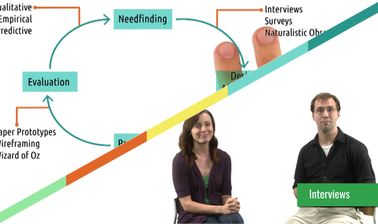
Human-Computer Interaction III: Ethics, Needfinding & Prototyping
- Provider: edX
- Time: 6 Weeks - 5-6 hours per week
Free
More Interaction Design courses

ProtoPie: Design Interactive Prototypes | from Zero to Hero (2020)
4.5 (191 Reviews)
- Provider: Udemy
- Time: 5h
$59.99


Master in New Product Development, Design & Engineering (2026)
4.4 (142 Reviews)
- Provider: Udemy
- Time: 4.6h
$19.99

Rapid Prototyping for Entrepreneurs| Build a Demo in 2 hours (2025)
4.3 (1,670 Reviews)
- Provider: Udemy
- Time: 7.3h
$84.99

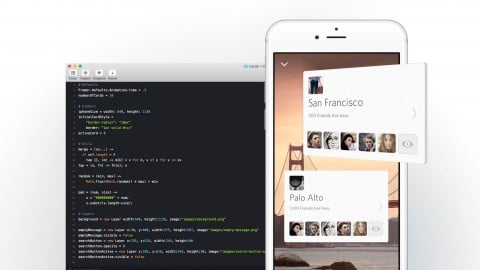
Framerjs: Innovative prototyping and design with interaction (2018)
4.1 (357 Reviews)
- Provider: Udemy
- Time: 9.1h
$19.99
 Reviews
No reviews yet. Be the first to review this course!
Showing all 0 reviews
Could not load more reviews.

- Video Duration:
 6 Weeks - 5-6 hours per week
- Price: Free
- Provider: edX
- University:
 Institution
GTx
- Level:
 Beginner
- Language:
 English
- Certificate:
 Yes
edX Coupon Price Tracker
