
 Web Development
 Data Science
 Python
 SQL
 JavaScript
 Artificial Intelligence
 IT & Software
 IT Certifications
 Hacking
 AWS
 Arduino
 DevOps
 3D Modeling
 Graphic Design
 Photoshop
 Drawing
 Digital Painting
 UX Design
 Business
 Data Analysis
 Communication Skills
 Project Management
 Leadership & Management
 Human Resources
 Digital Marketing
 Social Media Marketing
 Marketing
 SEO
 Google Analytics
 Branding
 Excel
 Office Productivity
 SAP
 PowerPoint
 Microsoft Access
 SharePoint
 Finance & Accounting
 Trading & Investing
 Accounting
 Bitcoin
 Personal Finance
 Video Editing & Animation
 Photography
 Adobe Premier Pro
 Adobe Lightroom
 Personal Development
 Productivity
 Career Development
 Life Coaching
 Health & Fitness
 Meditation & Mindfulness
 Yoga
 Music
 Music Production
 Guitar
 Piano
 Singing
 Language Learning
 Teaching & Academics
 Engineering
 Math
 Lifestyle
Orchestration (Udemy.com)
The complete course in instrumentation & orchestration
Created by: Jonathan Peters
Last updated December 2022
 What you will learn
- You will be learning from a professional and award-winning composer and orchestrator.
- You will learn about orchestral instruments and their notation, transposition, ranges, register strengths, dynamic capabilities, playing techniques, and more.
- You will learn how to properly prepare a score and parts and tips on how to proof them before publishing or performance.
- You will acquire knowledge of the different types of timbres and textures and how and why to use them.
- You will learn how spacing and voicing is used in orchestral chords and how to score chords for the orchestra and each section.
- You will learn about various instrument combinations, and the different roles each instrument and section plays within the whole.
- You will learn many orchestration tips and techniques to help you in your orchestrations.
- You will learn strategies for reading scores.
How it compares
Against the other 270 rated Udemy courses in Music on CourseDuck:
- Rating4.6 out of 5higher than 40% of them
- Reviews1,069#45 of 271 by number of reviews
- Length6.3 hourslonger than 73% of them
- Last updatedDecember 2022earlier than 55% of them
 Course Description
The course is divided into two parts: part 1 is on Instrumentation and part 2 is on Orchestration. Instrumentation is an important and necessary first step since you cannot write for orchestra if you don’t know about the individual instruments of the orchestra.
In part 1 you will learn how each instrument is constructed, how they produce sound, how they are properly notated, their playing and sounding ranges, register characteristics, dynamic capabilities and common playing techniques.
In part 2 you will learn basic concepts for writing for orchestra, including how to create and effectively use different timbres and textures, the best methods for scoring chords, the roles each instrument and section play within the whole, how to properly prepare a score and parts, and how to proof before publishing. The course concludes with an entire section of helpful orchestration tips and techniques. There are also a number of useful reference charts in the appendix.
At key points in the course you will be given score reading assignments, listening assignments, composing assignments, and quizzes.
A vital component to the study of orchestration is score reading, and so throughout the course you will be asked to read scores. There are some score excerpts in the course but the majority of score reading will be done on your own. There is an important reason for this. Taking a course in orchestration is a great start to learning how to write for orchestra but the only way to become truly knowledgeable and skilled in this very complex art form is through a lifetime of score study and through a lifetime of experience gained from actual writing for orchestra. This cannot be emphasized enough.
Note: This is not a music theory course or a music composition course. This course was written for individuals who already have a basic foundation in music theory (including music notation) and music composition. If you need or would like to develop your knowledge in these areas please see the following courses by the instructor.
Music Theory
Music Composition 1
Music Composition 2
Four-part Harmony

 Udemy Discount
The discount is applied through our link. Open the course from here and Udemy's current promotional price is applied at checkout on most courses, no code to type.
Some courses are excluded from Udemy's promotions. If the price does not drop, clear your browser cookies and use the button again.
Instructor Details

- 4.6 Rating
 1,069 Reviews
Jonathan Peters
Jonathan Peters is an award-winning composer currently residing in the beautiful state of Colorado. Since 1990 he has worked as a composer, conductor, arranger, recording artist, educator, and author.
Peters’ music has been featured multiple times on NPR’s Peabody award-winning show Performance Today. His works have been performed by orchestras throughout the United States, and have also been performed internationally. He has won multiple awards and recognitions, such as 1st place in the 1996 Composers Today Contest. His 50 plus works include 2 full length operas, a symphony, orchestral works, chamber music, choral pieces, and works for solo piano.
Mr. Peters is the author of the Scholastic Music Series, a collection of educational CDs that use music as a tool to teach various academic subjects. His CD, The Constellations - A Guide to the Orchestra, received the highest starred review from School Library Journal and is carried in libraries throughout the country.
He is also the author of nine books, including six academic books on music and three children’s books with downloadable music. Besides teaching piano privately, he also gives on-line instruction in music theory, music composition, four-part writing, counterpoint, and orchestration. His on-line courses have been taken by tens of thousands of students from over a hundred countries.
 More courses by Jonathan Peters
More Music courses
Music Theory Comprehensive Complete: Parts 13, 14, & 15 (2026)
5.0 (315 Reviews)
 Provider: Udemy
 Time: 8.4h
$16.99

Jazz Piano - Ultimate Beginners Course for Piano & Keyboard (2025)
4.9 (2,224 Reviews)
- Provider: Udemy
- Time: 8.1h
$15.99

Music Composition with the Piano: Ultimate Keyboard Theory (2020)
4.9 (1,679 Reviews)
- Provider: Udemy
- Time: 7.8h
$16.99

Electronic Music Production with Ableton Live [2025]
4.9 (1,088 Reviews)
- Provider: Udemy
- Time: 14.8h
$19.99
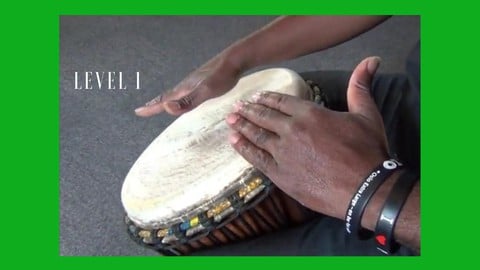
How to Play Djembe,Drum & Rhythm and teach Children. Level 1 (2020)
4.9 (533 Reviews)
- Provider: Udemy
- Time: 2.1h
$69.99
 Reviews

By Valerija Vranješ on 4/2/2026
I'm a graduated composer, but my lectures on university weren't systematical enough, and they we're all over the place. So I needed this course to remind myself why I love composing, and to give myself courage and new practical system to collect my 'all over the place' knowledge into one connected view to be motivated to create aagain! So far so great! Thank you so much for this practical lecture and knowledge!
By Juha-Pekka Kuusela on 6/13/2024
Yes helped lot. One very super important things my other sources not have anything useful info (one book have only diagrams what are next imppossible convert to mp,ppp,ff etc) about instrument dynamics and text is well writen now engineer style what seen too often when we go advanced topics. Only what i miss is less common instruments what are used movie/game music side of orchestral music for example but even very common instruments is lot of possible even piano and violin pair for example. I dont have anywhere info about Taiko dynamics for example. I honestly hopefully found somewhere info for them (mentioned book have some diagrams but as they are only shape but exact values is not found then information is not useful at all). even my percussion books not talk about taiko about this. Other i think even not mention whole instrument. Then seems needed combine lot different sources. at least few more but its not this course tutor fault.
By Demian Ulrich on 7/12/2023
An absolute behemoth of a course! Trust me when I say that this is likely the most complete and densely packed course on instrumentation and orchestration on the site. Each section of the orchestra is discussed in great detail, and all concepts are explained very clearly. Not once did I have to look something up elsewhere due to ambiguity. There are many recommendations included of scores to study, many of which are also assigned to the sections they're most relevant to. All the sections are full of visual examples (especially useful for visual learners), along with audio examples. All in all, a very extensive course that exceeded my expectations. It is clear that a great deal of effort (and a lot of experience) was channeled into this one!
By Rose Williams on 6/30/2021
So far I have learned a lot about the logistics of using each orchestra section and each instrument. I have not watched any of the provided instrument demo videos yet. I think it would be nice if the instructor used more of his own experience and included more short clips of recordings to explain his points. It is great to get through the basics quickly, but a little more interesting detail here and there would be nice.
By Matt Charlesworth on 2/10/2021
I have been a musician and music teacher most of my life. I play many different instruments but the orchestra very much alluded me in term of composition and arrangement. There are so many fundamentals to understand before you can even hope to effectively orchestrate and this course presents them so effectively and yet succinctly. I am looking forward to a lifetime of listening, learning, analysing, composing and arranging built on the foundations of this course. Sincerely, thank you so much.
By Derek Cook on 11/15/2020
So far so good. Would have liked real players sounding the instruments but maybe thats later.
By Alex on 11/15/2020
For me, Very slow pace, no video of the instructor. The best course I've done so far is the one by Steve melin
By Praveen Francis on 10/20/2020
This course is really wonderful... I have learned a lot from this.. Thanks a lot..
By Natalie Goossens on 10/7/2020
Excellent course. Every conductor, composer and arranger should take this course for a better and thorough understanding of music.
By Paolo on 10/4/2020
Great course to introduce the vast world of orchestration.
Simple language, easy terms, very good examples (even the video material).
Anyway, you should already know a bit of music theory.
By Julie Romeo on 10/1/2020
Easy to understand, perfect amount of information without getting too technical
By Chris van der Walt on 9/14/2020
It is great information. Just lacks excitement.
 Quality Score
No CourseDuck member has rated this course yet. Taken it? Give each part a thumbs up or down.
Overall Score : 92 / 100
- Video Duration:
 6.3h
- Price: $17.99
- Provider: Udemy
- Updated:
 December 2022
- Level:
 Beginner
- Language:
 English
- Certificate:
 Yes
30-day money-back guarantee on most paid courses
Udemy Coupon Price Tracker
