
 Web Development
 Data Science
 Python
 SQL
 JavaScript
 Artificial Intelligence
 IT & Software
 IT Certifications
 Hacking
 AWS
 Arduino
 DevOps
 3D Modeling
 Graphic Design
 Photoshop
 Drawing
 Digital Painting
 UX Design
 Business
 Data Analysis
 Communication Skills
 Project Management
 Leadership & Management
 Human Resources
 Digital Marketing
 Social Media Marketing
 Marketing
 SEO
 Google Analytics
 Branding
 Excel
 Office Productivity
 SAP
 PowerPoint
 Microsoft Access
 SharePoint
 Finance & Accounting
 Trading & Investing
 Accounting
 Bitcoin
 Personal Finance
 Video Editing & Animation
 Photography
 Adobe Premier Pro
 Adobe Lightroom
 Personal Development
 Productivity
 Career Development
 Life Coaching
 Health & Fitness
 Meditation & Mindfulness
 Yoga
 Music
 Music Production
 Guitar
 Piano
 Singing
 Language Learning
 Teaching & Academics
 Engineering
 Math
 Lifestyle
A Beginner's Guide to Numerical Methods in MATLAB (Udemy.com)
Learn to select, apply and improve numerical methods.
Created by: Dmitri Nesteruk
Last updated April 2016
 What you will learn
- Understand about the ways computer store numbers
- Choose the right numerical methods to solve a problem
- Measure (and avoid) the errors inherent in numeric calculations
- See how algorithms are implemented in MATLAB
How it compares
Against the other 335 rated Udemy courses in Engineering on CourseDuck:
- Rating4.2 out of 5higher than 21% of them
- Reviews96#293 of 336 by number of reviews
- Length4.8 hoursshorter than 52% of them
- Last updatedApril 2016earlier than 98% of them
 Course Description
This course is about Numerical Methods and covers some of the popular methods and approaches being used daily by mathematicians and everyone involved in computation.
This course will teach you about
- How computers store numbers: what is floating point, what is precision and accuracy.
- The kinds of errors you are likely to encounter when applying numerical methods, and how to minimize them.
- One- and Two-Point iterative methods
- Interpolation and Curve Fitting
- Numerical Differentiation and Integration
This course consists of the following materials:
- Video lectures, covering both the theory as well as demonstrating practical computer applications
- MATLAB files that you can download and run
- Quizzes related to the covered topics

 Udemy Discount
The discount is applied through our link. Open the course from here and Udemy's current promotional price is applied at checkout on most courses, no code to type.
Some courses are excluded from Udemy's promotions. If the price does not drop, clear your browser cookies and use the button again.
Instructor Details

- 4.2 Rating
 96 Reviews
Dmitri Nesteruk
Dmitri is a quant, developer, book author and course author. His interests lie in software development and integration practices in the areas of computation, quantitative finance and algorithmic trading. His technological interests include C# and C++ programming as well high-performance computing using technologies such as CUDA and FPGAs. He has been a C# MVP since 2009.
 More courses by Dmitri Nesteruk




Learn Parallel Programming with C# and .NET (2019)
4.6 (4,564 Reviews)
 Provider: Udemy
 Time: 5.3h
$14.99


More Engineering courses

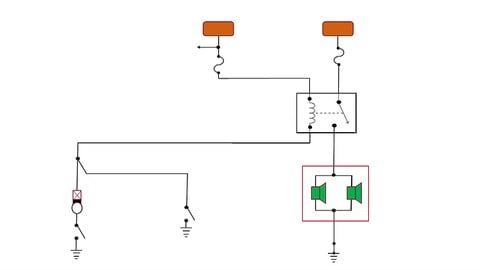
Do it Yourself - Automotive Electrical Diagnosis - Beginner (2026)
4.8 (1,897 Reviews)
- Provider: Udemy
- Time: 2.1h
$12.99
ROS 2 for Beginners Level 2 - TF | URDF | RViz | Gazebo (2025)
4.8 (1,869 Reviews)
- Provider: Udemy
- Time: 13.8h
$10.99

Advanced Kalman Filtering and Sensor Fusion (2021)
4.8 (1,033 Reviews)
- Provider: Udemy
- Time: 8.3h
$84.99

Digital Electronics: Robotics, learn by building module II (2020)
4.8 (942 Reviews)
- Provider: Udemy
- Time: 13.1h
$14.99

 Reviews

By Peter Chaula on 1/20/2021
Easy and straight forward.
By Hansel W on 12/25/2020
I think the instructor was really in a rush when making the video (?) He didn't really explore the matlab codes (explain what's eval, subs, etc. ), in contrast he spent a considerable amt of time writing out the long lines of math equation (more efficient to just show the final form and explain each term/ maybe starts with example then starts the investigation)
By Het Vashi on 6/29/2020
my personal experience was very good i learn much of the things.
By Aryamaan Mohapatra on 3/26/2020
this has helped me a lot. there had been a few challenging topics which i was unfamiliar with, before the start of this course, but now i feel confident in solving more problems based on numerical methods
By Cesar Miranda Meza on 1/10/2019
Although i am a certified engineer, i didn't had a great course of Numerical Methods while i was on the University and, on top of that, i didn't liked Numerical Methods quite much. But, in time i noticed i needed this for my research projects and i got tired of not being able to apply Numerical Methods completely on my own until i went through this course. I am glad i took this course because with my previous knowledge plus this course i can now understand the basics of Numerical Methods and start going in-depth on more advanced concepts. Thanks!
By Oscar Barreca on 6/22/2018
Up until Section 4 the instructor delivers good, substantial explanations, but I haven't yet seen a challenging exercise to make the course even more worthy. I'm motivated to move on, hoping to hone my technical skills through said practical exercises. Those encountered so far were just single-questions with limited options. Update: I'm about the same opinion even after having finished the course. Very little original thinking was required for finishing the exercises. I know elaborating challenging exercises requires time, and am understanding of it. On the level of contents I'm pretty much satisfied to have had an exposure before embarking on a more serious study of the subject.
By Jose A Guerrero on 1/4/2018
- I like that he explains the material in simple terms with the definition of the formula of a topic written, however, some variable terms like what is 'x' or 'u' in a given formula, are not labeled (just written as a variable and its meaning stated), so it might get hard to keep track of the variables in the formulas. - I like that he explains on a smart board, for visual representation. - I like that there are quizzes, however, they are short (1 - 3 questions), so they are not as thorough as some other courses I have taken. - I don't like that he does not follow through the whole thought process when solving some topics at about 25% through the course, meaning, I feel like he tries to save time during the explanations of the topics. - I feel like you definitely need to know the mathematical terms he uses because he does not take time to explain certain things you might not know. Calculus is required (derivatives and partial derivatives), also, how to use functions, symbols, loops, etc. in MATLAB, and Linear Algebra, to understand the lectures. - Voice intonation could be improved. - I feel like the material is easy to forget. There are no real exercises that make sure you understand and remember the material. - Matlab with symbolic toolbox is required to complete the quizzes. - Lecturer could improve lectures by more video editing, to remove mistakes and keep the pace up.
By Sagnik Kundu on 11/4/2017
It was a god experience
By Nayeli del Carmen González Novelo on 6/8/2017
I'd like to have more material to study. For instance, something related to methods proof.
By Gianfranco Giorgianni on 7/1/2016
The Course is very nice, it is designed like what I wanted, I'd just put some more numerical topics like the solution of ODEs, PDEs and related systems, nonlinear regression and optimization methods and the use of other toolboxes..
 Quality Score
No CourseDuck member has rated this course yet. Taken it? Give each part a thumbs up or down.
Overall Score : 84 / 100
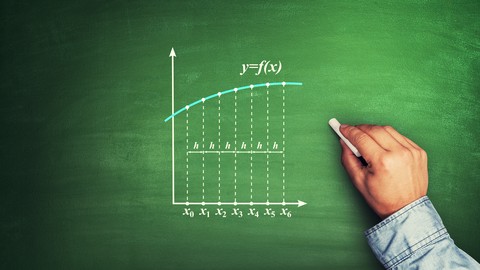
- Video Duration:
 4.8h
- Price: $44.99
- Provider: Udemy
- Updated:
 April 2016
- Level:
 Beginner
- Language:
 English
- Certificate:
 Yes
30-day money-back guarantee on most paid courses
Udemy Coupon Price Tracker
