
 Web Development
 Data Science
 Python
 SQL
 JavaScript
 Artificial Intelligence
 IT & Software
 IT Certifications
 Hacking
 AWS
 Arduino
 DevOps
 3D Modeling
 Graphic Design
 Photoshop
 Drawing
 Digital Painting
 UX Design
 Business
 Data Analysis
 Communication Skills
 Project Management
 Leadership & Management
 Human Resources
 Digital Marketing
 Social Media Marketing
 Marketing
 SEO
 Google Analytics
 Branding
 Excel
 Office Productivity
 SAP
 PowerPoint
 Microsoft Access
 SharePoint
 Finance & Accounting
 Trading & Investing
 Accounting
 Bitcoin
 Personal Finance
 Video Editing & Animation
 Photography
 Adobe Premier Pro
 Adobe Lightroom
 Personal Development
 Productivity
 Career Development
 Life Coaching
 Health & Fitness
 Meditation & Mindfulness
 Yoga
 Music
 Music Production
 Guitar
 Piano
 Singing
 Language Learning
 Teaching & Academics
 Engineering
 Math
 Lifestyle
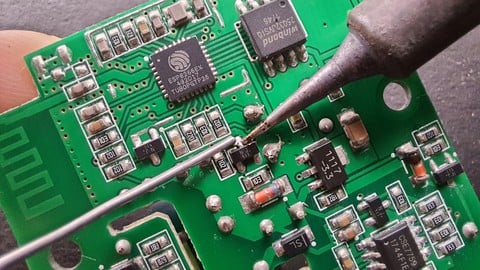
Soldering for Beginners: Electronics Through-Hole & SMD (Udemy.com)
Hand-solder electronic components and circuit boards like a pro: through-hole, SMD, desoldering, rework, and PCB repair
Created by: Shubham Tiwari
Last updated September 2026
 What you will learn
- Hand-solder through-hole (THT) components with clean, reliable joints
- Solder surface-mount (SMD) components confidently, even small packages
- Choose the right soldering iron, tips, and temperature for each job
- Set up your iron and workspace to solder safely and comfortably
- Splice and solder wires together correctly
- Desolder both THT and SMD components without damaging the board
- Diagnose and fix cold solder joints and common PCB mistakes
- Read PCBs and use free open-source design files to practice on real boards
How it compares
Against the other 335 rated Udemy courses in Engineering on CourseDuck:
- Rating4.5 out of 5higher than 55% of them
- Reviews461#157 of 336 by number of reviews
- Length3.1 hoursshorter than 71% of them
- Last updatedSeptember 2026more recently than 99% of them
 Course Description
If you can't solder, you can't build, repair or modify electronics. It's the one hands-on skill nearly every project depends on. The good news is that it's completely learnable, and a clean, reliable joint comes far more from technique than from talent.
Soldering shows up everywhere, from the tiniest component on a circuit board to larger assemblies. Whether you're prototyping an idea, building boards, or fixing something on your own workbench, you need connections that are electrically sound, mechanically strong and built to last.
Who's teaching you
I'm a Lead Hardware Engineer with 7+ years in industry, and I've soldered and assembled boards at a production scale of 500+ units a month, using both SMD reflow and through-hole techniques. In this course I'll give you the tools, techniques and troubleshooting know-how to make great joints every time.
How the course is built
Short, focused lectures, most of them under ten minutes, filmed close-up so you can see exactly what the iron, the solder and the joint are doing. You'll watch every technique done on real components and boards, then practise it yourself. Each section builds on the one before, and each ends with a short quiz.
Section 1: getting set up safely. Soldering safety (heat, fumes and lead), the basic hand tools you'll need, the different types of soldering iron and which one to start with, useful accessories, and how to secure your board so your hands are free to work.
Section 2: general-purpose soldering. The types of solder and flux and when to use each, how to set up a new soldering iron properly, and your first real joints: soldering a wire to another wire, and a wire to a component.
Section 3: through-hole (THT) soldering. Soldering resistors, capacitors and other basic components, soldering ICs onto a PCB, and handling awkward parts. You'll also learn how to recognise and fix common mistakes like cold joints and bridges, desolder through-hole parts cleanly with desoldering braid (wick) and a pump, and clean up flux residue from your board afterwards.
Section 4: surface-mount (SMD) soldering.
PCB basics, so you understand the board you're working on, and where to find free, open-source PCB designs to practise with
An introduction to SMD components and packages
Soldering SMD parts with a regular soldering iron, in two parts
Soldering SMD parts with a hot air gun, in two parts
Reflow soldering
Desoldering SMD components without damaging the board
Repairing damaged PCB traces, so one mistake doesn't mean a ruined board
Section 5: what's next. A short wrap-up with ideas for what to take on now that you can solder, from assembling boards you've designed yourself to repairing the devices around you.
What you'll be able to do at the end
Choose a suitable soldering iron, tips, solder and flux for the job
Make clean, reliable through-hole joints and splice wires properly
Solder SMD components with an iron, with hot air, and by reflow
Desolder THT and SMD parts without lifting pads
Spot and fix cold joints, bridges and other common mistakes
Repair broken traces and rescue boards you might otherwise throw away
Why technique beats talent
Most bad joints have the same few causes: not enough heat, too much solder, no flux, or moving the part before the joint has set. Once you understand what's happening at the joint, you can see what went wrong and fix it. That's the focus throughout: not just what to do, but why it works, so you can solder parts and boards you've never seen before.
Is this course for you?
It's for complete beginners who've never held a soldering iron, hobbyists and makers who want cleaner and more reliable joints, students starting hands-on electronics, and anyone who wants to repair or modify their own devices. No electronics background is needed.
It's probably not for you if you already do fine-pitch rework or BGA work professionally. This course builds a strong, practical foundation in THT and SMD hand-soldering.
What you'll need
A soldering iron and a few basic supplies to practise as you learn (the course shows you what to choose)
Some scrap PCBs or spare components to practise on are nice to have, but optional
No prior soldering or electronics experience
Common questions
Which soldering iron should I buy? The course walks through the main types, from simple fixed-temperature irons to soldering stations, and explains which features actually matter for a beginner, so you can choose one that suits your budget.
Do I need a hot air station for SMD work? No. You'll see SMD soldering with a regular iron first. Hot air and reflow are shown so you know when they're worth adding.
Leaded or lead-free solder? The course explains the main types of solder and flux and how they behave, so you can pick what suits your project and the rules where you live.
What if my first joints look terrible? Everyone's do. There's a full lecture on rectifying common mistakes, and the course shows you what a good joint looks like so you can compare your own. It usually clicks faster than people expect once the heat, the solder and the timing come together.
Can I practise without ruining a real project? Yes, and you should. Old boards from broken devices, cheap practice kits, or a scrap piece of protoboard are ideal. The course also shows you where to find free, open-source PCB designs if you want to order a practice board of your own.
How you'll learn
About three hours of close-up bench video, with English captions corrected by hand. If something isn't working for you at the bench, post in the Q&A with a description of what you're seeing. I read and answer the questions myself.
Quality joints come from proper technique plus the right materials, and technique is something you build through guided, hands-on practice. By the end, you'll solder with the steady confidence of someone who's done it hundreds of times.
More than 20,000 learners have taken my courses. Pick up a skill you'll use for the rest of your electronics journey.

 Udemy Discount
The discount is applied through our link. Open the course from here and Udemy's current promotional price is applied at checkout on most courses, no code to type.
Some courses are excluded from Udemy's promotions. If the price does not drop, clear your browser cookies and use the button again.
Instructor Details

- 4.5 Rating
 461 Reviews
Shubham Tiwari
I'm a hardware engineer with 7+ years doing exactly what these courses teach: designing PCBs, soldering and reworking boards, repairing electronics, and building labs from scratch. Everything here is what I actually do, not textbook theory.
I've taken products from a blank schematic to CE/BIS-certified production, built two electronics labs from the ground up, and ran a 12-person repair lab where I cut field-failure revisits from 12% to 3.7%. I also taught as an Assistant Professor at IIIT-Hyderabad, and 20,000+ learners have taken my Udemy courses.
My style is clear, practical, and beginner-friendly- no fluff, just the real skills that get you building and fixing electronics with confidence. Glad you're here, let's pick up the soldering iron and build something that works.
 More courses by Shubham Tiwari
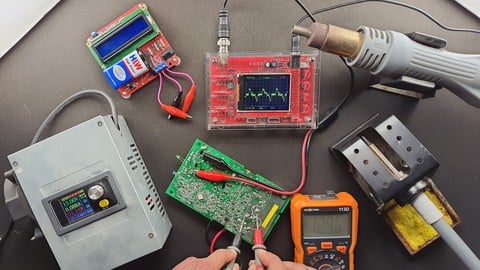
Electronics Repair & Troubleshooting: A Complete Guide (2026)
4.3 (1,423 Reviews)
 Provider: Udemy
 Time: 6.1h
$12.99
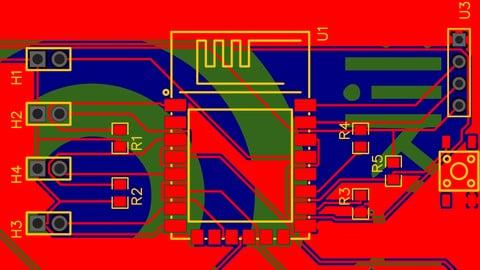
Complete PCB Design: From Schematic to Manufacturing (2026)
4.7 (637 Reviews)
- Provider: Udemy
- Time: 4.6h
$59.99
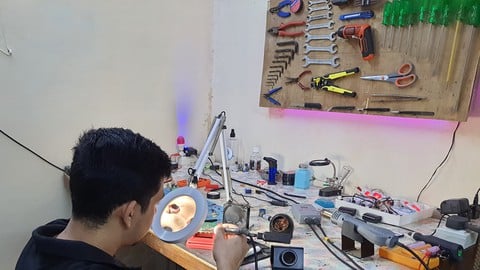
Electronics Lab Setup: Tools & Test Equipment (2026)
4.4 (312 Reviews)
- Provider: Udemy
- Time: 3.7h
$10.99
More Engineering courses

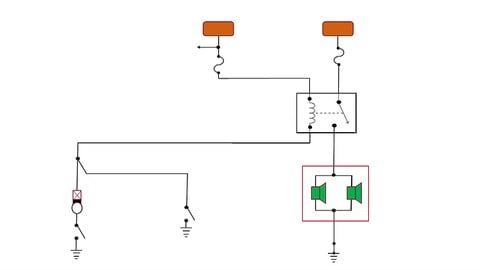
Do it Yourself - Automotive Electrical Diagnosis - Beginner (2026)
4.8 (1,897 Reviews)
- Provider: Udemy
- Time: 2.1h
$12.99
ROS 2 for Beginners Level 2 - TF | URDF | RViz | Gazebo (2025)
4.8 (1,869 Reviews)
- Provider: Udemy
- Time: 13.8h
$10.99

Advanced Kalman Filtering and Sensor Fusion (2021)
4.8 (1,033 Reviews)
- Provider: Udemy
- Time: 8.3h
$84.99

Digital Electronics: Robotics, learn by building module II (2020)
4.8 (942 Reviews)
- Provider: Udemy
- Time: 13.1h
$14.99

 Reviews

By Peter Salo on 7/23/2026
Overall, good course but there are a few things I would like to point out: 1) Lots of spelling errors in the text at bottom of screen 2) Some of his soldering was sloppy. He used a flat tip where a pointy tip would have been better 3) When soldering, he should have mentioned you need to apply some solder directly to the tip first to enhance the melting of the solder
By Jason Roche on 5/25/2026
Electrical theory mentioned in passing, with thorough overview of soldering iron types, explains *why* we use selected tools for this module. --- Update: Very thorough survey of topics utilizing PCBs for the hobbyist. Pleasantly surprised by the amount of info, especially in this module..The ability to design and order PCBs is foundational.
By Randall Hardy on 5/1/2025
Lots of great basic information. For someone with no clue how to solder this is perfect. For more advanced people I would say this is more of an back to basic session. But I understand these courses are not made for an individual but everyone from no experience to high experience.So, starting from step 1 is the way to go. I am one that never turns down any type of training. I love to learn.
By Marinos Lymperis on 8/21/2024
I 've expected something more from an experienced guy like you. it's the second course of yours i 've watched.
By Jeff Poss on 2/17/2024
Excellent review of soldering techniques. It will be very useful when I start repairing stereo/audio receivers. I thought the use of the soldering paste was particularly useful when it comes to soldering large main processing chips with lots of pins all around it. It may come in very handy if I ever have to replace the main processing chip of a stereo/audio receiver which sometimes go bad. Thank you, Jeff
By Dmitro Yaroshenko on 11/26/2023
It was very helpful tutorial about the basic knowledge about soldering, at some steps, could be cut in less time because it was repeated process, understanble, even though the accent was clear. 4/5 star because of the video focus at the right point, at some point i though it was low quality video but i was running on 1080p. Overall experience, great i could probably recommend it for basic things for a starter soldering things like cables.
By Arturo D Rincon on 9/8/2023
I really liked the camera angle and the simplicity of the course. I learned a lot and I will refer to this whenever I need help. It is straight forward! Give it a shot guys! :) and also Thank you Shubham for taking the time to build out this course for people who are new to these things and share your knowledge with us.
By Sandy K Rowles on 5/13/2022
This is an excellent course! I did not know anything about soldering before I started this course and only took it as a warm up for the $149 course that I was planning on taking. I don't think I need the expensive class now. I believe I have learned everything I need to know right here in this 3hr course. The instructor is great and very thorough. I highly recommend this course to anyone who is just starting out with soldering.
By Dan Slanker on 5/4/2022
Its better than I expected. Definitely refreshed my memory of some techniques and updated my knowledge of some new shop tools. Nice section on PCB manufacturing process and the electronic community that is out there today that surrounds it (and is at your fingertips anywhere you can access the web).
By Abhijeet Singh on 10/23/2021
The explanations was excellent & the Instructor Covered all the topics thoroughly. There was perfect mix of theory as well as Practical as the Subject was Practical in nature so it was more in focus along with that the Instructor kept imparting necessary theory, tips & tricks. It covered everything from THT to SMD soldering. Enough depth for the topics was covered by actually performing soldering of various types of components.
 Quality Score
No CourseDuck member has rated this course yet. Taken it? Give each part a thumbs up or down.
Overall Score : 90 / 100
- Video Duration:
 3.1h
- Price: $10.99
- Provider: Udemy
- Updated:
 September 2026
- Level:
 Beginner
- Language:
 English
- Certificate:
 Yes
30-day money-back guarantee on most paid courses
Udemy Coupon Price Tracker
