
 Web Development
 Data Science
 Python
 SQL
 JavaScript
 Artificial Intelligence
 IT & Software
 IT Certifications
 Hacking
 AWS
 Arduino
 DevOps
 3D Modeling
 Graphic Design
 Photoshop
 Drawing
 Digital Painting
 UX Design
 Business
 Data Analysis
 Communication Skills
 Project Management
 Leadership & Management
 Human Resources
 Digital Marketing
 Social Media Marketing
 Marketing
 SEO
 Google Analytics
 Branding
 Excel
 Office Productivity
 SAP
 PowerPoint
 Microsoft Access
 SharePoint
 Finance & Accounting
 Trading & Investing
 Accounting
 Bitcoin
 Personal Finance
 Video Editing & Animation
 Photography
 Adobe Premier Pro
 Adobe Lightroom
 Personal Development
 Productivity
 Career Development
 Life Coaching
 Health & Fitness
 Meditation & Mindfulness
 Yoga
 Music
 Music Production
 Guitar
 Piano
 Singing
 Language Learning
 Teaching & Academics
 Engineering
 Math
 Lifestyle
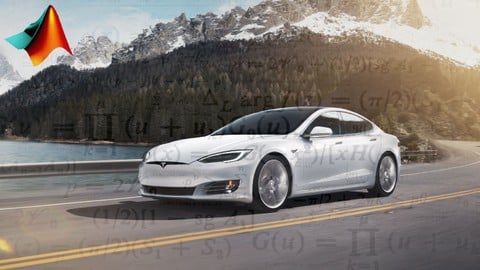
Model a Car and Design a PID Controller in MATLAB/SIMULINK (Udemy.com)
Model and simulate an electric car (Tesla Model S) in MATLAB & SIMULINK and design your own PID speed controller.
Created by: Eliott Wertheimer
Last updated December 2018
 What you will learn
- Understand the manufacturing and physics behind a Model S battery.
- Derive the mathematical equations behind an electric DC motor.
- Understand and harness the Physics behind a moving car.
- Derive the mathematical equations that govern the movements of a car.
- Implement Transfer Functions into Simulink.
- Implement Mathematical equations in Simulink through Matlab functions.
- Use and understand common Simulink blocks such as sums, constants, integrators, etc.
- Create an Open loop engineering Model in Simulink and test its performance using sink blocks.
- Implement a Closed Loop PID Controller in Simulink and learn how to tune it with respect to a desired performance.
How it compares
Against the other 335 rated Udemy courses in Engineering on CourseDuck:
- Rating4.1 out of 5higher than 13% of them
- Reviews867#97 of 336 by number of reviews
- Length2.8 hoursshorter than 75% of them
- Last updatedDecember 2018earlier than 87% of them
 Course Description
One of the only comprehensive, detailed and approachable online courses taking you from the mathematical modelling of engineering systems to MATLAB/SIMULINK implementation and PID control design.
ON TOP OF THAT WE MAKE IT ALL HAPPEN ON A TESLA MODEL S P85!
Today, control systems are everywhere: in cars, military aircrafts, interplanetary rockets, computers, fridges, washing machines, etc. As technology advances, control engineering allows us to design systems which make the most complicated machines do exactly what we want them to do with outstanding accuracy and reliabilty.
This course gives you the opportunity to learn and do the following:
- Understand and harness the Physics behind a Tesla Model S or any other electric car.
- Establish the mathematical model of an electric DC motor.
- Derive the mathematical model behind the dynamics of a car.
- Implement an engineering model in SIMULINK using blocks, transfer functions, MATLAB functions, etc.
- Test and fit your model to relevant real life performance.
- Implement, test and tune a PID controller adapted to your requirements in order to control the output of your system, in this case the speed of your Model S (cruise control).
I will thoroughly detail and walk you through each of these concepts and techniques and explain down to their fundamental principles, all concepts and subject-specific vocabulary. This course is the ideal beginner, intermediate or advanced learning platform for the mathematics behind engineering systems, the use of MATLAB and SIMULINK in engineering design and PID control. Whatever your background, whether you are a student, an engineer, a sci-fi addict, an amateur roboticist, a drone builder, a computer scientist or a business or sports person, you will master the physics behind an electric car and learn how to implement and control them in SIMULINK by designing a powerful PID controller that fits your requirements!
If you have questions at any point of your progress along the course, do not hesitate to contact me, it will be my pleasure to answer you within 24 hours!
If this sounds like it might interest you, for your personal growth, career or academic endeavours, I strongly encourage you to join! You won't regret it!

 Udemy Discount
The discount is applied through our link. Open the course from here and Udemy's current promotional price is applied at checkout on most courses, no code to type.
Some courses are excluded from Udemy's promotions. If the price does not drop, clear your browser cookies and use the button again.
Instructor Details

- 4.1 Rating
 867 Reviews
Eliott Wertheimer
I have always been impressed and passionate about flying machines and the ultimate frontier that space represents. This led me to graduate from a Masters in Aerospace Engineering as one of the top students at a leading UK university. Throughout this degree I was offered the opportunity to understand and apply advanced engineering concepts to different design projects.
In my final year, I consequently designed a proof of concept nuclear battery or Radioisotope Thermoelectric Generator (refer to my courses to learn more about these) for nanosatellites which was judged by academics as one of the best projects of my department, won the Reaction Engines prize and presented at the 4th Interplanetary Cubesat Workshop. Similarly, I developed, with a team of colleagues, an unmanned rotorcraft able to fight fires, carry cargo and surveillance missions which eventually won a design competition for Agusta Westland.
I went on to found FuroSystems, a company which designs, manufactures and retails ultra light high performance electric vehicles. Our goal is to help accelerate society's transition to electric means of transportation through aesthetic, powerful and affordable machines. We are now present in over 30 countries and have sold 1000s of units.
I am very excited to be able to share my knowledge with curious individuals, who like me want to know more about the engineering behind the wonderful machines that populate our world.
 More courses by Eliott Wertheimer
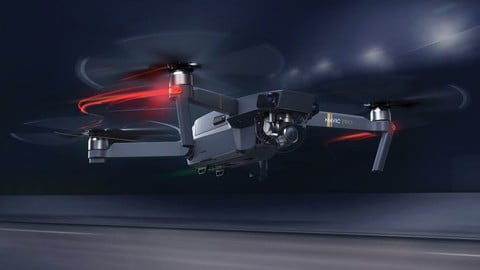
Model, Simulate and Control a Drone in MATLAB & SIMULINK (2019)
4.3 (796 Reviews)
 Provider: Udemy
 Time: 4.5h
$12.99

Rocket Engineering and Interstellar Space Propulsion (2018)
4.5 (755 Reviews)
- Provider: Udemy
- Time: 2.7h
$39.99
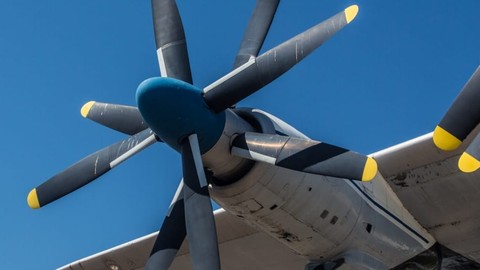
Design and Simulate the Aerodynamics of Propellers in MATLAB (2019)
4.4 (303 Reviews)
- Provider: Udemy
- Time: 3.9h
$10.99

Machine Learning, Deep Learning & Neural Networks in Matlab (2020)
4.2 (164 Reviews)
- Provider: Udemy
- Time: 4.1h
$10.99
More Engineering courses
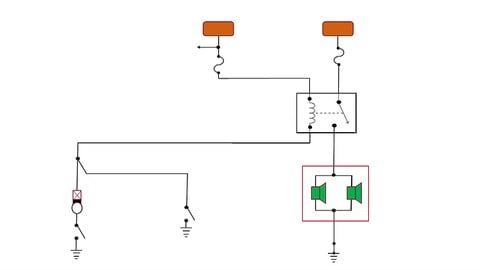
Do it Yourself - Automotive Electrical Diagnosis - Beginner (2026)
4.8 (1,897 Reviews)
- Provider: Udemy
- Time: 2.1h
$12.99
ROS 2 for Beginners Level 2 - TF | URDF | RViz | Gazebo (2025)
4.8 (1,869 Reviews)
- Provider: Udemy
- Time: 13.8h
$10.99
Advanced Kalman Filtering and Sensor Fusion (2021)
4.8 (1,033 Reviews)
- Provider: Udemy
- Time: 8.3h
$84.99

Digital Electronics: Robotics, learn by building module II (2020)
4.8 (942 Reviews)
- Provider: Udemy
- Time: 13.1h
$14.99

 Reviews

By Dan Slanker on 3/26/2022
Really good. I have a Masters in Systems and this was very interesting. I was a bit surprised in the actions of the models with the caps and windup which were very strong. Often I describe PID tuning has use P only for the most part although I think the autotuning nowadays has kinda broken that rule of thumb... In this case the (due to caps and windup) its back to P only for the most part at least to start with. Thanks, Dan...
By Alexander J Pate on 1/21/2022
Overall, this course was pretty informative. It touches on the basic forces that act on an electric vehicle and how to model them in Simulink. The instructor assumes that the student has a basic understanding of many principles of Electrical Engineering, so some things may be confusing. The Simulink implementation is interesting, but does not follow many of the standards that are used by companies. For instance, all variables are entered directly into the Simulink blocks rather than using an M-script to manipulate variables. While this is helpful for understanding the math, it is missing an important function of MatLAB and Simulink.
By Dennis Jagosz on 8/6/2021
The course is more or less solid in this point to get the basic knowledge on how to model any system (electrical, mechanical etc.) in MATLAB Simulink with the help of some rules. In order to understand most of the course topics, you should be familiar with the concept of how to transfer the differential equation into the laplace domain and why it is so important for the analysis of the system as well as the design of the controller. Unfortunately you are not going to develop an actual model of the the electrical machine of an Tesla Model S P85, as the title implies it. You are going to mimic the behavior of the three phase AC electrical machine with an brushed DC machine. Also the coordinate transformation (park and clarke) which are state of the art, in order to effectively control the electrical machine in the dq-reference frame were not discussed and are not present in this course. In addition to that, the whole power electronics part (keywords: inverter, pulse-width-modulation (PWM)) were not covered in this course. Furthermore the course is lacking effective control strategies like MTPA, in order to control the torque of the electrical machine. The concept of cascading PI controllers is not picked up in general. So in summary your final simulation model will be very basic and consist of only one PID controller and a transfer function. Furthermore the design of the PID controller follows and trial-and-error principle. For a first try this can be a valid option but if you want to fellow a specific system response and behavior, you have to use other approaches. If you have taken fundamental classes in control engineering or control theory you should know, that their are a couple of ways in order to adjust and calculate the optimal values for your PID controller (keywords: optimum amount or symmetrical optimum). All the other necessary and important bits and pieces were neglected, so your simulation model does not really describe the actual and real behavior of an Tesla Model S P85.
By Mateo Ceballos Querol on 5/28/2020
Thank you Eliott for this course, It was amazing and very well explained. Being an Electrical and Electronics Engineering student at university, I have already come across control systems and was familiar with the theory but real life examples is not something I had looked at. Merci!
By Huseyin Hanli on 5/6/2020
It is a course designed for all kinds of backgrounds and proficiency in Control systems. I will be looking forward to seeing more complicated systems with including more noise and disturbances. Thank you Elliot, great job and waiting for more videos
By Antarip Giri on 9/25/2019
Very good course. Could you please make a more indepth course on simulation for advanced students taking the course which will include 3 phase motors, dq transformation, power electronics module and drive cycles. Btw, love your work very much. Lets collaborate. I am an electrical engineer with master's degree in power electronics and drives from UK. I have worked on EV simulations and motor control hardware designing for my academic coursework. Hope to hear from you soon regarding any collaboration. My e-mail id is in my udemy profile. Regards, Antarip Giri.
By Snehal Sylas Malladi on 6/23/2019
The course was very helpful in learning the design and implementation of an electric vehicle (Tesla Model S P 85) in Matlab/Simulink and it can help model the system in a virtual environment and test the outputs. Overall, a very well thought out course with a lot of real-life implementations possible with other models as well. I am for sure going to try to implement what I have learned from Eliott's course on other models as well. Thank you, Eliott Wertheimer!
By Ralph Koch on 1/31/2019
One of the lectures was very poor in comparison to all other lectures including those in the instructors control course. Very poorly explained regarding the extraction of the back emf component from the Transfer function and then the separation into two blocks in Simulink. It would only have taken a single slide to show how you extracted the Transfer function.
By Peng Ai on 1/5/2019
This course is a pretty decent quick introduction to people who are interested in MATLAB/SIMULINK for vehicle control modelling. It has covered the basics of PID in SIMULINK with a step by step approach. I enjoy it, but this might be too basic for any non-beginners.
By Baixiao Huang on 11/6/2018
I like how the lecturer starts from the basics of theory and mathematical modeling, and transitions into applying those mathematical calculations into actual Matlab simulation. This way of teaching gives lots of insight into how the control system works and actually applying the theoretical knowledge. This is helpful for engineer who wants to create an actual feedback system.
 Quality Score
No CourseDuck member has rated this course yet. Taken it? Give each part a thumbs up or down.
Overall Score : 82 / 100
- Video Duration:
 2.8h
- Price: See price on Udemy
- Provider: Udemy
- Updated:
 December 2018
- Level:
 All Levels
- Language:
 English
- Certificate:
 Yes
30-day money-back guarantee on most paid courses
Udemy Coupon Price Tracker
