
 Web Development
 Data Science
 Python
 SQL
 JavaScript
 Artificial Intelligence
 IT & Software
 IT Certifications
 Hacking
 AWS
 Arduino
 DevOps
 3D Modeling
 Graphic Design
 Photoshop
 Drawing
 Digital Painting
 UX Design
 Business
 Data Analysis
 Communication Skills
 Project Management
 Leadership & Management
 Human Resources
 Digital Marketing
 Social Media Marketing
 Marketing
 SEO
 Google Analytics
 Branding
 Excel
 Office Productivity
 SAP
 PowerPoint
 Microsoft Access
 SharePoint
 Finance & Accounting
 Trading & Investing
 Accounting
 Bitcoin
 Personal Finance
 Video Editing & Animation
 Photography
 Adobe Premier Pro
 Adobe Lightroom
 Personal Development
 Productivity
 Career Development
 Life Coaching
 Health & Fitness
 Meditation & Mindfulness
 Yoga
 Music
 Music Production
 Guitar
 Piano
 Singing
 Language Learning
 Teaching & Academics
 Engineering
 Math
 Lifestyle
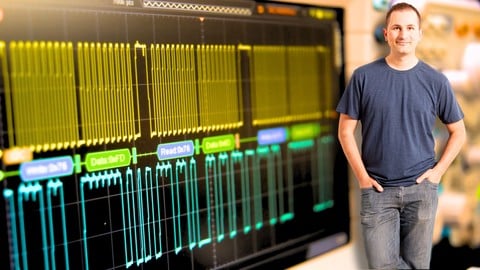
Oscilloscopes for beginners (Udemy.com)
With this course, you will learn how to use the oscilloscope through a series of experiments
Created by: Dr. Peter Dalmaris
Last updated December 2022
 What you will learn
- Understand the purpose of the oscilloscope.
- Understand the basic controls of the oscilloscope.
- Learn how to calibrate and use the probes so that a signal is transmitted to the oscilloscope with minimal distortion.
- Learn how to use the automatic and manual trigger function to capture a variety of signal types.
- Understand the differences and similarities between bench-top, portable and PC/USB oscilloscopes.
- Understand what you can and cannot do with an oscilloscope.
- Become familiar with the various kinds of waveforms that are typical in electronic circuits.
- Understand how to keep your oscilloscope and yourself safe.
- Learn how to use the oscilloscope automatic measurement and statistics functions.
- Learn how to take manual measurements using the cursors.
- Learn how to use cursors in manual, tracking and automatic mode.
- Build-up your skill and confidence through a series of experimentations.
How it compares
Against the other 335 rated Udemy courses in Engineering on CourseDuck:
- Rating4.5 out of 5higher than 55% of them
- Reviews1,322#69 of 336 by number of reviews
- Length6.3 hourslonger than 58% of them
- Last updatedDecember 2022earlier than 63% of them
 Course Description
Oscilloscopes are incredible: They can capture, display, and analyse an electrical input signal. They can automatically produce all kinds of measurements, like the period, rise time, width, duty cycle, max and min voltages, and lots more, and even decode communications protocols like RS232, and I2C.
Are you working with electronics and are interested in using an oscilloscope to gain a better understanding of what is happening inside your circuits as they operate?
Perhaps you already have an oscilloscope but are confused by all its buttons, knobs and menu options?
Perhaps you are thinking of getting one but not sure if its worth it, or not sure what to look for?
This course is dedicated to the oscilloscope, and it will help you answer these questions, plus lots more.
It will teach you how to use the oscilloscope that you already have, or are planning to get.
After the multimeter, the oscilloscope is the most useful test instrument for makers.
Over the last few years, their prices have dropped by a lot, and it is now very common for students and hobbyists to be able to afford one. Today, budget scopes offer a full array of capabilities.
You are probably familiar with the multimeter. This test instrument gives you a snapshot of what is happening in your circuit in a specific moment in time. For example, it will tell you that the voltage on a certain pin is 5.1 Volts.
The multimeter works in a single dimension.
The oscilloscope works in two dimensions.
On its screen, it will plot the voltage of your test circuit over time. You can see how voltage changes over time, and get the measurements that describe various aspects of its operation. You can use this information to dive deep into the inner workings of your circuit.
This is a course for people who are already familiar with basic electronics.
To make the most from this course, you will need to have a working understanding of things like Volt, Hz and duty cycle.
Because I use the Arduino and the ESP32 to create experiments based on which I demonstrate various features and capabilities of the oscilloscope, you should also have a basic understanding of those two technologies.
In the course, first I’ll talk about the various aspects of an oscilloscope, such as the most important features, functions, and controls.
Second, I’ll help you get comfortable with your oscilloscope, calibrate it and get it ready for use.
And third, I’ll show you how to use the oscilloscope by guiding you through multiple experiments. Each experiment is an opportunity to learn and practice several new workflows and operations. This third part, the experimental, consists the bulk of the course.
So I invite you to enrol in this course right now, and learn how to use your oscilloscope.
You can also have a look at the free lectures for more information about the objectives and structure of this course.

 Udemy Discount
The discount is applied through our link. Open the course from here and Udemy's current promotional price is applied at checkout on most courses, no code to type.
Some courses are excluded from Udemy's promotions. If the price does not drop, clear your browser cookies and use the button again.
Instructor Details
- 4.5 Rating
 1,322 Reviews
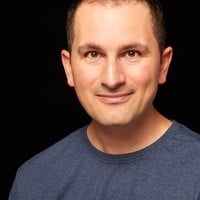
Dr. Peter Dalmaris
Peter Dalmaris is an educator, electrical engineer, electronics hobbyist, and Maker. Creator of online video courses on DIY electronics and author of three technical books, and has recently released his book Maker Education Revolution.
As a Chief Tech Explorer since 2013 at Tech Explorations, the company he founded in Sydney, Australia, Peter’s mission is to explore technology and help educate the world.
Tech Explorations offers educational courses and Bootcamps for electronics hobbyists, STEM students and STEM teachers.
A life-long learner, Peter’s core skill is in explaining difficult concepts through video and text. With over 15 years of tertiary teaching experience, Peter has developed a simple yet comprehensive style in teaching that students from all around the world appreciate.
His passion for technology and in particular for the world of DIY open source hardware has been a dominant driver that has guided his personal development and his work through Tech Explorations.
Peter’s current online courses have helped over 150,000 people from around the world to be better Makers.
For more information on Peter's work, please go to his web site, techexplorations dot com.
 More courses by Dr. Peter Dalmaris
Arduino Step by Step: Getting Started (2024)
4.7 (8,714 Reviews)
 Provider: Udemy
 Time: 21.4h
$159.99
PCB design with KiCad - updated for KiCad 9 (2026)
4.6 (3,737 Reviews)
- Provider: Udemy
- Time: 31.9h
$79.99
More Engineering courses
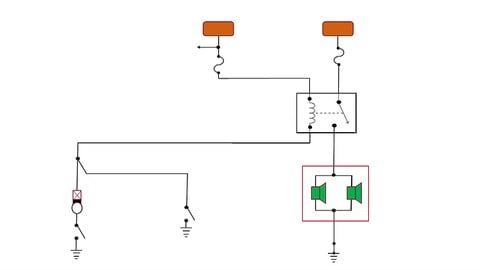
Do it Yourself - Automotive Electrical Diagnosis - Beginner (2026)
4.8 (1,897 Reviews)
- Provider: Udemy
- Time: 2.1h
$12.99
ROS 2 for Beginners Level 2 - TF | URDF | RViz | Gazebo (2025)
4.8 (1,869 Reviews)
- Provider: Udemy
- Time: 13.8h
$10.99
Advanced Kalman Filtering and Sensor Fusion (2021)
4.8 (1,033 Reviews)
- Provider: Udemy
- Time: 8.3h
$84.99

Digital Electronics: Robotics, learn by building module II (2020)
4.8 (942 Reviews)
- Provider: Udemy
- Time: 13.1h
$14.99

 Reviews

By Don W on 10/27/2025
Excellent course as a solid intro to oscilloscopes, functionality, and most important, how to set them up for real-life use. It was just what I needed to get more comfortable with the Rigol scope I had recently purchased. My only complaint, or minor negative, might be that for the ESP32 section, if you're not familiar with platform.IO/VS Code, or able to manipulate the provided ESP32 code to work inside of the Arduino IDE, it's more difficult than expected to get the ESP32 up and running for that set of experiments. It should at least be noted/clarified in the description of the course as to those details. Or, providing that same code for easy implementation in the Arduino IDE would also help. Peter's courses are always a good value for the money, and this one is no different; I definitely recommend it.
By Alexis Moreno Rodriguez on 7/4/2025
El curso es muy bueno, pero no es excelente. Hacen falta detalles importantes relacionados con la seguridad al manejar estos dispositivos. Tampoco se da una explicación profunda sobre cómo funcionan internamente los osciloscopios. Esto le daría al estudiante una base más sólida para poder tomar decisiones cuando necesite medir ondas complejas. Las practicas son muy buenas, pero se debería incorporar mediciones de variables como corrientes y voltajes en sistemas más potentes haciendo uso de puntas de prueba diferencial y sensores de corriente. En términos generales el curso aclaro mis dudas y estoy muy agradecido con el profesor por ello. Muchas gracias.
By Luigi Siciliani on 2/17/2024
Good, clear content. While some repetition is necessary to solidify knowledge points, it would have worked better for my purposes if some of that repetition had been replaced with more practical use examples. And although I recognize that the course is aimed at designers, some practical troubleshooting examples would still have been relevant since the design process always includes some troubleshooting.
By Nuno Alvares on 8/19/2023
While this is in fact a good approach for someone who never touched an oscilloscope before, I feel like after the explanation of the core concepts, demonstrations just get a little repetitive. You're just seeing the same sort of measurements over and over across different scenarios. Also, considerations should be made that efforts in order to get answers in the Q.A. section where worthless. I had some questions which I never saw answered. One last consideration goes for the fact that sometimes the instructor focus on features that are specific to his scope model that leads a newbie like me immediately start wondering if my scope is any good because it misses such features. It is never mentioned what can or cannot happen in different models and the workarounds about it. In a few words I can say that I'm satisfied with what I learned but there serious room for improvement.
By Dick Schweiger on 1/21/2023
This course was the perfect match, after all it is a course for beginners. I really liked that you had the wiring diagrams, so one could build and test. I would suggest you to make a follow up course, and include different electronics, explain the circuits, include wiring diagram and then measure with The oscilloscope. Even to measure a simple voltage divider could give someting back to a newbie. Or a BJT amplifier in one stage, two stage, and so on. I saw a few low point reviews, but I guess they did not read the label of the course: Oscilloscopes for BEGINNERS. I followed all the steps, and built my own circuits, and also wrote the code my self. That gives the best learning exparience. I still have some problem here and there, even though I have the same oscilloscope. But I Guess that is why I am here :) You got me started for real. I WILL take other courses you have done. Already knows which. Thank you very much. Dick / Stockholm / Sweden
By Tom Betka on 11/26/2022
Incredible course--made me MUCH more comfortable using my Rigol scope. The scope I have has more features than the one in this course, but it turned out to be something of a blessing in disguise...as it forced me to go research how to access the same features on my scope, and of course to practice and experiment with the thing. I also have an older Digilent Analog Discovery USB scope laying around (that I wasn't using), and I even dusted off that thing and did all the experiments with it as well. All-in-all, I probably spent 25 hours or so with this course, and would highly recommend people spending as much time with the material as they possibly can. It really does make a difference.
By Peter Glass on 2/1/2022
This was a thorough introduction to the features and limitations of modern oscilloscopes. Peter covered everything from calibration of probes and the oscilloscope to complex triggering, with information useful to both analog and digital circuits. The circuits he uses are basic, going from a basic RC circuit to a PWM waveform generator built around an ESP32, with an Arduino in the middle. It was easy to follow along on my own scope. This is a basic course, so things like decoding bus communications and signal math were not covered, but by the time you finish with this course you will feel comfortable experimenting on your own and cracking open your scope manual. This was an enjoyable but comprehensive intro with sections short enough to get through in a single sitting, and it left plenty of room to explore more on your own.
By Andre Howard on 11/7/2020
So far so good, I am not having trouble understanding what the instructor is teaching.
By Andrew Yarker on 10/25/2020
Brilliant course, have done 4 of Peters courses and everyone is 5 stars
By Spuro Sourtzis on 10/19/2020
I am really enjoying the course so far. Clear explanations and I can always replay the videos. As I progressed with the course, it included hardware that I was unsuccessful at installing. I had a lot of difficulty installing the ESP32 board on my personal computer. As a result, I only give the course four stars.
By Huy Anh Vu on 10/15/2020
Since this course title oscilloscope for beginners and level of each person are different so I would like to see more detail explain on the oscilloscope itself and each of their functionality. But it is good to see a lot of experiment of measurements.
By Viljoen du Toit on 10/14/2020
Very impresed, and what i expected from the course so far.
 Quality Score
No CourseDuck member has rated this course yet. Taken it? Give each part a thumbs up or down.
Overall Score : 90 / 100
- Video Duration:
 6.3h
- Price: $14.99
- Provider: Udemy
- Updated:
 December 2022
- Level:
 Beginner
- Language:
 English
- Certificate:
 Yes
30-day money-back guarantee on most paid courses
Udemy Coupon Price Tracker
